
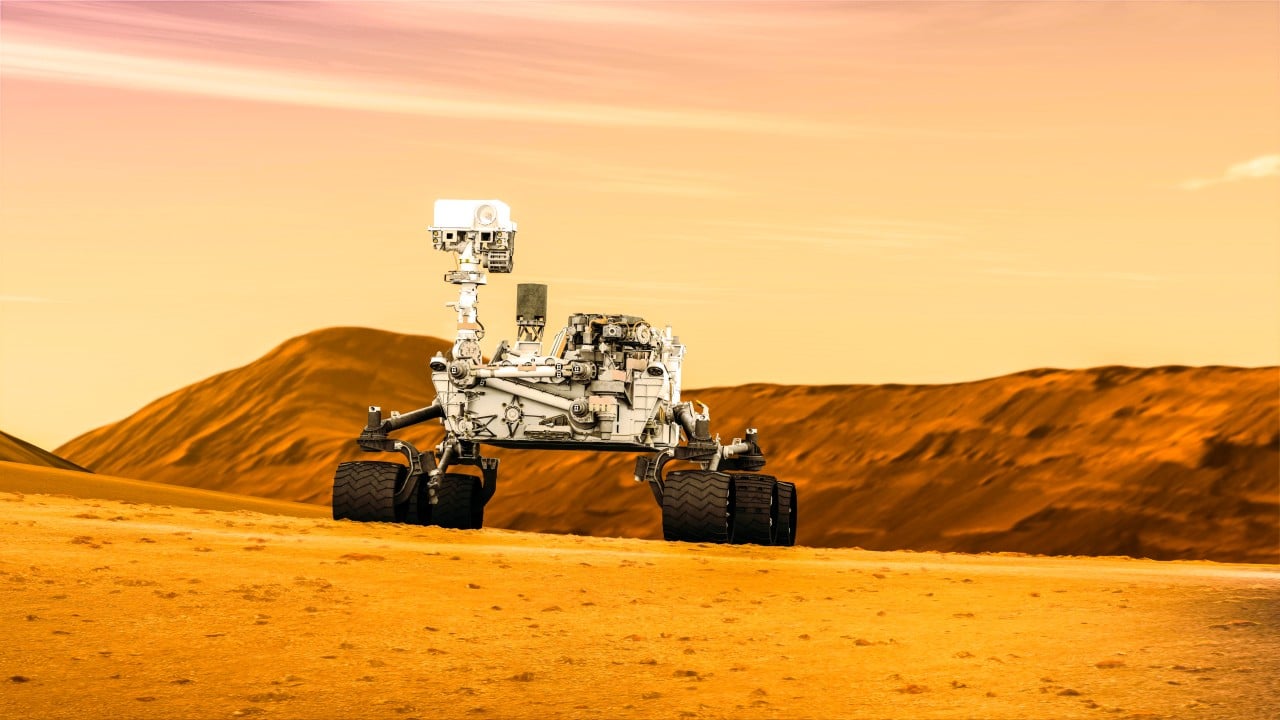
NASA’s Perseverance rover detected organic carbon compounds embedded within sedimentary rocks located in an ancient river delta inside Jezero Crater on Mars. The examined geological samples date back to a remote period when active liquid water regularly flowed across the surface of the red planet.
Perseverance scientists continue analyzing these specimens.
Researchers detected these specific chemical elements within layered sedimentary materials that rushing water transported during a distant epoch when continuous river networks regularly flowed across the Martian surface into an expansive lacustrine basin long before the planetary environment turned completely arid. Fast-moving waterways collected multiple rock fragments along ancient riverbanks. Sediment accumulated across deep geological basins over millions of years.
Inbound river currents deposited mineral structures inside the prehistoric catchment area over successive geological eras. The findings detailing how these rocks preserved ancient chemical structures appeared in the journal Science Advances.
Geological pathways that generate non-biological organic molecules
- Volcanic reactions taking place within the planetary crust
- Extended chemical interactions between liquid water and native minerals
- Cosmic object impacts striking the Martian surface

The presence of these compounds does not confirm biological life on the Martian surface. Non-biological geological interactions generate identical organic molecules without any living organisms. Scientists treat these compounds as chemical building blocks rather than direct evidence of past habitability.
Why ancient rock layers survive longer on Mars than on Earth
The crust of Mars provides structural stability absent from Earth’s dynamic geology. Mars lacks active tectonic plates and experiences minimal atmospheric erosion. Because of this prolonged geological tranquility, ancient rock formations preserve intact chemical materials across billions of years. Researchers examine these pristine strata to reconstruct the chronological evolution of the Martian environment.
How planetary carbon signatures mirror early biological records
On Earth, complex macromolecules provide the foundational chemistry for biological life and persist inside ancient stone formations as the sole remaining indicators of primordial microbes.
Planetary Science Institute researcher and co-author Ashley Murphy stated that carbon constitutes the core architecture of all terrestrial life. Determining whether Mars possessed similar chemical building blocks clarifies whether ancient Martian environments could have supported living organisms.