
Scientists propose examining lunar dust for alien relics


A newly published scientific preprint proposes a novel method for identifying technological signatures of extraterrestrial civilizations through the direct physical examination of the lunar surface. Researchers suggest extracting and analyzing 1 cubic meter of lunar regolith to locate sub-micron dust particles generated by ancient artificial structures across the Milky Way. These microscopic fragments can theoretically drift across interstellar space over billions of years before coming to rest on the Moon.
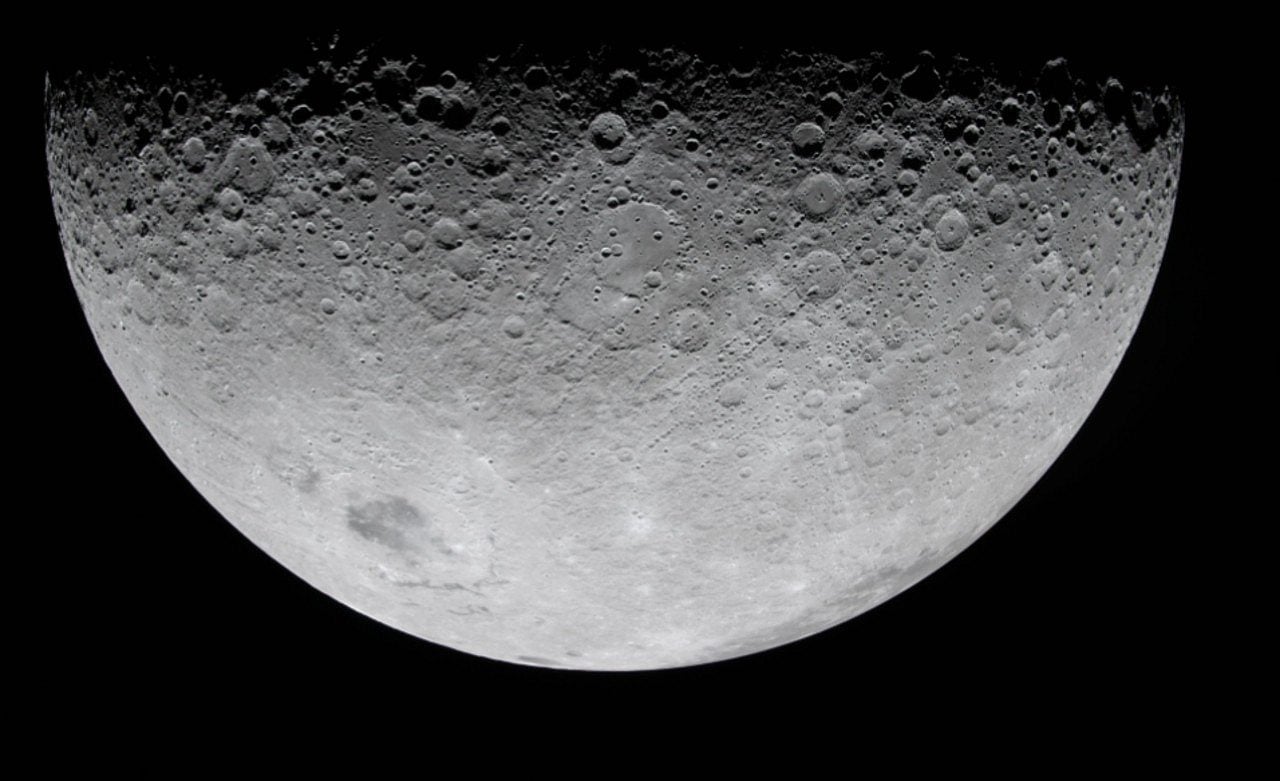
Unlike traditional searches that depend on contemporaneous electromagnetic transmissions resembling an active phone call, material relics accumulate continuously long after their creators disappear. The Moon lacks internal geological activity, preserving incoming debris over a span of 4.5 billion years like an astronomical archive documenting the cosmic environment since the early observations surrounding the interstellar object 1I/’Oumuamua.
The mathematical model demonstrates that refractory particles with characteristic radii of approximately 0.3 microns can endure destructive gas drag and sputtering across journeys spanning up to one billion years before penetrating solar winds to settle on the Moon. Measuring the concentration of these particles in lunar soil establishes an upper boundary for the physical production of technological civilizations. The absence of artificial grains within 1 cubic meter of regolith rules out hypotheses where Sun-like stars shed more than 9 percent of the mass of Earth in durable particulates. This physical constraint refines previous cosmological expectations.
A landmark 2020 scientific study calculated that the total anthropogenic mass of manufactured structures, asphalt roadways, and operational machinery exceeds living biomass at roughly 1.1 trillion metric tons.
Humanity would encounter immense technical barriers if it attempted to eject an equivalent volume of manufactured mass into interstellar space beyond the gravitational escape velocity of the solar system. Historic missions including Voyager 1, Voyager 2, Pioneer 10, Pioneer 11, and New Horizons required specialized trajectories and orbital velocity boosts around the Sun to break free from local gravity. Catastrophic asteroid collisions striking leftover terrestrial infrastructure would predominantly loft debris that remains trapped inside the gravitational well of the Sun.
Even under hypothetical models where every Sun-like star disperses durable technological dust into space, the resulting density per unit volume is trillions of times lower than natural interstellar grains. Such debris remains scarce.
Planetary dust dynamics inside the solar system further complicate detection efforts because interplanetary material continually blankets the lunar surface. This pancake-shaped zodiacal cloud scatters sunlight along the orbital plane of Earth and loses mass toward the Sun through Poynting-Robertson drag while replenishing via Jupiter-family comets and asteroid collisions. Less than 1 percent of this incoming dust originates in interstellar space, while local asteroid impacts continue pulverizing lunar soil into fine regolith.
Terrestrial exploration added approximately 181 metric tons of equipment, probes, and discarded hardware to the lunar environment over the past half century. The Moon absorbs roughly 10,000 metric tons of natural dust annually, meaning that human artifacts represent only 1 part in 5,000 of all material deposited there during the modern space age.
The local density of operational artificial hardware could rise sharply if extraterrestrial probes intentionally steer toward the habitable zone surrounding Earth. Macroscopic interstellar objects matching the dimensions of 1I/’Oumuamua, 2I/Borisov, or 3I/ATLAS could theoretically deploy targeted exploration craft toward the Moon. The UAP Science Advisory Council investigates related technological signatures under official federal oversight for the U.S. government.
Astrophysicist Avi Loeb directed the Institute for Theory and Computation at the Harvard-Smithsonian Center for Astrophysics and led the astronomy department at Harvard University from 2011 to 2020. The researcher oversees the Galileo Project and issued the paperback edition of his book Interstellar in August 2024.





