
Webb telescope reveals hidden black hole glowing like star

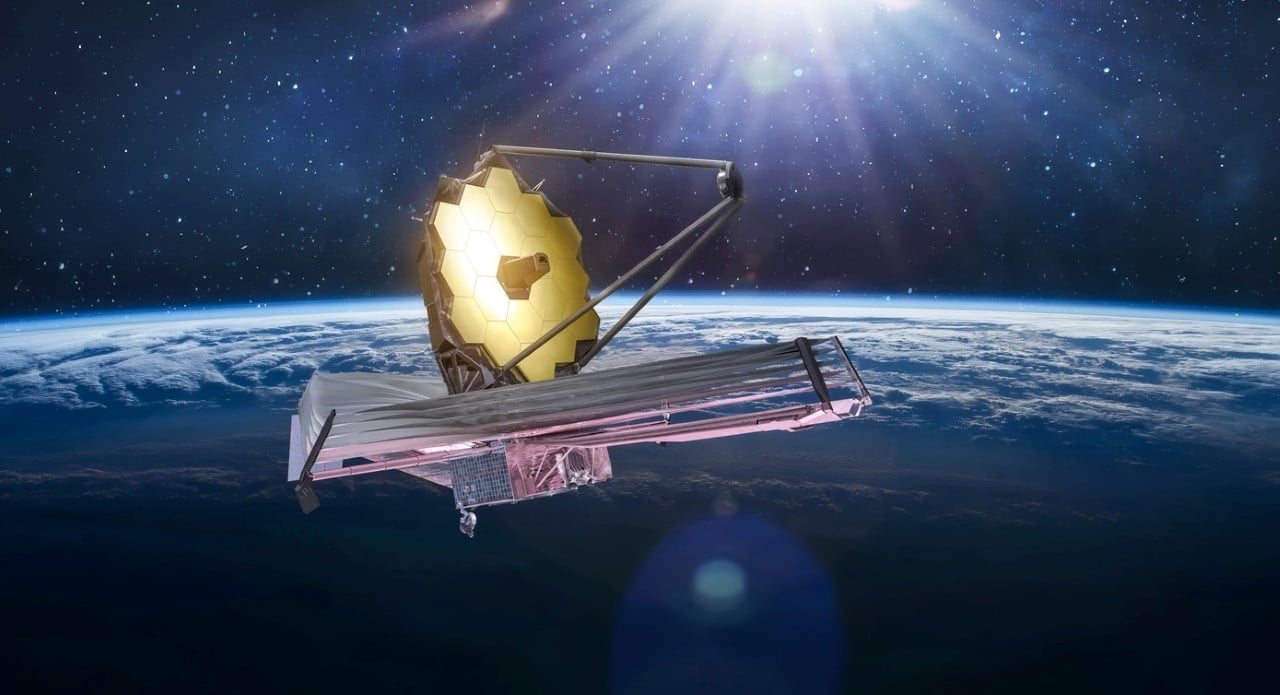
MIT researchers confirmed on September 8, 2026, that data from the James Webb Space Telescope reveals a primitive black hole surrounded by a gas envelope spanning the entire width of the Solar System.
Astronomers originally spotted these compact red markers across early deep-field images gathered when scientific observations began in 2022. The science teams quickly designated the formations as little red dots because no immediate physical explanation could account for their distinct spectral emissions.
Early cosmic models fail to explain anomalous crimson formations
Standard astrophysical theories offered no explanation for how these red targets could populate the universe during its first billion years.
Classifying the targets as young galaxies created conflicts because the structures exhibited excessive mass and unexpected stability for systems existing only a few hundred million years after cosmic inception, while interpretations favoring feeding supermassive black holes lacked the characteristic X-ray and radio emissions typical of active accretion. These bodies vanished almost entirely two billion years after cosmic expansion began.
Spectral breakdown clarifies the nature of MoM-BH*-1
Project leader Rohan Naidu organized the targets under the Mirage or Miracle survey to assess whether the sources constituted optical mirages, singling out one target that generated red radiation far stronger than surrounding bodies.
A study in Nature detailed that the primary theoretical model reflects a central black hole roughly 100,000 times the mass of the Sun completely enveloped by dense hydrogen gas that radiates heat from gravitational accretion rather than core nuclear fusion. This massive gas structure expands across a diameter equivalent to the Solar System and converts gravitational infall directly into radiant energy.
Thermonuclear fusion cannot replicate such luminous output in conventional stellar bodies, as this active core exceeds the brilliance of the brightest known star by roughly 100 billion times.
Investigators designated this specific candidate MoM-BH*-1, adding an asterisk in line with standard astrophysical typography. The detector arrays recorded photons that originated when the universe had reached an age of approximately 660 million years.
Light measurements rule out ordinary cosmic dust
Kavli Institute director Robert Simcoe noted at MIT that reddish space signatures generally point to dense cosmic dust clouds because solid grains scatter shorter blue wavelengths while letting red photons travel onward.

The target spectrum displayed a sharp drop below a critical wavelength known as the Balmer break, a signature typical of stars with the age of Vega that Naidu described as the deepest break ever recorded in an astronomical object. The physical composition consisted almost exclusively of light elements without exceeding the density of helium, directly contradicting standard dust models that require significantly heavier chemical components.
Independent observations record identical structural patterns
Observational backing emerged when Anna de Graaff presented September 2025 data regarding an extreme object called The Cliff from the Max Planck Institute for Astronomy, where galactic dust hypotheses collapsed before researchers proposed a preliminary model of a gas-cloaked black hole.
Data published by Nature in January showed that broadened emission lines stemmed from electron scattering rather than gravitational acceleration, reducing estimated masses up to one hundred times. Astrophysicist Vasily Kokorev subsequently leveraged a galaxy cluster as a gravitational lens at the University of Texas at Austin in June to isolate over 40 spectral lines from GLIMPSE-17775, while the European Space Agency validated the growing consensus around this morphology.
Theoretical questions persist over envelope durability
Astronomers never imaged the MoM-BH*-1 cocoon.
The scientific community continues to study how such an enormous gaseous envelope resists disruption while feeding a perpetual central drain, leaving technical teams to evaluate alternative models involving ultradense stellar clusters. The James Webb Space Telescope already scheduled dedicated follow-up campaigns during its upcoming observation cycle.
Naidu determined that systems structured like this one may have established the initial rate at which early galaxies produced stars during cosmic dawn.
European Research Council records show that MoM-BH*-1 orbits alongside a brighter companion galaxy toward an impending merger expected within 100 million years. The combined spectra of both systems match the visual signature of an isolated red spot, indicating that current measurements isolate MoM-BH*-1 only because the two bodies have not yet completed their collision.





