
AI video reveals black hole jet across 27 years of data
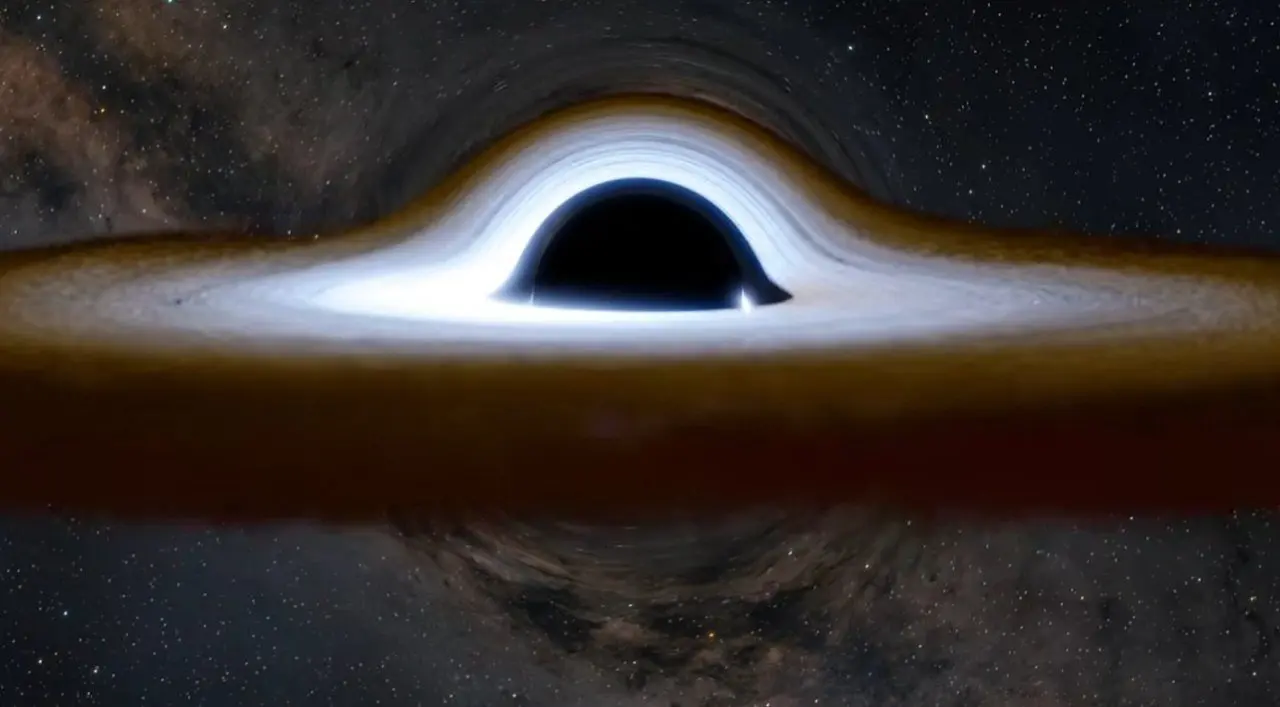
On 9 September 2026, researchers released an artificial intelligence video charting the activity of a blazar jet using data collected across 27 years. The model combined more than 100 individual images of a single black hole to deliver the highest-resolution sequence ever captured of such a cosmic feature.
Scientists tracked 1 active blazar.
On the same topic: Astrophysicists unravel the mystery of the brightness of stars that survive black holes
By feeding more than 100 individual astronomical images gathered across 27 years of deep space monitoring into advanced artificial intelligence algorithms, researchers managed to bridge extensive observational gaps and generate continuous footage illustrating how matter travels within the blazar stream. The archival sequence captures subtle variations in the jet structure that standard instruments could not track in isolated frames. Specialized computational tools interpolated the intervals between each observation recorded since the late 20th century.
Technical records established by the observation model
The final sequence represents the highest-resolution visual documentation of a relativistic jet ever compiled in observational astronomy. Computational systems processed the 100-plus observational snapshots to reconstruct the high-energy flow with unprecedented spatial precision.
- Over 100 visual frames combined into a single continuous sequence
- Total observation window extending across 27 continuous years
- Visual mapping focused directly on the core jet of a single blazar
The analysis demonstrates how machine learning algorithms reconstruct astrophysical dynamics without introducing artificial artifacts into the 27-year baseline. Each stage of the rendering pipeline mapped plasma movements emerging directly from the central gravitational boundary. The resulting visual stream allows astronomers to track structural shifts across multi-year intervals.
Read also: ‘Wandering’ supermassive black hole discovered far from galactic center after devouring star
Mapping the energetic activity of a distant blazar
Observational instruments gathered the source material across 27 consecutive years.
The targeted blazar channels matter outward in narrow streams moving close to the speed of light. By integrating the 100-plus separate photographic datasets, the system charted the physical changes occurring within the core beam over extended timescales.
Editorial timeline recorded for the project release
Reporter Elizabeth Howell documented the research milestones on 9 September 2026. The editorial review of the publication involved editors Laura Mondragón and Brandon Specktor. Previous aerospace documentation by Howell included research accounts involving astronaut Dave Williams.
Howell conducted previous investigative reporting connected to the White House and flight operations aboard the International Space Station. The team completed editorial checks on 9 September 2026 before publishing the compiled astronomical findings.
More news in Latest News (EN)
See more → Lensed gravitational waves explain black hole collisionPrime Minister Netanyahu files defamation suit against newspaper over alleged UAE October 7 warning
 Astronomers find 84 mysterious cosmic objects using ChandraTrump claims convention outdrew NFL opener; Rodgers speaks on Danica Patrick split amid league’s streaming shiftUpgrade your game day: Hisense 75-inch U6 Pro 4K Mini-LED TV now under $800, a record lowMassachusetts mother accused of children’s deaths remains jailed as medical examiner’s report awaited
 Webb and Hubble identify primitive icy bodies past Neptune
 Seven global phones receive early access to Xiaomi HyperOS 4
 Comet 3I/ATLAS shows origin in deep freeze of distant star
 Apple prepares rollout of seven new devices for September
 Samsung modifies Galaxy support timeline in September 2026
 Instagram welcomes Jennifer Lawrence as verified profile debuts
More news on Mix Vale
- 1Prince Louis and Princess Charlotte begin new term at Lambrook
- 2Sony launches preorders for two limited GTA 6 controllers
- 3Retailers release cases for iPhone 18 Pro and iPhone Duo
- 4Samsung patches 90 security flaws in September 2026 update
- 5Apple unveils AirPods 5 alongside new Watch Ultra 4 lineup
- 6Apple unveils Series 12 watch with advanced health sensors
- 7Fatal Amazon cargo jet crash: new data reveals pilot warnings about excessive speed before Miami runway overrun
- 8Apple iPhone Duo challenges Samsung Galaxy Z Fold8 Ultra
- 9Major retailer faces scrutiny as key product costs reportedly rose during price freeze campaign
- 10Kremlin alleges Kyiv sought to ignite conflict between Russia and United Kingdom, London refutes claim