Comet 3I/ATLAS shows origin in deep freeze of distant star

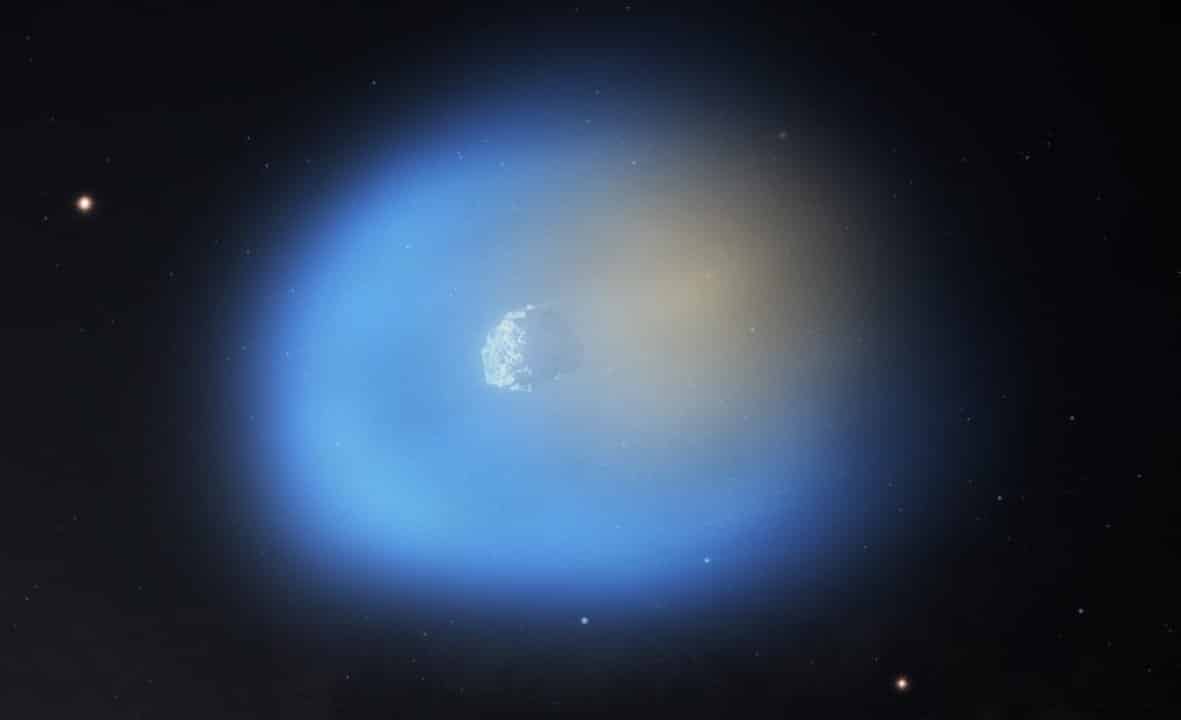
Astronomers in the United Kingdom identified the origin of comet 3I/ATLAS, marking only the third interstellar body ever detected passing through our solar system since observations began. A study released in the Monthly Notices of the Royal Astronomical Society confirmed that the icy visitor originated under severe freezing conditions at the remote outskirts of a foreign planetary system.
Dr. Lea Ferellec from Northumbria University’s School of Engineering, Physics and Mathematics directed the research by tracking the ionized gas trail released by 3I/ATLAS while the body departed from the sun.
Scientific data came from the Large Integral Field Unit mode of the WEAVE instrument, mounted on the 4.2-meter William Herschel Telescope operated by the Isaac Newton Group. The Science and Technology Facilities Council supported the engineering of this diagnostic setup.
By pairing WEAVE imaging spectroscopy with non-sidereal telescope tracking, investigators detected five distinct ions across the coma simultaneously.
Capturing multiple ions at once remains uncommon in standard cometary science. Five ions emerged simultaneously.
Researchers calculated that 3I/ATLAS originated in an extreme cosmic deep freeze colder than -240°C (-400°F) after measuring the precise ratio between dinitrogen gas and carbon monoxide streaming directly from the nucleus into surrounding space during its outward orbital transit.
The chemical composition places the nursery of the comet at the remote perimeter of its parent star system. Volatiles froze solid in those distant outskirts.
Chemical markers reveal cold origins beyond the solar system
Ferellec said, “This object gives us a rare chance to study material that formed somewhere completely different from our own solar system.”
Ferellec affirmed, “Finding that it’s so rich in nitrogen tells us it likely formed in extremely cold conditions, far from its home star.” Nitrogen condensation requires temperatures far lower than those found near inner planets.
Ferellec said, “Every one of these objects we study helps us understand a little more about how planets form around other stars.”
Icy interstellar bodies travel across interstellar space for millions of years after being ejected from other star systems. These rogue rocks eventually traverse our planetary neighborhood before returning to deep space.
Astronomers have recorded only three interstellar visitors to date, including 3I/ATLAS, which surveys first registered in July 2025 as the object sped away from the sun.
Material formed in distant regions of the Milky Way offers physical proof of how foreign protoplanetary disks operate. Telescopic analyses of such wanderers test universal models of planet formation.
Spectrometers record particle transformations in the comet tail
Scientists from Northumbria University and the University of Edinburgh monitored how solar wind plasma altered ions along the tail of 3I/ATLAS, marking the first time instrumentation recorded such physical transitions for an interstellar comet.
Isaac Newton Group Director Rubén Sánchez-Janssen stated, “Powerful, large-format IFUs with high sensitivity in the blue optical spectrum—like WEAVE-LIFU on the WHT—are opening new frontiers for the study of comets and other solar system objects.” High-resolution blue optical spectroscopy allows precise identification of volatile species.
Sánchez-Janssen added, “This discovery is a perfect example of the value of DDT, which is specifically designed to enable observations of exceptional and urgent scientific importance.”
Jeronimo Santos é colaborador da redação do Mix Vale, portal de notícias com cobertura de Brasil e mundo. Produz conteúdo nas editorias de economia e benefícios, com foco em informação de serviço para o leitor brasileiro. Escreve para o portal desde 2016: Formação: Marketing