
Curiosity rover completes 5,000 Martian days on Mars surface
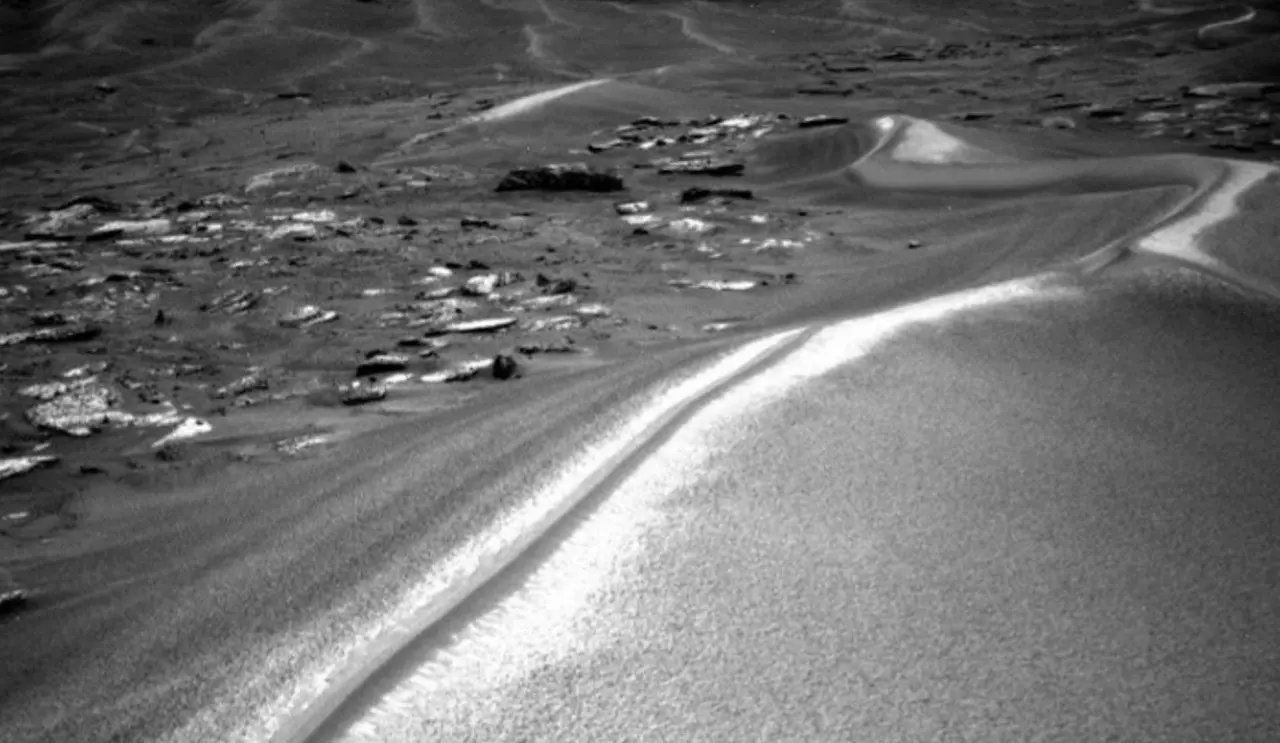
On August 28, 2026, the Curiosity rover surpassed an elevation gain of 1,000 meters above its landing site inside Gale crater on Mars. William Farrand of the Space Science Institute reported the climbing achievement across the rugged Martian terrain. That ascent exceeds the 106 meters conquered by the Spirit rover at Husband Hill in Gusev crater back in August 2005.
Curiosity officially recorded 5,000 Martian sols on August 29, an operational stretch that translates to more than 5,137 days on Earth due to the Martian 24.6-hour diurnal cycle. Mission engineers and researchers tracked the milestone from control stations on Earth.
Read also: Debate arises after mysterious object is captured in photos of Mars by NASA
Science teams directed the rover to inspect a wind-shaped sand formation designated as Chocolatal. Observations aim to verify if the feature qualifies as a transverse aeolian ridge oriented perpendicularly to prevailing local wind currents. Orbital cameras previously documented these formations across the Martian crust. Curiosity now probes whether high-elevation ridges on Mount Sharp share identical grain distributions with lower geologic formations.
Researchers still examine whether the sand ridge remains mobile or how structural factors solidified the formation.
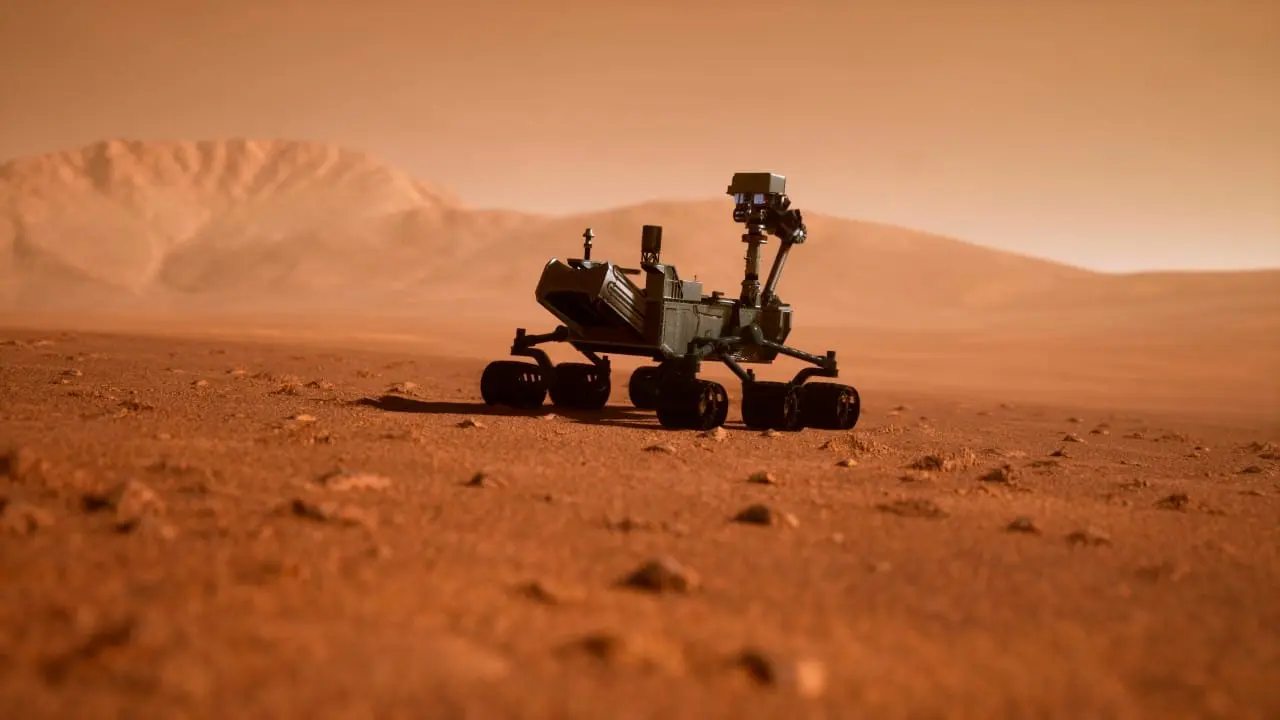
During initial route planning, Curiosity targeted light-toned bedrock formations scattered along its designated trajectory. ChemCam deployed its Laser Induced Breakdown Spectroscopy instrument to analyze the elemental chemistry of rock surfaces coated in dark crusts, while mast-mounted cameras assembled comprehensive image mosaics capturing elevated geological layers on nearby Martian buttes and distant sand formations.
Curiosity navigated directly into Chocolatal, planting a front wheel into the sand before reversing slightly to expose subterranean material within a shallow trench. ChemCam analyzed soil targets at the base of the ripple alongside exposed bedrock. Field engineers scheduled close-contact instrument tests inside the freshly dug indentation.
Science teams named the MAHLI camera mosaics of the right trench wall in honor of researcher Paul Geissler following his death earlier in the year. The rover dug the trench. Sensors on the APXS instrument measured atmospheric parameters and coarse grains, while ChemCam fired laser pulses at a dark flank strip and at a crest shaped like a mohawk haircut. Navcam cameras conducted surveys for dust devils and suprahorizon atmospheric patterns.
Engineering crews now target another 5,000 sols of planetary exploration across Mars.
More news in Latest News (EN)
See more → Astronomers find 84 mysterious cosmic objects using ChandraTrump claims convention outdrew NFL opener; Rodgers speaks on Danica Patrick split amid league’s streaming shiftUpgrade your game day: Hisense 75-inch U6 Pro 4K Mini-LED TV now under $800, a record lowMassachusetts mother accused of children’s deaths remains jailed as medical examiner’s report awaited
 Webb and Hubble identify primitive icy bodies past Neptune
 Seven global phones receive early access to Xiaomi HyperOS 4
 Comet 3I/ATLAS shows origin in deep freeze of distant star
 Apple prepares rollout of seven new devices for September
 Samsung modifies Galaxy support timeline in September 2026
 Instagram welcomes Jennifer Lawrence as verified profile debuts
 Prince Louis and Princess Charlotte begin new term at Lambrook
 Sony launches preorders for two limited GTA 6 controllers
More news on Mix Vale
- 1Retailers release cases for iPhone 18 Pro and iPhone Duo
- 2Samsung patches 90 security flaws in September 2026 update
- 3Apple unveils AirPods 5 alongside new Watch Ultra 4 lineup
- 4Apple unveils Series 12 watch with advanced health sensors
- 5Fatal Amazon cargo jet crash: new data reveals pilot warnings about excessive speed before Miami runway overrun
- 6Apple iPhone Duo challenges Samsung Galaxy Z Fold8 Ultra
- 7Major retailer faces scrutiny as key product costs reportedly rose during price freeze campaign
- 8Kremlin alleges Kyiv sought to ignite conflict between Russia and United Kingdom, London refutes claim
- 9Green Bay Packers’ Josh Jacobs enters no contest plea, setting stage for NFL ban
- 10Homeowner association records online may expose personal data to scammers, fueling fraud risks