
Webb and Hubble identify primitive icy bodies past Neptune

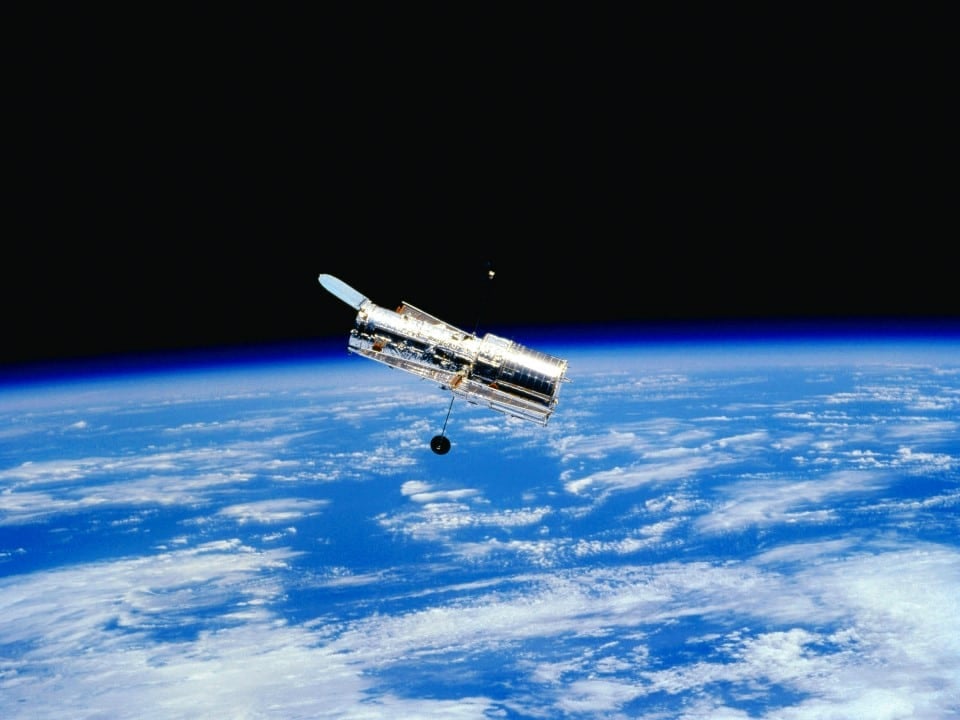
Astronomers coordinating the James Webb Space Telescope and the Hubble Space Telescope examined 27 newly discovered trans-Neptunian objects to evaluate the chemical signatures and physical scales of primordial material residing beyond the orbit of Neptune. Research teams directed by doctoral candidates at Northern Arizona University in Flagstaff and the University of Victoria in Canada discovered that these miniature celestial bodies retain the same surface properties as substantially larger objects in the outer solar system.
The findings appeared in two coordinated studies published in The Astronomical Journal following targeted space observations. Most of these distant icy targets reflect minimal sunlight, registering more than 100 million times dimmer than items visible to the unaided human eye from the ground. Both observatories directed their instruments toward identical coordinates in the sky to measure optical wavelengths and infrared signals simultaneously.
The solar system preserves relics.
The surveyed bodies belong to an early developmental era when a swirling disk of dust and pebbles around the Sun gathered into city-sized planetesimals that served as the primary building blocks for larger worlds. In the remote zone beyond Neptune, this aggregation stopped before assembling full-sized planets, leaving a frozen reservoir of ancient remnants.
Surprising preservation of ancient surface colors
Researchers examined the visible light signatures through the Hubble Space Telescope while utilizing the infrared detectors on the James Webb Space Telescope to establish precise surface compositions. Prior to the project, astronomers assumed that smaller trans-Neptunian objects experienced repetitive collisions over billions of years that fragmented their structures and altered their outer crusts.
The data demonstrated that the smallest fragments share the exact color profiles and chemical compositions recorded across their larger planetary siblings. Scientists determined that external impacts failed to alter the outer chemistry of these objects, indicating either lower impact rates in the Kuiper Belt or an innate retention of their original properties.
“You could imagine a scenario where getting knocked around and fragmented would change the surface composition, and then you would see a different surface color for tiny TNOs compared to their larger siblings,” said Anastasia Morgan, a doctoral candidate at Northern Arizona University who led the compositional investigation. She noted that the survey verified how the smallest objects preserve their foundational characteristics without displaying the expected collisional transformations. The team confirmed that these diminutive bodies continue to display the exact chemical markers they acquired during the formation of the outer solar system. This physical consistency provides direct insight into the chemical environment present during the initial condensation of the protoplanetary nebula.
Distinct orbital groups show unexpected uniform scales
The observational campaign targeted two specific dynamical groups known among planetary specialists as cold and hot populations. The dynamically cold bodies follow circular tracks aligned with the primary plane of the solar system, having remained in their native positions since their formation billions of years ago.
Dynamically hot bodies developed between Uranus and Neptune before planetary migrations scattered them outward into tilted, elliptical tracks. “These dynamically ‘hot’ TNOs retain a signature of where they were born, even though they’ve been orbitally scrambled since then,” said co-author David Trilling of Northern Arizona University.
Data gathered by the James Webb Space Telescope showed that both populations possess equivalent size distributions despite having formed in completely different radial sectors of the solar nebula. Theoretical models had predicted that local disk turbulence and density variations would generate divergent physical scales among emerging planetesimals. “It’s very interesting that the process of planetesimal formation ends up producing the same distribution of sizes for both cold and hot populations, despite forming in different regions of the early solar system,” said University of Victoria doctoral candidate Marielle Eduardo. She explained that planetesimal construction appeared indifferent to local disk temperatures, yielding identical fragment dimensions in both thin and dense ancestral environments.
Sensors register extremely faint targets in deep space
Instruments aboard the James Webb Space Telescope registered fewer miniature bodies than theoretical planet formation calculations had anticipated in that distant orbital zone. The smallest detected specimen measures roughly 3 miles, or 5 kilometers, in diameter, which represents a scale five times smaller than the direct viewing thresholds of ground-based observatories.
The investigation classified several physical properties of the newly documented objects:
- Surface colors matching the larger planetesimal families across hot and cold classifications
- Orbital tracks documenting past planetary migration events driven by outer gas giants
- Reflective signatures reaching limits comparable to a swarm of fireflies on the Moon viewed from Earth
- Size limits that challenge existing aerodynamic concentration models of early planetesimals
The project paired the distinct technical strengths of both space platforms to capture data that neither facility could acquire independently. While the Hubble Space Telescope provided high sensitivity across visible spectra, the James Webb Space Telescope tracked infrared emissions to establish diameter and thermal characteristics.
Operational framework supporting outer solar system research
The Hubble Space Telescope has operated in low Earth orbit for more than three decades under an international partnership between NASA and the European Space Agency. Mission and flight operations for Hubble proceed through the Goddard Space Flight Center located in Greenbelt, Maryland, with operational assistance delivered by Lockheed Martin Space in Denver.
Science operations for Hubble take place at the Space Telescope Science Institute in Baltimore, managed by the Association of Universities for Research in Astronomy. The James Webb Space Telescope functions as an international program guided by NASA in collaboration with the European Space Agency and the Canadian Space Agency. The National Research Council of Canada assisted the academic teams throughout the analysis of the observational datasets.
The Kuiper Belt remains an extended reservoir of icy bodies beyond Neptune, harboring dwarf planets including Pluto as well as comets and primitive fragments.
NASA continues science operations for both orbital observatories across multiple research institutions in North America and Europe. Lockheed Martin Space maintains engineering personnel assigned to the telemetry systems at Goddard Space Flight Center.





