
Cape Canaveral sees Blue Origin enlarge its launch facilities


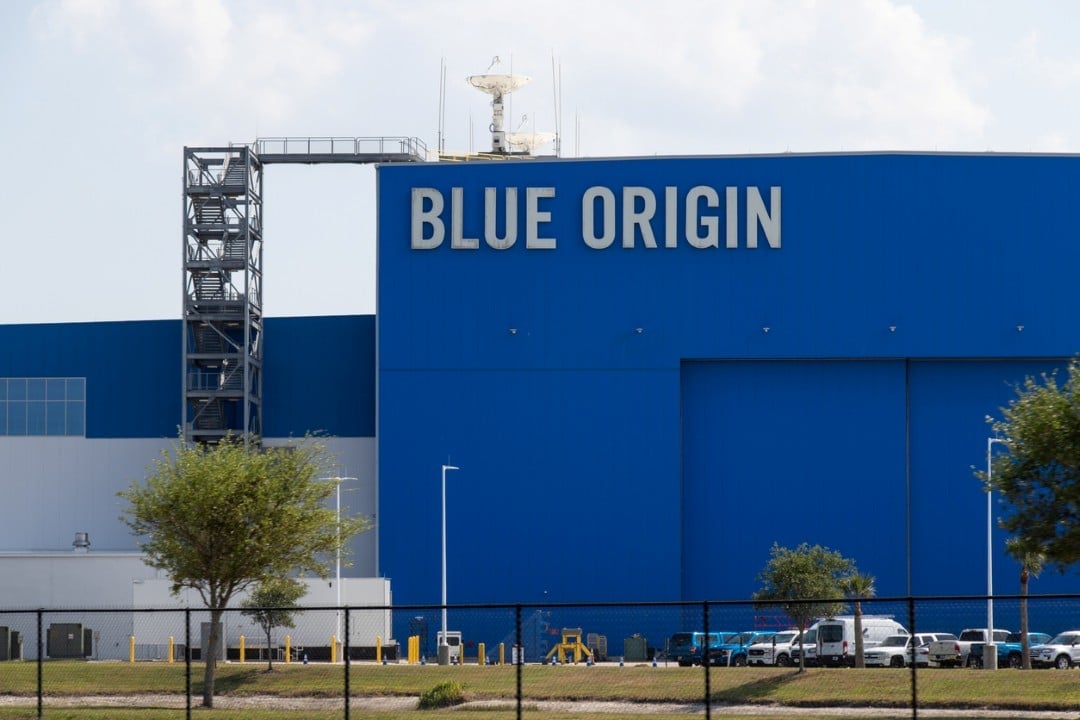
Blue Origin accelerated infrastructure expansion across Kennedy Space Center and Cape Canaveral on September 4, 2026, advancing work on production halls, testing areas, and launch infrastructure. Construction activities span from the rebuilt Launch Complex 36 to a newly designated test location on Merritt Island.
Recent aerial surveys documented these physical transformations as the aerospace company prepares for higher flight frequencies.
SpaceX continues development of rocket test positions at Kennedy Space Center. Meanwhile, Blue Origin erects a dedicated second stage testing installation near its primary industrial campus.
Regulatory filings submitted several weeks ago detailed plans for lightning mitigation towers at that location.
Subsequent administrative filings requested authorization for heavy cranes and mobile aerial platforms to erect the primary metal structures. These records formally designated the property as the MILA test site, referring to the Merritt Island Launch Area that defines Kennedy Space Center geography.
Heavy machinery already excavated earth across the parcel while delivery crews positioned large propellant tanks on the ground.
Engineers have not published the full operational scope of the MILA facility, though its proximity to civilian zones prevents full hot fire testing of the New Glenn first stage. Second stage cryogenic evaluation remains technically feasible at that safety distance.
Blue Origin confirmed it secured the historic B-2 test cell at Stennis Space Center in Mississippi to conduct static fires of that upper stage.
NASA transferred hardware using the Pegasus barge to clear deck space before crews loaded a GS2 transporter aboard the vessel. That movement followed the delivery of the core stage boattail for Artemis IV on August 31, 2026.
Conducting hot fire trials in Mississippi leaves the ultimate purpose of the Merritt Island grounds unresolved.
Technicians could execute cold propellant loading and pressure verification at MILA without igniting rocket engines. A secondary option would create a supplementary test stand to expand cadence alongside Mississippi operations.
Ground crews moved several GS2 structural articles across the Space Coast during recent operational intervals.
A massive grey service structure previously anchored Launch Complex 36 to service the second stage during pad abort and ignition trials. Pad repairs prompted workers to relocate that hardware toward the Stennis test infrastructure.
Barge operators navigated the oversized assembly across local waterways to transfer it away from the launch head.
The unit currently rests near the Banana River while teams finalize staging for upcoming trials. Work continues.
Crews transported an Ares I launch mount alongside that service equipment.
Teams built these structural units specifically for Mobile Launcher 1 prior to the formal cancellation of the Constellation program, after which workers transferred the surplus hardware into long-term storage at Launch Complex 12 where Blue Origin currently maintains day-to-day administrative and operational control. Technical staff could adapt that steel fixture to support second stage ground testing.
Transport teams delivered additional pressurized propellant vessels to Rocket Park during the same logistical window.
Blue Origin erected several new buildings across four distinct zones of Rocket Park to accommodate increased manufacturing targets. Expansion work proceeds simultaneously across these industrial plots.
Contractors in the southern sector pour foundation concrete for a major second stage manufacturing building designated Project Horizon.
Another parcel undergoing active site preparation sits immediately north of Lunar Plant 1. Heavy bulldozers cleared vegetation across that footprint.
Permits describe a manufacturing complex dedicated to metal stamping, subsystem warehousing, and mechanical integration.
The newly constructed Hardware Integration Facility stands immediately east of that parcel to receive stage hardware. Structural teams added an elevated vertical annex to the southern facade of the facility to rotate flight articles between orientations.
Construction workers completed an additional storage structure positioned west of Lunar Plant 1 alongside the Maintenance Support Facility.
Planning records indicate this annex will warehouse flight stages before rollout teams transfer them for integration and liftoff operations. Detailed blueprints show layout adjustments.
Architectural renderings released by Blue Origin display the finished configurations intended for Launch Complex 36A and Launch Complex 36B.
Launch Complex 36A will host the baseline New Glenn 7×2 vehicle, featuring seven BE-4 engines on the booster and two BE-3U engines on the upper stage.
Engineers engineered Launch Complex 36B specifically for the larger New Glenn 9×4 variant, incorporating two additional engines on each respective stage. Mechanical drawings reveal dual articulating crane arms on the tower to execute vertical stacking operations.
Similar vertical integration approaches operate on Starship orbital launch mounts, matching Blue Origin goals to increase vehicle throughput.
Excavation crews drove metal sheet piles into the ground across Launch Complex 36B to secure subterranean foundations against surrounding soil pressure. Deep foundation work continues at that secondary pad.
Demolition teams removed the fractured structural section from the primary tower at neighboring Launch Complex 36A.
An accidental explosion during testing in May toppled the lightning arrestor mast and damaged the umbilical framework. Technicians disassembled major modular sections to conduct parallel structural repairs across the site.
Specialists took down the compromised upper tier of the access gantry.
Three rebuilt modular tower levels returned to the pad perimeter for subsequent crane restacking operations. When reassembled, the gantry will supply high-pressure gas, electrical power, and telemetry cables directly to the fairing and upper stage without relying on a mobile strongback.
On September 4, 2026, Blue Origin chief executive Dave Limp provided an operational update regarding the restoration effort.
Limp confirmed transport teams moved the modular sections back to Launch Complex 36 to prepare for restacking operations. Technicians integrated replacement floor decking, pneumatic lines, power distribution boxes, and main piping runs inside each steel segment.
Relocating the personnel elevator to the exterior wall cleared significant interior square footage for pad operations.
“Ahead of Labor Day, I want to thank all of Team Blue for your hard work and give a shoutout to the team at the pad for their dedication to our return to flight,” Limp stated.
Crews repaired the deluge water tower after blast pressure from the May anomaly compromised the tank plumbing. Contractors welded damaged piping.
Heavy cranes detached the concrete launch bridge in a single piece to enable structural rehabilitation away from the pad surface.
Maintenance crews hung replacement industrial doors across the Horizontal Integration Facility hangar. High overpressure generated by the failure of first stage test article GS1 No It’s Necessary damaged the original door panels in May.
Launch Complex 11 sits directly north of the primary launch complex, with sections absorbed into the Launch Complex 36B footprint.
Ground crews utilized the remaining surface of Launch Complex 11 for aerospace component staging and mechanical validation. Workers removed protective tents belonging to the reusable Clipper upper stage project following the testing mishap at the pad.
Ground personnel used a test fairing and a second stage simulator on that asphalt apron to validate hoisting techniques for New Glenn 7×2.
The cylindrical second stage simulator remained parked on site while transport vehicles shifted the payload fairing back toward the integration hangar. Field hardware shifts constantly.
A shipping container designed for the Blue Moon Mark 1 lunar lander rests on the specialized engine test stand farther north.
That transport container previously sheltered lunar prototype SN1 Endurance during qualification testing at Johnson Space Center in Houston earlier this year. Program managers have not disclosed the specific test schedule planned for that stand.
New processing and vertical integration centers take shape
Blue Origin published updated layouts of Launch Complex 36 that include architectural views of its planned Vertical Integration Facility. Earlier building filings referenced that structure as the Vertical Refurbishment Facility.
Structural steel framing for the tall building became visible from the perimeter boundaries of the Space Force installation.
The facility stands north of the Cape Canaveral skid strip, positioning rocket handling operations outside the primary explosive safety arc of Launch Complex 36. This location enables staff to process stages without halting work during launch operations.
The interior will accommodate vertical processing and post-flight maintenance of large New Glenn 9×4 booster stages.
Blue Origin filed additional engineering schematics for a secondary Payload Processing Facility situated south of the landing strip. Earthmoving equipment broke ground on the parcel following complete land clearance operations.
Locating payload handling adjacent to the pad prevents base-wide road closures during satellite transport runs.
Operational logistics would gain further efficiency if Blue Origin acquires neighboring Launch Complex 46 to support heavy orbital missions. Space Force officials opened a commercial leasing competition for that site earlier this year to host super-heavy orbital rockets.
Demolition permits filed for Launch Complex 46 list Blue Origin as the project sponsor seeking to dismantle decommissioned launch hardware.
Existing ground structures at that seaside complex supported military trials for the Army and Navy, as well as launches of Minotaur IV and Astra Rocket 3. Obtaining the lease would secure an unbroken corridor of operational ground along the eastern shore.
The commercial parcel along Cidco Road previously served as SpaceX’s manufacturing yard during early Starship development in Florida.
SpaceX vacated the site last year, allowing Blue Origin to lease the property and repaint several industrial structures with corporate blue accents. Blue Origin staged scaffolding systems and ground support assemblies across open outdoor lots at the facility.
Current outdoor storage at Cidco Road supports ongoing installation tasks across the wider spaceport as Blue Origin expands its physical presence ahead of operational flight activities.





