
ESA plans Darmstadt event for FLEX and Sentinel-3C launch

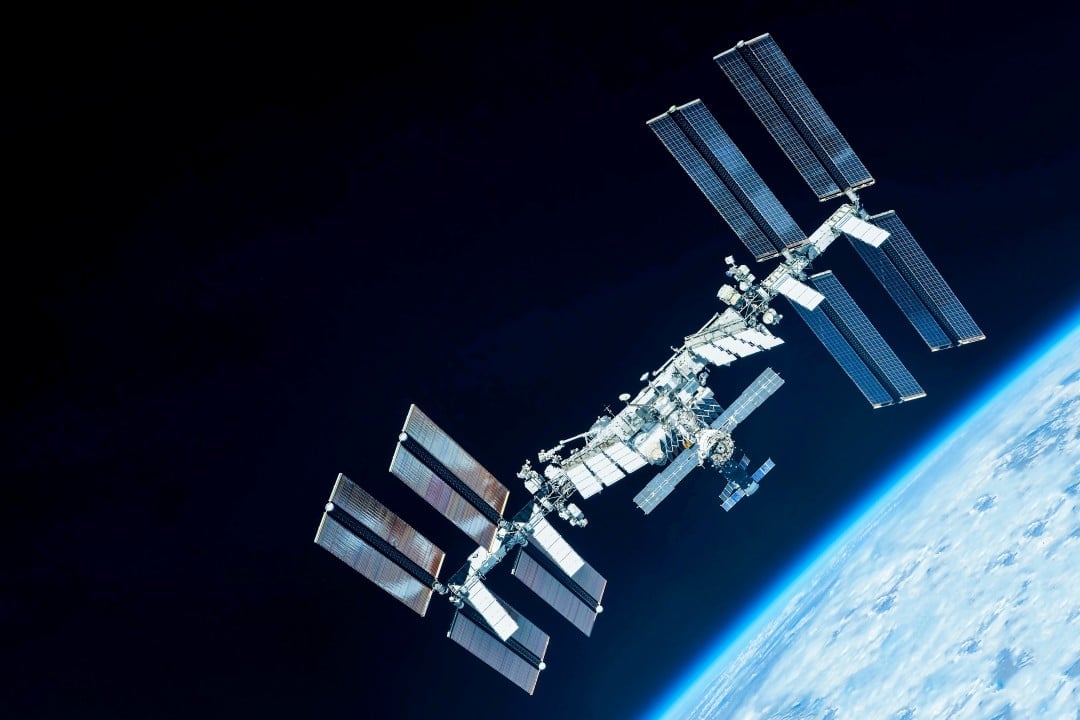
The European Space Agency gathers scientists and mission delegates at the European Space Operations Centre in Darmstadt, Germany, on 15 September 2026 for the joint orbital deployment of the FLEX and Copernicus Sentinel-3C spacecraft. Both Earth observation satellites take off together on a Vega-C rocket designated flight VV30 from Europe’s Spaceport in French Guiana at 03:21 CEST.
Liftoff occurs in French Guiana.
Flight schedule and operations center agenda
Following the nocturnal blastoff from South America, agency officials and partner organizations assemble in Room H 05 at the press facilities on Robert-Bosch-Strasse 5. The morning gathering features a comprehensive review of the ascent alongside real-time orbital updates transmitted directly from surrounding flight control rooms. Program organizers structured the timetable around mission milestones:
- 09:00 CEST: Security check-in and preliminary exchanges in Room H 05
- 10:00 CEST: Official opening address by Rolf Densing, Director of Operations and Head of the ESOC Establishment
- 10:10 CEST: Dual-satellite project briefing led by Dominique Gillieron, Head of the Earth Observation Projects Department
- 10:20 CEST: Scientific mission objectives delivered by Thorsten Fehr, Head of the Earth Science Division
- 10:30 CEST: Observation services panel featuring representatives from ESA, the European Commission, EUMETSAT, and Thales Alenia Space
- 10:45 CEST: Early orbital phase operations report presented by flight directors Franco Marchese and Elia Maestroni
- 10:55 CEST: European rocket transport capabilities review led by Vega E Project Manager Nicola Ierardo
- 11:00 CEST: Launch transmission replay covering primary flight highlights from French Guiana
- 11:15 CEST: Guided access to the Main Control Room according to operational availability
- 12:00 CEST: Individual interview sessions and meal service across Room H 05 and backup Room H 101
- 13:00 CEST: Delegated technical transfer to EUMETSAT headquarters in Darmstadt
- 14:00 CEST: Formal closure of the operations center facilities to outside visitors
The technical panel at 10:30 CEST convenes FLEX Mission Manager Timon Hummel, European Commission Policy Officer Attilio Gambardela from DG DEFIS, User Support Manager Hayley Evers-King from EUMETSAT, and Projects Director Philippe Pelouas from Thales Alenia Space. Discussions evaluate how enhanced orbital imaging will assist institutional users across Europe and worldwide.
Registration closed on 11 September 2026.
Presentations and early orbit tracking by flight teams
Flight controllers Franco Marchese and Elia Maestroni deliver initial operational findings during the critical launch and early orbit phase at 10:45 CEST. Their assessment tracks spacecraft stabilization, solar array deployment, and preliminary communications link health across tracking stations. These steps ensure both platforms maintain safe orbital trajectories before instruments begin full calibration.
Nicola Ierardo follows with details on European launcher autonomy and Vega-C operational reliability. The transport address examines payload capacity improvements and the technical parameters of the VV30 flight trajectory.
Visitors who tour the Main Control Room at 11:15 CEST observe active telemetry monitoring consoles while spacecraft teams maintain round-the-clock shift oversight. Flight engineers in Darmstadt oversee trajectory corrections and sensor activations immediately after separation from the Vega-C upper stage. Institutional spokespersons from DG DEFIS and industrial suppliers participate in targeted background exchanges across designated briefing rooms until midday. The facility closes all access at 14:00 CEST once media activities conclude.
Operations teams track the hardware continuously.
Satellite capabilities for biosphere and ocean monitoring
FLEX represents the latest Earth Explorer mission developed under agency leadership, standing as the first spacecraft engineered specifically to record photosynthetic activity across global vegetation from space. Equipped with the specialized Fluorescence Imaging Spectrometer, the FLEX spacecraft detects the faint glow emitted by vegetation during photosynthesis, giving scientists unprecedented measurements of global plant health, agricultural productivity, and the specific ways terrestrial biospheres respond to severe environmental stress. These observations allow researchers to assess physiological changes in crops before visible damage appears.
Copernicus Sentinel-3C serves as the third dedicated unit in its operational series to collect continuous environmental records over oceans, ice formations, land masses, and the atmosphere. The orbiter delivers marine forecasting data, tracks atmospheric shifts, and maps surface topography to support climate governance under the European Union Copernicus program.
ESA handles the manufacturing and initial procurement of Sentinel platforms, whereas EUMETSAT directs day-to-day orbital operations and delivers observation data to global user communities. An optional technical tour between 13:00 CEST and 14:00 CEST allows registered specialists to inspect the nearby EUMETSAT control infrastructure that assumes operational custody of Sentinel-3C during its multi-year routine phase. This distribution mechanism channels marine temperature measurements, sea surface topography files, and land cover indices into worldwide meteorological networks. The combined data streams from both craft supply forecasting models with daily surface observations.
Organizational structure and international cooperation
ESA was founded in 1975.
The organization includes 23 Member States: Austria, Belgium, the Czech Republic, Denmark, Estonia, Finland, France, Germany, Greece, Hungary, Ireland, Italy, Luxembourg, the Netherlands, Norway, Poland, Portugal, Romania, Slovenia, Spain, Sweden, Switzerland, and the United Kingdom. Cyprus, Latvia, Lithuania, and Slovakia participate as Associate Members under formal agency agreements. Canada contributes directly to select research programs through an ongoing cooperation treaty.
Joint work with the European Commission encompasses the deployment of both the Galileo navigation network and the Copernicus Earth observation family. Member nations pool technical resources to undertake space projects that surpass the operational reach of any individual country.
Formal agency operations also involve bilateral partnerships with three European Union states that maintain specialized cooperation status.





