Hubble and Webb discover ancient icy worlds past Neptune

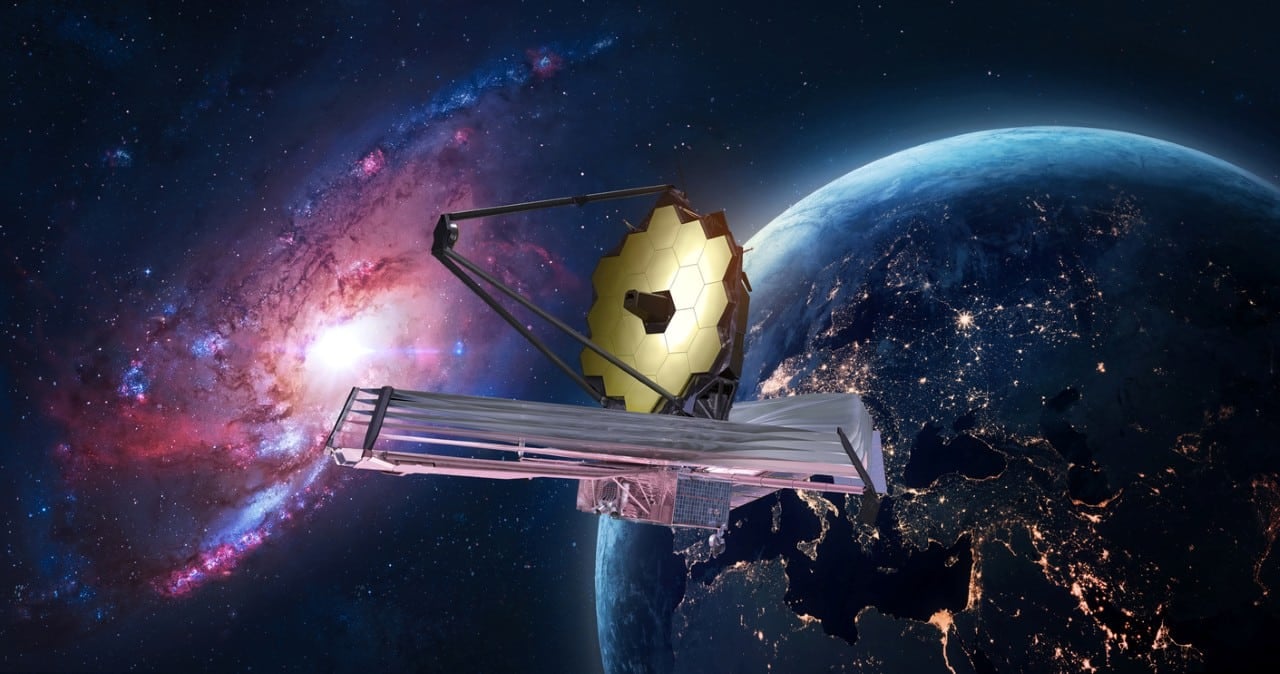
Astronomers tracked distant Trans-Neptunian Objects across the outer solar system by coordinating observations with NASA’s Hubble Space Telescope and James Webb Space Telescope. The survey detected fewer small bodies than planetary models suggested, while showing that their colors mirror those of larger counterparts.
These faint, frozen fragments orbit the Sun far past the path of Neptune. Most reflect so little sunlight that they appear 100 million times dimmer than objects visible without equipment. Two studies in The Astronomical Journal detailed the color, chemical composition, and size distribution of 27 newly spotted bodies.
These primitive relics preserve an early phase of planetary construction where dust and pebbles formed city-sized planetesimals that never merged into worlds.
Research teams led by doctoral candidates from the University of Victoria under the National Research Council of Canada and Northern Arizona University surveyed a patch of sky simultaneously with Hubble in visible light and Webb in infrared to measure the orbits, sizes, and chemical color fingerprints of the distant objects. The work represents the deepest survey of its kind to date.
Investigators separated the targets into two distinct groups. Dynamically cold objects retain nearly circular paths in the plane of the solar system. Dynamically hot objects formed between Uranus and Neptune before early planetary migrations scattered them into tilted, oval orbits.
Astronomers previously expected frequent collisions to alter the surfaces of small bodies in both groups. The data contradicted that scenario. The smaller objects share the colors of their larger relatives. Researchers continue testing whether collisions occur less frequently or if the surfaces withstand fragmenting impacts.
“You could imagine a scenario where getting knocked around and fragmented would change the surface composition, and then you would see a different surface color for tiny TNOs compared to their larger siblings. So it’s really fascinating to see that the smallest objects are somehow ‘remembering’ and preserving the history of how they were made,” said Northern Arizona University researcher Anastasia Morgan, who led the color analysis.
“These dynamically ‘hot’ TNOs retain a signature of where they were born, even though they’ve been orbitally scrambled since then,” said co-author David Trilling of Northern Arizona University.
Both groups keep the initial colors acquired during the formation of the solar system. Surface weathering has caused minimal alteration over billions of years.
Measurements gathered by Webb allowed scientists to catalog object sizes across both populations. The distributions aligned closely between the two groups. That consistency surprised the team.
“It’s very interesting that the process of planetesimal formation ends up producing the same distribution of sizes for both cold and hot populations, despite forming in different regions of the early solar system. The process seems to be insensitive to disk conditions, producing similar planetesimal sizes whether the disk is hot or cold, and dense or fluffy,” said University of Victoria researcher Marielle Eduardo, who led the size distribution study.
The total count of tiny fragments fell below predictions derived from planetary formation models. Webb uncovered 27 dim objects, including one with a brightness comparable to spotting fireflies on the Moon from Earth. The smallest body spans roughly 5 kilometers across, which is five times smaller than targets detectable by ground observatories.
Both observatories worked together.
Hubble has operated for more than three decades through an international partnership between NASA and ESA. The mission receives operational management from NASA’s Goddard Space Flight Center in Greenbelt, Maryland. Lockheed Martin Space supports mission control tasks in Denver. Science operations run through the Space Telescope Science Institute in Baltimore, managed by the Association of Universities for Research in Astronomy.
Webb operates as an international project led by NASA alongside ESA and the Canadian Space Agency. The observatory investigates planetary systems and deep cosmic structures. Teams continue using its instruments to analyze the outskirts of our planetary system.
Thiago Lemos é colaborador da redação do Mix Vale, portal de notícias com cobertura de Brasil e mundo. Produz conteúdo nas editorias de economia e benefícios, com foco em informação de serviço para o leitor brasileiro. Escreve para o portal desde 2020: Formação: Administração.