
NASA’s Parker Solar Probe sends signal after close flyby

The Parker Solar Probe completed its 29th close flyby of the Sun on September 4, 2026, matching its previous speed and distance benchmarks relative to the photosphere. Optical systems recorded solar structures and movements while the craft passed near the northern pole of the star.
On September 7, 2026, the spacecraft beamed a confirmation tone back to Earth confirming normal operations across all systems following nine days of planned autonomous navigation conducted entirely without contact from ground teams.
Moving at a top speed of 430,000 miles per hour just 3.8 million miles from the photosphere, the spacecraft sampled nearly 40 percent of the solar circumference in a single day as four instrument suites gathered observations directly inside the solar corona. The full encounter period extended from August 30 to September 9, 2026. Instruments collected data continuously.
Engineers scheduled detailed telemetry downloads for September 11, 2026, with scientific data transmissions slated to run from September 13 to September 27, 2026.
Measurements of the solar wind and coronal mass ejections assist in forecasting space weather events that threaten satellites, astronauts, aviation networks, and electrical power grids on Earth while enhancing safety margins for crewed flights bound for the Moon and Mars. Decoding the physics governing this hostile domain improves space weather forecasting accuracy beyond Earth’s protective atmosphere.
NASA launched the mission in August 2018 during the quiet minimum phase of the 11-year solar cycle. In 2024, NASA, the National Oceanic and Atmospheric Administration, and the international Solar Cycle Prediction Panel confirmed the solar cycle had reached solar maximum. The spacecraft will maintain round-the-clock monitoring as solar activity declines.
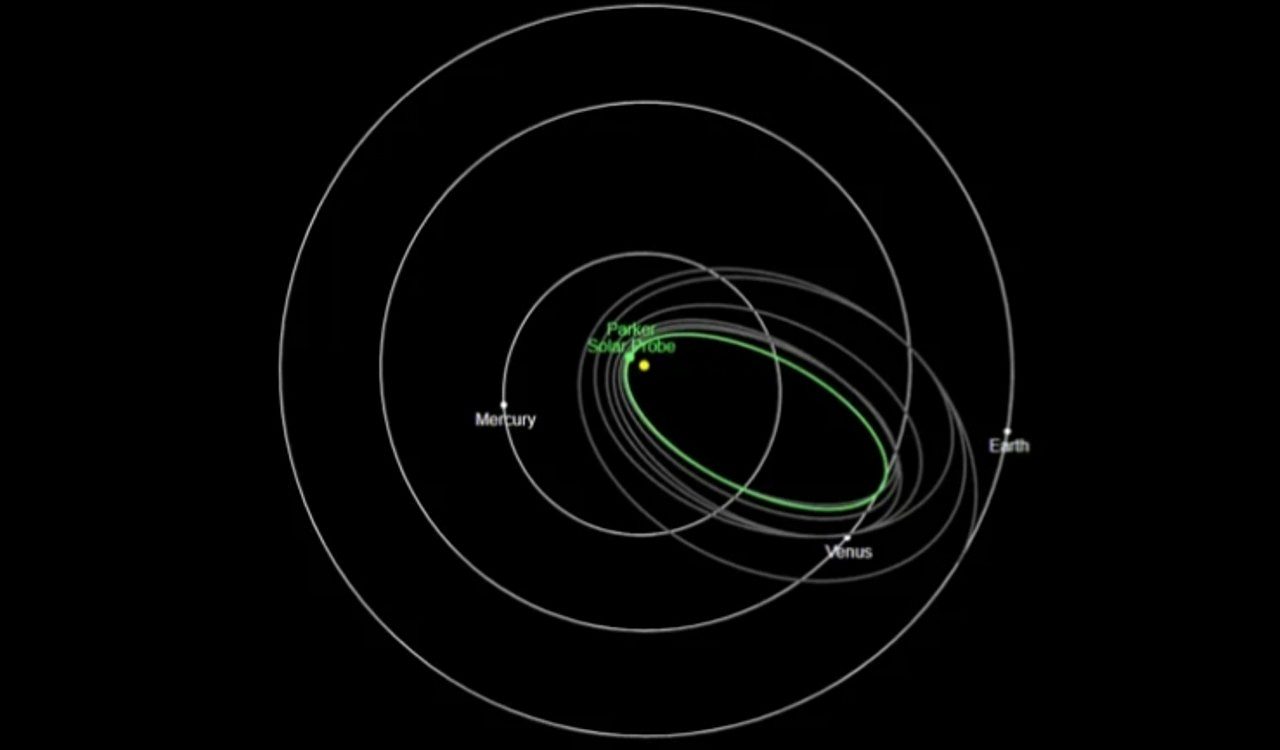
The inner solar system trajectory places the probe 3.8 million miles from the photosphere at peak speeds of 430,000 miles per hour, matching record benchmarks first set on December 24, 2024, and matched across seven close passes through September 4, 2026.
Operations will extend through 2029. This mission extension follows formal recommendations delivered by the 2026 Heliophysics Senior Review.
Developed under NASA’s Living With a Star program, the mission operates under the direction of Goddard Space Flight Center in Greenbelt, Maryland, with project management and construction handled by the Johns Hopkins Applied Physics Laboratory in Laurel.





