
Zodiacal light illuminates the eastern horizon before sunrise

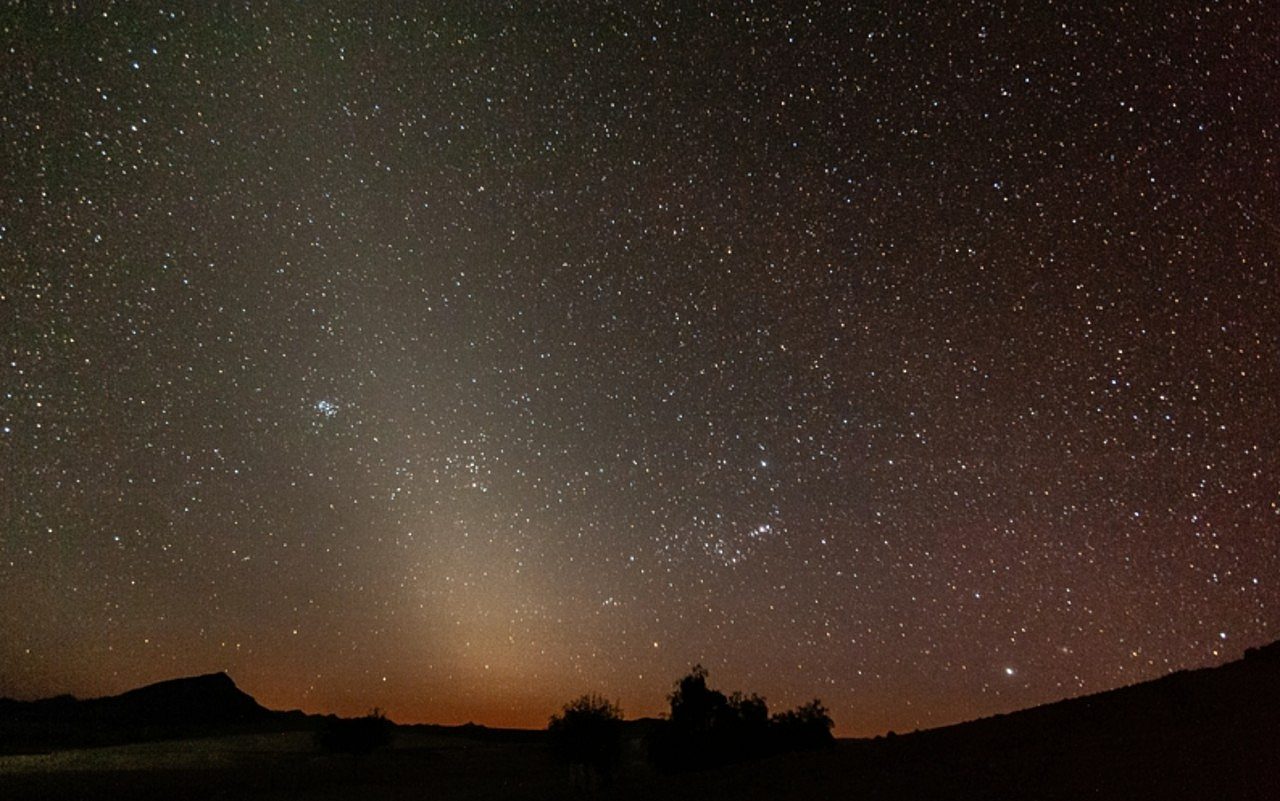
The zodiacal light reappeared across the eastern horizon before dawn in the Northern Hemisphere, marking the start of the seasonal viewing window for observers in dark rural areas. Skywatchers report the luminous pyramid rising ahead of sunrise.
The astronomical glow forms a luminous cone directly above the horizon point where the Sun rises or sets.
Astronomers identify the weeks surrounding the September and March equinoxes as the prime observation periods across both hemispheres. Dark skies without lunar interference remain necessary to detect the faint glow.
Observers must bypass the glare from the full moons scheduled on September 26 and October 25 to secure optimal visibility.
Pyramids of dust scatter sunlight across early morning horizons
The celestial formation appears as a distinct cone rising over the horizon line before dawn or after twilight fades into evening. Stargazers observe the beam extending upward from where the Sun sits below the landscape.
Observers in the Northern Hemisphere can now track the false dawn toward the eastern sunrise point across cloudless countryside horizons during early morning hours.
Viewers situated across the Southern Hemisphere must direct their gaze toward the western sky after twilight ends to catch the false dusk. Rural skies offer clearer views.
The interplanetary formation mirrors the brightness of the Milky Way without showing the reddish atmospheric tints typical of terrestrial dawns.
A completely dark sky provides the clearest vantage point for tracking the illumination across the eastern horizon. Skywatchers occasionally sight a thin crescent Moon framing the broad pyramid.

Steep angles along the ecliptic enhance celestial visibility
The phenomenon reaches peak visibility near equinox periods because the ecliptic plane carrying the Sun, Moon, and planetary orbits meets Earth’s horizon at its steepest geometry.
Tropical latitudes across Earth permit year-round viewing because the solar path maintains a consistently sharp incline toward the horizon. This alignment keeps the light concentrated high above local ground obstructions.
Skywatchers across the southern United States and parts of Canada regularly document the glowing column whenever artificial lighting remains absent.
Urban light pollution completely obscures the delicate glow from populated metropolitan areas. Observers travel far outside city limits across Canada to escape artificial glare.
Seasonal schedules determine optimal viewing windows
Autumn mornings provide the premier viewing window for dawn sightings across Earth, while spring evenings offer the best post-sunset visibility.
Equinox transitions across Earth dictate the directional orientation of the beam depending on geographic latitude. Observers track eastern skies during autumn and shift westward when spring arrives.
The seasonal calendar operates inversely between the Northern Hemisphere and the Southern Hemisphere.
Northern skywatchers monitor the eastern dawn from late August through early November. The viewing window reopens in late February and runs through early May for evening watchers.
Observers across the Southern Hemisphere must reverse this timetable by scanning western skies after dusk between August and November.
Southern viewers shift their attention to pre-dawn skies from late February until early May to catch the morning beam. These calendar shifts align directly with orbital dynamics.
Early scientific theories incorrectly categorized the luminous phenomenon as a meteorological event taking place inside the upper atmosphere of Earth.
Subsequent research showed that the illumination arises from sunlight bouncing off cosmic debris orbiting inside the inner solar system. Scientists long assumed the particles were debris left behind during the creation of our solar system 4.5 billion years ago.
Recent planetary observations revealed that intense global storms across Mars loft mineral particles with sufficient velocity to escape the planet’s gravitational grip, spreading reflective grains across the orbital plane where sunlight strikes them to produce the luminous cones visible from ground stations.
Martian dust clouds create faint counterglow in deep space
These interplanetary grains range in dimension from microscopic specks to meter-wide fragments orbiting the Sun. The same dusty disk also produces the gegenschein, a subtle patch of reflected light located directly opposite the antisolar point.
Spotting the gegenschein requires exceptional sky darkness because its faint counterglow lacks the distinct brightness of the primary zodiacal beam.
Sunlight reflecting off interplanetary dust particles inside the solar system produces the triangular glow visible under dark rural conditions. Observers across the Northern Hemisphere must complete their pre-dawn sightings before November ends.





