
3I/ATLAS reveals interstellar trajectory from September 11 data

Astronomers evaluated new orbital coordinates for interstellar comet 3I/ATLAS on September 11, 2026, to determine the object’s origin outside the Solar System. The research team focused their measurements directly on the approach vector of the celestial body.
Calculations reveal trajectory of the visitor beyond the Solar System
Astronomical readings showed an unusual velocity during the passage of comet 3I/ATLAS. Sensors registered this high speed across orbital monitoring stations. The velocity confirmed the open escape path.
More on this story: 3I/ATLAS reveals origin path in new September 11 cosmic data
Physical structure of comet 3I/ATLAS preserves ancient stellar material
The interstellar designation places comet 3I/ATLAS in a select group of foreign celestial bodies identified crossing planetary space. The physical structure of the object retains original compounds formed within its native stellar home.
Core parameters documented across the orbital tracking operation
- Hyperbolic orbit confirmation registered for interstellar comet 3I/ATLAS
- Orbital parameter collection logged on September 11, 2026
- Physical composition classification confirmed as an interstellar object
Ground observatories tracked the visitor as it crossed the orbits of inner planets at high speeds that cannot be matched by the gravitational pull of the Sun, while field teams calculated every deviation caused by nearby planetary bodies. The movement required active surveillance across observation networks. Astronomers track the path.
Scheduled sensor readings follow comet 3I/ATLAS toward deep space
Telescopes record the angular positions of interstellar object 3I/ATLAS throughout its outward transit. These instruments will maintain detection until the traveler completely leaves the range of optical devices.
More news in Latest News (EN)
See more → João Pedro scores to level 2-2 for Chelsea in Premier League
 Norris takes historic Spanish GP pole as Bortoleto grabs 12th
 Apple unveils iPhone 18 Pro to replace aging iPhone 15 ProFrench authorities probe potential sabotage in passenger train derailment near Rouen, injuring dozens
 Pacific El Niño warms waters by 2 degrees before 2027 winterTooro kingdom mourns King Oyo as news anchor Edward Kijanangoma assumes royal mantle in UgandaNepali hydropower tunnel collapse traps six; air pocket discovery sparks hope amid arduous rescue efforts
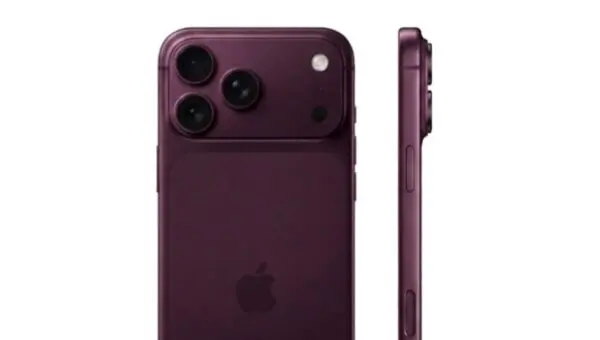 T-Mobile sets $5 monthly fee for one number on two iPhones
 Moacir Rosa defends 20-hour fasting method for weight loss
 Daniel Magnoni warns shoyu packs 900 mg of sodium in one spoon
 Inca projects 17,000 new cervical cancer cases across Brazil
 Bromidrosis signals diabetes and renal failure in patients
More news on Mix Vale
- 17 daily habits slow aging and cut Alzheimer risk in adults
- 2USP links 500 ml of daily orange juice to lower blood sugar
- 3Lucas Jaques de Oliveira lists 6 illnesses linked to pigeons
- 4Ryan Reynolds’ ‘brutal’ 1980s view sparks debate with Dr. Drew Pinsky on era’s true nature
- 5T-Mobile unleashes unprecedented iPhone 18 Pro and Pro Max deals for new and loyal customers starting September 12th
- 6El-Sayed advocates for youth gender-affirming care amid scrutiny of his medical licensing
- 7SBEM fixes daily water intake at 35 ml per kilogram in 2026
- 8Katie Holmes dates contemporary artist Jason Bard Yarmosky
- 9Brazil records 87,518 stroke deaths as doctors urge fast care
- 10Covitel records a 90% surge in obesity among youth in Brazil