
Redmi 17 5G arrives with 7,500 mAh cell at $249 global price
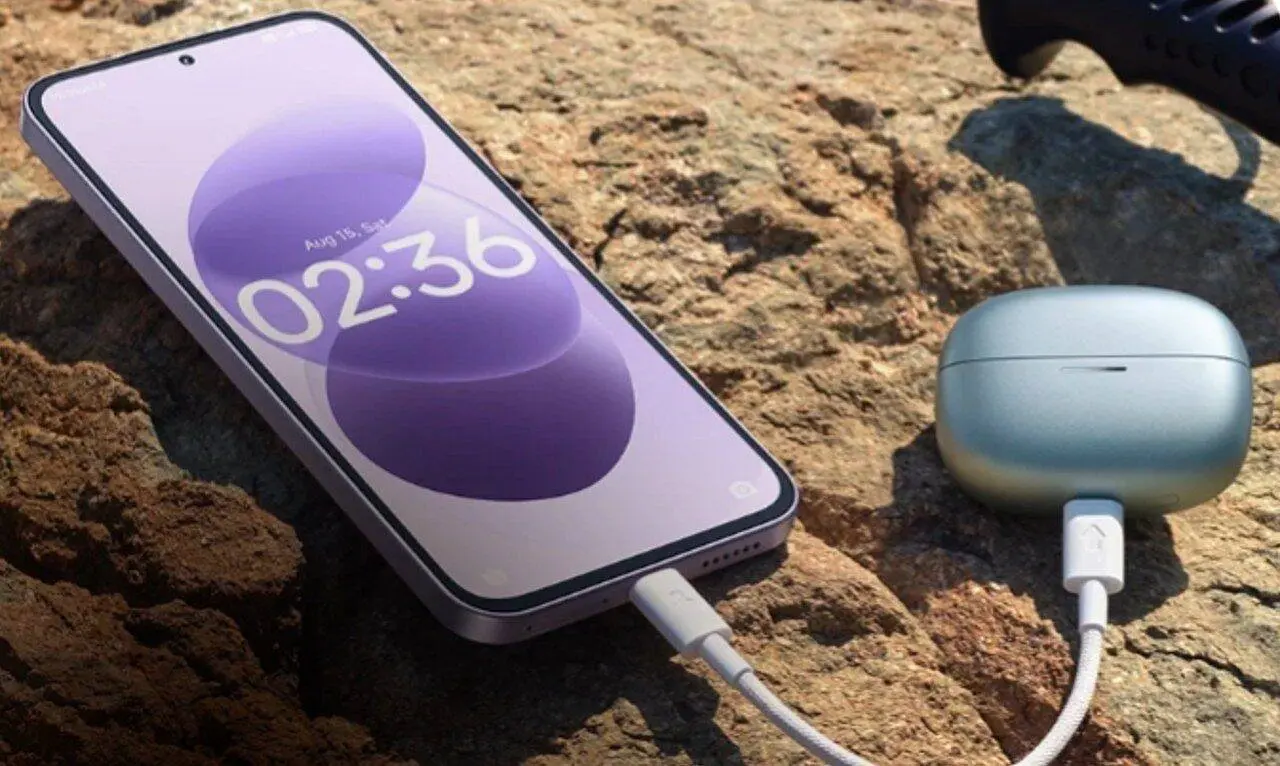
Xiaomi released the Redmi 17 5G across international markets equipped with a 7,500 mAh power cell. This storage capacity exceeds the conventional 5,000 mAh threshold standard for entry-tier smartphones.
The manufacturer unveiled the device alongside the Redmi 17 4G during the same presentation. Both phones share the primary structural architecture across their hardware builds. The 4G alternative swaps the cellular connectivity, the central processor, and the internal storage standard.
These releases follow the Redmi 15 series that arrived on retail shelves in August 2025 with an opening distribution focused on Asian countries. Prioritizing extended runtimes provides competitive separation in a market segment where performance increases remain narrow.
Wired charging setup fills the battery in 96 minutes
A 45 W wired system restores the accumulator to full power within 96 minutes. Plugging the phone into an outlet for 35 minutes supplies sufficient energy to sustain a complete day of routine operation. This power delivery keeps the oversized battery functional for continuous mobile use.
Factory performance metrics list 109 hours of audio playback, 28 hours of video streaming, and 10 hours of uninterrupted media capture. The handset also supplies reverse charging at 22.5 W to power accessories such as smartwatches and wireless earbuds.
Xiaomi documented long-term energy durability benchmarks inside the official technical manual of the phone. The publication outlines specific charge retention expectations over multiple years. The brand confirmed this metric.
“After 1,000 full charging cycles, the battery maintains at least 80% of its capacity,” the manufacturer stated. This longevity rating guarantees that the battery resists operational degradation through sustained daily recharging.
Physical capacity expanded by 500 mAh when compared directly to the specifications of the previous model. Conventional wired replenishment accelerated from 33 W to 45 W on the new release. Reverse power transmission also climbed from 18 W to 22.5 W.
More on this story: Apple unveils iPhone 18 Pro to replace aging iPhone 15 Pro
Hardware modifications introduced across the display assembly to trim expenses
The visual assembly exhibits the most noticeable adjustments relative to the product catalog launched in 2025. The company reduced the graphical properties of the 6.9-inch LCD panel by lowering its resolution to 1600 x 720 pixels, trimming the refresh rate from 144 Hz to 120 Hz, and dialing back the touch response rate from 288 Hz to 240 Hz to lower production costs.
Peak screen illumination reaches 825 nits in high brightness mode, matching close to the 850 nits measured on the earlier unit. The outer glass consists of Corning Gorilla Glass 7i paired with IP64 protection against water spray. Wet Touch engineering allows accurate input recognition when moisture coats the surface.
- Processor: Snapdragon 4 Gen 5 in the 5G model and MediaTek Helio G91 Ultra in the 4G variant
- Display: 6.9-inch LCD with 1600 x 720 pixels and 120 Hz refresh rate across both options
- RAM: 4 GB or 6 GB configurations using LPDDR4X technology on both units
- Storage: 128 GB or 256 GB UFS 2.2 on the 5G phone and eMMC 5.1 on the 4G alternative
- Battery: 7,500 mAh capacity featuring 45 W wired charging and 22.5 W reverse delivery for both phones
- Cameras: 50 MP primary rear sensor alongside an 8 MP front shooter on each version
- Colorways: Black, Deep Blue, and Vibrant Orange for 5G; Black, Deep Blue, Oak Green, and Lotus Purple for 4G
The contrasting internal storage standards produce noticeable variance in everyday operating speeds across both units. Memory bus speeds directly govern application responsiveness and file handling.
The UFS 2.2 read speeds on the 5G edition significantly outpace the slower eMMC 5.1 storage installed in the 4G version. These throughput gains reduce program startup delays across daily software routines. Game data installation and asset saving also finish faster under the newer storage protocol.
Technical shifts distinguish the new hardware from the previous generation
- Battery: 7,500 mAh on the new release compared to 7,000 mAh on the predecessor
- Charging: 45 W wired and 22.5 W reverse transfer on the current model against 33 W and 18 W previously
- Screen resolution: HD+ at 1600 x 720 pixels on the 17 5G versus Full HD+ at 2340 x 1080 pixels on the 15 5G
- Refresh rate: 120 Hz on the newer device compared to 144 Hz on the 2025 variant
- Processor: Snapdragon 4 Gen 5 inside the latest phone and Snapdragon 6s Gen 3 in the prior generation
- Storage: capacity reaching 256 GB over UFS 2.2 maintained across both product iterations
Qualcomm positions the Snapdragon 4 tier below the Snapdragon 6s family in its silicon hierarchy. The newer Snapdragon 4 Gen 5 utilizes a 4-nanometer node that delivers improved electrical efficiency over the older 6-nanometer manufacturing process, though independent benchmarks have not compared the two chips directly.
Read also: Snapdragon 8 Elite Gen 6 Pro leak on AnTuTu anticipates revolution in cell phones
Selecting a lower-resolution panel reduces the processing demands placed on the integrated graphics core. This reduction in load directly preserves stored power during sustained operating sessions. Battery endurance extends further as fewer display pixels demand active backlight power.
Spreading fewer pixels across an expansive 6.9-inch screen area reduces overall visual sharpness. Users register a softer image profile when reading small typography or viewing high-resolution video streams.
Global pricing tiers emerge without a confirmed release in Brazil
The base 5G model carries a retail price of $249 for the configuration pairing 4 GB of RAM with 128 GB of internal storage. The product lineup includes additional SKUs offering 4 GB of RAM with 256 GB of space, as well as 6 GB RAM models paired with 128 GB or 256 GB drives. The 4G variant enters stores at an opening price of $179.
Retail outlets in Malaysia list the 5G version at MYR 769, while the 4G model retails at MYR 669. These regional shelf prices translate to roughly $188 and $163 respectively at current foreign exchange conversions.
Learn more: Xiaomi 18 Pro Max benchmark reveals Snapdragon 8 Elite Gen 6
- Redmi 17 5G with 4 GB and 128 GB: $249 globally, converting to approximately R$ 1,267
- Redmi 17 4G with 4 GB and 128 GB: $179 globally, converting to approximately R$ 911
- Redmi 17 5G in Malaysia: MYR 769, equivalent to roughly $188 and R$ 957
- Redmi 17 4G in Malaysia: MYR 669, equivalent to roughly $163 and R$ 830
These financial conversions apply the commercial exchange rate recorded on August 10, 2026, when the currency traded at R$ 5.09. The baseline currency conversions do not incorporate local import tariffs or shipping fees applicable to consumer goods. Final import rates routinely adjust these figures upward at regional distribution hubs.
Domestic tax policies frequently double the retail expense of imported entry-level mobile devices upon clearance. Statutory fees compound across federal and state levels before merchandise reaches commercial outlets.
Extended operating system support covers four years of software updates
Both variants ship from the assembly plant running HyperOS 3 built on top of Android 16. The manufacturer committed to delivering sustained operating system fluidity for 48 consecutive months. This policy guarantees that software performance stays consistent throughout four years of continuous ownership.
The built-in software includes direct integration with Google’s Gemini artificial intelligence assistant. On the rear casing, a customizable RGB notification light ring offers eight distinct colors to signal incoming calls, battery alerts, and camera shutter events.
Retail timeline and competitive alternatives in the domestic market
Xiaomi has not published a launch schedule for introducing the Redmi 17 5G to retail stores in Brazil. Importers await official regulatory filings before establishing local availability. Regional distributors continue tracking inventory flow across Latin American channels.
Historical commercial patterns show the typical gap separating overseas debuts from Brazilian store arrivals. The Redmi Note 15 premiered in China in August 2025 before launching commercially in Brazil during January 2026.
On the same topic: Amazon and Qualcomm partner on AI chips for data centers
The preceding device remains stocked across storefronts and competes directly against the updated generation. American electronics retailers sell the Redmi 15 5G for $214, which undercuts the $249 price tag placed on the newer hardware. The outgoing smartphone continues to attract buyers who prioritize its sharper Full HD+ display panel.
Another in-house competitor is the POCO M8s 5G, which packages a 7,000 mAh battery and a 144 Hz Full HD+ screen for under $200. That alternative model provides consumers with higher display specifications at a lower entry cost.
More news in Latest News (EN)
See more → João Pedro scores to level 2-2 for Chelsea in Premier League
 Norris takes historic Spanish GP pole as Bortoleto grabs 12th
 Apple unveils iPhone 18 Pro to replace aging iPhone 15 ProFrench authorities probe potential sabotage in passenger train derailment near Rouen, injuring dozens
 Pacific El Niño warms waters by 2 degrees before 2027 winterTooro kingdom mourns King Oyo as news anchor Edward Kijanangoma assumes royal mantle in UgandaNepali hydropower tunnel collapse traps six; air pocket discovery sparks hope amid arduous rescue efforts
 T-Mobile sets $5 monthly fee for one number on two iPhones
 Moacir Rosa defends 20-hour fasting method for weight loss
More news on Mix Vale
- 1Daniel Magnoni warns shoyu packs 900 mg of sodium in one spoon
- 2Inca projects 17,000 new cervical cancer cases across Brazil
- 3Bromidrosis signals diabetes and renal failure in patients
- 47 daily habits slow aging and cut Alzheimer risk in adults
- 5USP links 500 ml of daily orange juice to lower blood sugar
- 6Lucas Jaques de Oliveira lists 6 illnesses linked to pigeons
- 7Ryan Reynolds’ ‘brutal’ 1980s view sparks debate with Dr. Drew Pinsky on era’s true nature
- 8T-Mobile unleashes unprecedented iPhone 18 Pro and Pro Max deals for new and loyal customers starting September 12th
- 9El-Sayed advocates for youth gender-affirming care amid scrutiny of his medical licensing
- 10SBEM fixes daily water intake at 35 ml per kilogram in 2026