Fossil jaw reveals tiny herbivorous dinosaur species in Texas
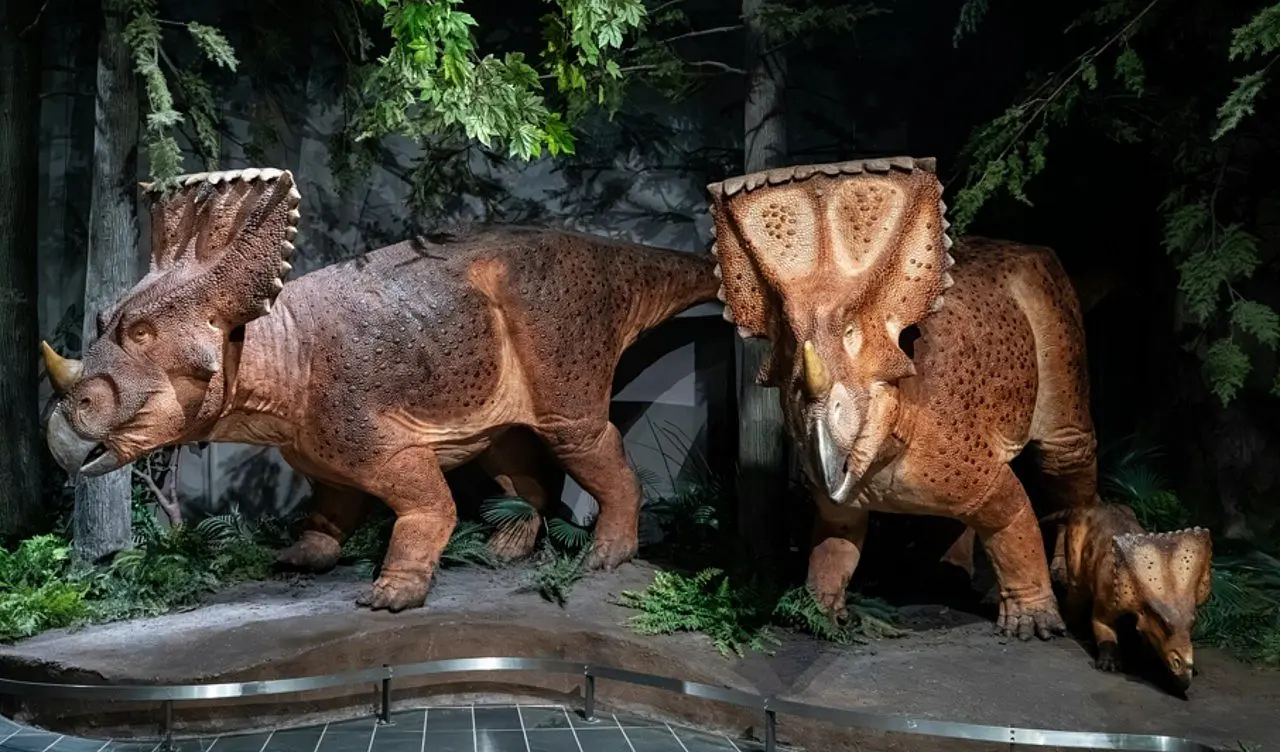
Paleontologists identified a new genus and species of small ornithopod dinosaur from a partial jawbone recovered in Texas, United States, according to research released on 13 October 2023. Researchers assigned the scientific name Ampelognathus coheni to the animal.
The reptile lived along the edges of a shallow seaway that split North America approximately 96 million years ago during the mid-Cretaceous period.
“The mid-Cretaceous was a time of major change in the terrestrial ecosystems of North America,” stated paleontologist Christopher Noto from the University of Wisconsin-Parkside. Noto co-authored the scientific study.

Noto explained that vertebrate groups originating in Asia crossed the newly established Beringian land connection to enter the North American fossil record at the same time flowering plants spread across land environments while previously diverse endemic lineages declined or vanished.
The expansion of the Western Interior Seaway during the Cenomanian between 100.5 and 93.9 million years ago divided the continent into Appalachia to the east and Laramidia to the west. This geographic division spurred independent evolutionary paths on both landmasses until marine waters receded in the Maastrichtian between 72.1 and 66 million years ago.
Taxonomists placed Ampelognathus coheni within Ornithopoda as a sister taxon to the clade uniting Thescelosaurus and Iguanodontia.
Workers collected the nearly complete left dentary bone from exposures of the Lewisville Formation within the Woodbine Group. The fossil was found at the Grapevine Lake emergency spillway in northern Tarrant County, Texas.
Geologists documented that the Woodbine Group rocks in northeast Texas accumulated along the southwestern coastline of Appalachia in marine, paralic, deltaic, and fluvial settings during an early to middle Cenomanian sea regression.
“The Lewisville Formation preserves the most diverse terrestrial fossil assemblage known from Appalachia,” the authors noted in their assessment. Prior to this recovery, paleontologists had located no physical remains of small-bodied ornithischian dinosaurs in the formation.
Ampelognathus coheni constitutes the initial small ornithopod dinosaur recognized from the Lewisville Formation.
“The significance of this discovery is that it provides a previously missing, but expected, component of this ancient fauna,” Noto stated. The specimen verified long-standing ecological models.
“Naming a new species is always exciting because it represents a new data point for science,” the researcher said.
“Ampelognathus coheni is significant because it represents the first small herbivore found in the Woodbine Group,” the scientist remarked. The discovery clarifies vacant trophic roles.
“Up until now, we had very few herbivores known, only one of which was a dinosaur, which was a bit of a mystery,” Noto said.
“This specimen helps fill this gap and expands our understanding of the structure of the terrestrial community at Woodbine over 95 million years ago,” the paleontologist added. The evidence outlines the ancient food web.
The formal description of the dinosaur appeared on 13 October 2023 in the Journal of Vertebrate Paleontology.
Paleontologist Ronald S. Tykoski served as lead author on the paper describing the specimen. The scientific publication carries the digital object identifier 10.1080/02724634.2023.2257238.