
Comet 3I/ATLAS reveals extreme 30 Kelvin birth in deep space

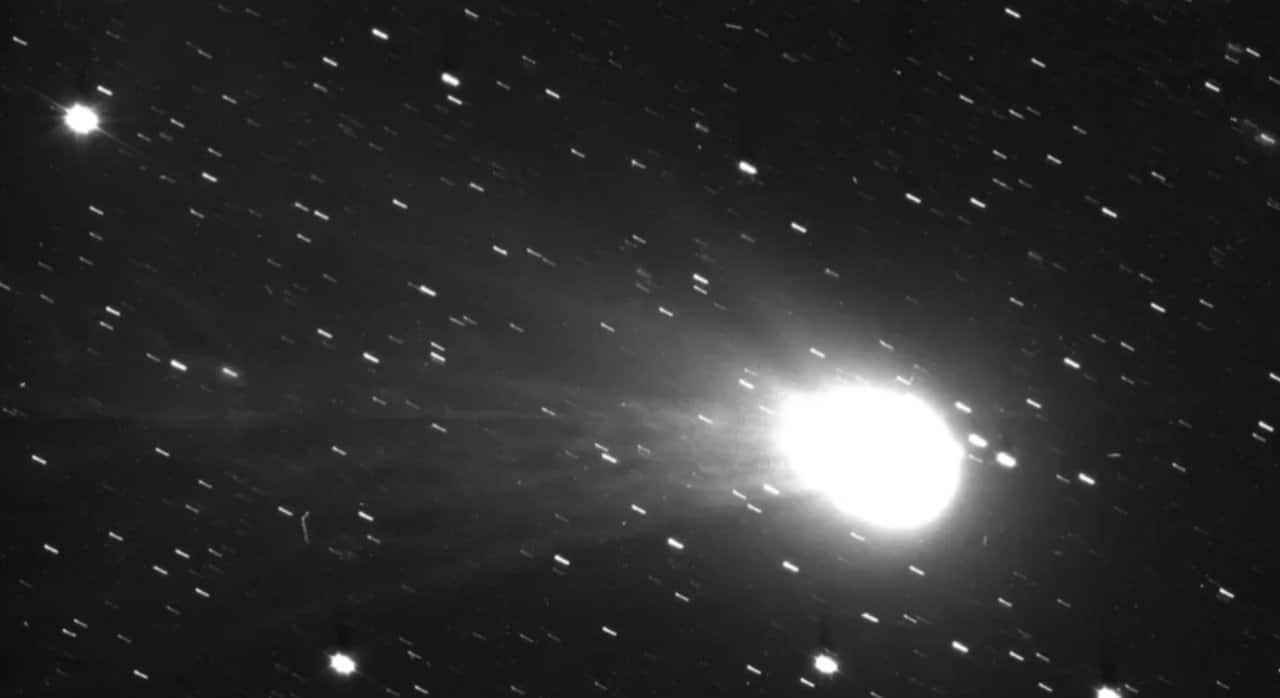
Interstellar comet 3I/ATLAS formed in extreme cold environments beyond the Solar System before embarking on an uncontrolled cosmic passage, according to research released in the Monthly Notices of the Royal Astronomical Society. Astronomical instruments logged this body as the third verified interloper originating outside the gravitational domain of the Sun. Spectroscopic readings obtained by terrestrial facilities captured volatile molecules that survived intact since the birth of the object in an alien stellar environment.
Harsh conditions preserved the original elements. The pristine core remained frozen.
Spectroscopic data tracks chemical formation below 30 Kelvin
Chemical evaluation of the coma surrounding 3I/ATLAS revealed substantial fractions of carbon monoxide and volatile compounds that condense into solid form exclusively below 30 Kelvin, a thermal range found along the outermost perimeters of distant protoplanetary nurseries. Scientists determined that the icy nucleus avoided stellar radiation inside its birth environment throughout the agglomeration period, shielding volatile gases before severe dynamical disruptions tossed the debris into galactic space. This volatile footprint contrasts sharply with comet nuclei that assemble within warmer inner sectors of protoplanetary disks. Subzero temperatures halted thermal alterations that could compromise primordial chemistry.
Relative abundances of simple gases functioned as an interstellar thermometer. Ground arrays documented sublimation behavior as the Sun heated outer surfaces.
Carbon monoxide molecules convert directly into gas much faster than ordinary water ice at identical solar distances. This physical mechanism generated an expansive particle cloud around 3I/ATLAS well before its trajectory approached perihelion. Specialized observatories separated this incoming radiance into specific wavelengths to register the underlying chemical elements.
Trajectory measurements confirm non-solar origin for the comet
The excessive travel velocity recorded for 3I/ATLAS far surpassed the capture thresholds enforced by the solar gravitational field. This hyperbolic velocity ruled out any closed orbit around the central star.
Mathematical calculations established an orbital eccentricity comfortably higher than 1, proving that the wanderer never belonged to local reservoirs such as the Kuiper Belt or the Oort Cloud. The nucleus travels across an open trajectory that intersects the ecliptic plane at an acute incline, precluding any eventual return once escape velocity carries it outward. Astrodynamics researchers compared real-time positional data with archives from the ATLAS monitoring project that flagged the incoming body. Solar tides caused minimal deflection.
Residual speed measured at infinity reaches dozens of kilometers per second. This remarkable kinetic reserve proves the extrasolar heritage of the icy traveler.
Typical comets from our planetary neighborhood complete closed elliptical paths characterized by eccentricity values beneath 1. For 3I/ATLAS, the gravitational pull of the Sun acted merely as a transient deflection mark along an extensive journey through interstellar territory. Telescopes globally logged the swift motion of the traveler as it traversed several prominent celestial constellations.
Core volatility separates the visitor from known cometary bodies
Examinations show that 3I/ATLAS exhibits a carbon-to-oxygen ratio that diverges from compositions found in primitive Solar System matter. Planetary scientists tracked these molecular ratios to trace the parent system.
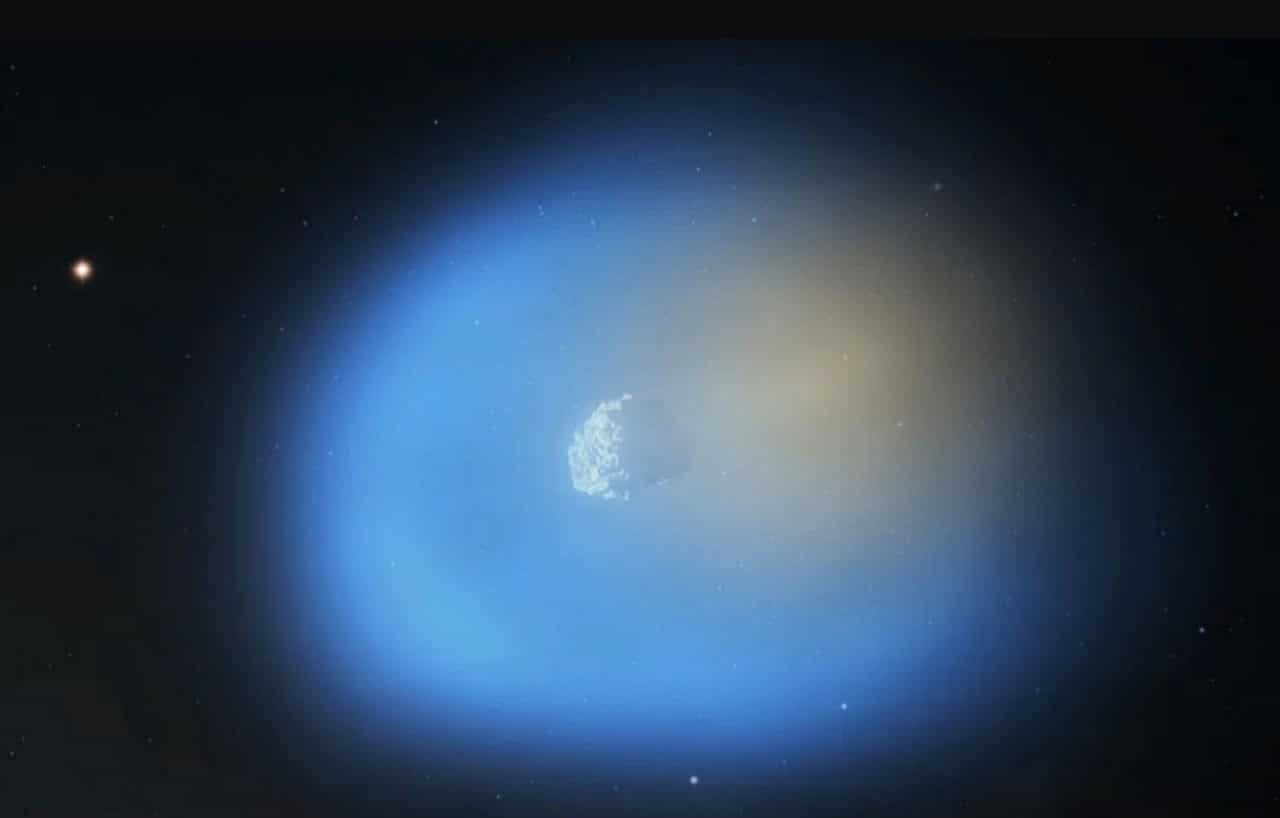
Native comets like Halley and 67P/Churyumov-Gerasimenko feature solid water ice as their leading volatile, whereas this interstellar guest holds disproportionate volumes of hyper-frozen volatiles. Research details published in the Monthly Notices of the Royal Astronomical Society point out that this specific chemical makeup mirrors the initial cloud environment that produced the parent star system. Spectrometers measured clear cyanogen signatures that differ from typical Oort Cloud comets. The total absence of ancient heating protected these fragile materials within the interior strata of the nucleus.
The internal mixture avoided degradation over millions of light-years. High-energy cosmic rays penetrated solely through outer crustal layers without destabilizing the frozen core beneath.
Astronomers log three interstellar trespassers across recent years
Global observatories registered the first interstellar traveler in October 2017 with the designation 1I/Oumuamua, a prolonged object that showed an elongated shape without any active dust coma. Two years later, researchers identified 2I/Borisov in August 2019, which displayed standard cometary features fueled by water sublimation and volatile dust dispersion. The arrival of 3I/ATLAS enlarges this catalog to three foreign targets documented by modern equipment.
Each newly tracked interstellar traveler reveals distinct dynamics concerning remote star creation. Observational records continue to refine current models.
- The discovery of 1I/Oumuamua in October 2017 provided initial verification of interstellar debris crossing the Solar System.
- The identification of 2I/Borisov in August 2019 demonstrated that classic water sublimation occurs around other stars.
- The cataloging of 3I/ATLAS supplied structural evidence regarding extreme cold zones in distant stellar systems.
Debates surrounding 1I/Oumuamua focused on non-gravitational acceleration without visible emissions, while 2I/Borisov demonstrated familiar cometary behavior. The arrival of 3I/ATLAS broadens this cosmic survey by verifying that objects assembled at the coldest edges of exoplanetary discs can reach our sector of space. Data compiled in the Monthly Notices of the Royal Astronomical Society provide parameters that help scientists test numerical simulations of planetary migration. Deep-space observations continue to clarify the distribution of free-floating planetesimals.
Space-based observatories monitored the brightness of the visitor across varying phases of approach. Photometric observations assisted teams in narrowing down the approximate physical dimensions of the frozen nucleus.
Planetary chaos expels icy blocks into interstellar voids
Orbital mechanics indicate that gravitational three-body interactions between massive protoplanets and peripheral planetesimals accelerated these icy fragments beyond the host star’s escape velocity, dispersing primitive celestial matter across the vast expanses of the Milky Way over billions of years. Massive emerging planets routinely dislodge trillions of icy remnants into interstellar coordinates through chaotic migrations. Computational models indicate that the original circumstellar disk possessed adequate density to breed giant worlds while expelling leftover fragments into interstellar vacuum. Dynamic disruptions represent a common outcome during the early evolution of multi-planet systems.
The swift ejection preserved initial thermodynamic conditions. Thermal balance remained unchanged outside stellar radiation fields.
The galactic void maintains an ambient temperature close to 2.7 Kelvin, matching cosmic microwave background radiation. This intense cold suspended chemical reactions and defrosting cycles within 3I/ATLAS throughout its passage across interstellar space. Proximity to our Sun warmed the core, reigniting the sublimation of volatiles that had stayed dormant since the initial expulsion of the object.
Astronomical stations continue to chart the outgoing path of 3I/ATLAS before the comet passes beyond optical reach. Remote coordinates will soon conceal the visitor permanently.





