
NASA finds 5 vital organic elements on Saturn moon Enceladus

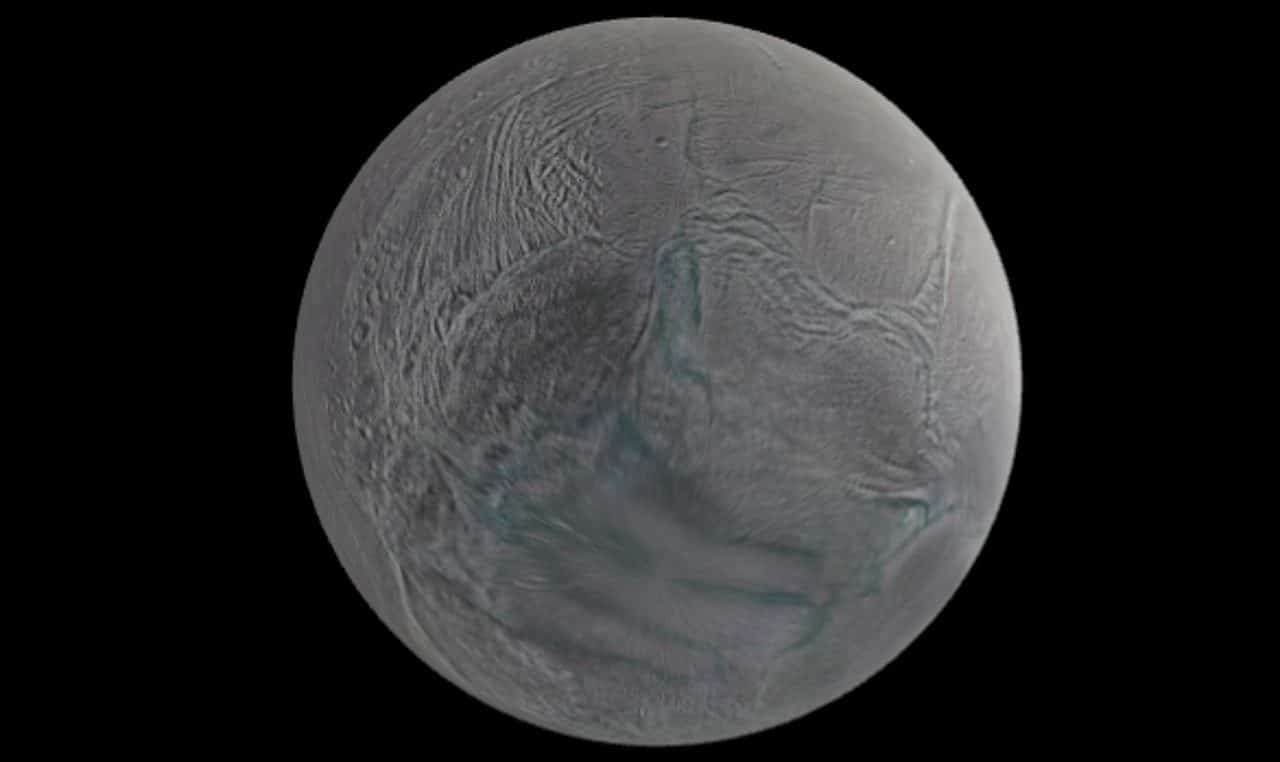
NASA researchers identified complex organic molecules on Saturn’s moon Enceladus in 2026, expanding the search for biological activity beyond Earth. Planetary scientists recorded the chemical compounds through direct orbital readings near the celestial body.
The observation marks a technical shift in outer solar system exploration by documenting structured carbon compounds at the outer satellite. These specific chemical networks provide the building blocks necessary to sustain extraterrestrial organisms in deep space. Astrobiologists now focus their target models on these active ocean plumes.
Detection of larger chemical chains within erupting geysers
Spectrometers recorded large molecular arrangements that match the fundamental structural materials found in terrestrial living matter. Earlier flybys detected simple organic groups, but recent analysis confirms the presence of significantly heavier molecular structures inside Enceladus.
Cryovolcanic fractures propel liquid fractions from the internal sea directly through the surface crust into space. The process enabled instruments to sample subterranean oceanic water without drilling through kilometers of outer ice. Spacecraft traversed these vapor jets to capture expelled ice grains.
Data verified by NASA confirm the simultaneous presence of carbon, hydrogen, nitrogen, oxygen, and phosphorus within the satellite’s subterranean reservoir, assembling the comprehensive elemental framework that planetary scientists classify as the essential chemical foundation for biological structures across the Solar System. The reservoir maintains all five foundational elements together.
- Carbon and hydrogen chains forming organic structures
- Dissolved phosphorus compounds necessary for cell membranes
- Nitrogen and oxygen molecules supporting precursor reactions
Subterranean marine dynamics powered by tidal friction
Enceladus preserves a global ocean layer nestled between its silicate core and a frozen shell. This hidden body of water makes the satellite a primary objective for space exploration agencies worldwide.
Submersible sensors previously mapped hydrothermal vents across Earth’s seabed that shelter entire ecosystems without direct sunlight. The moon’s ocean floor exhibits matching thermal vents that release warm mineral streams into the dark marine layer. Chemical energy drives these underwater environments entirely.
The heat comes from Saturn. Gravitational pull from the host planet creates tidal friction that prevents the sub-surface water from freezing solid.
Prebiotic synthesis in the deep extraterrestrial reservoir
Laboratory validations confirm that hydrothermal reactions generate constant chemical interactions beneath the crust. Mineral deposits mix continuously with dissolved gases inside the core interface.
The marine abyss supplies thermal currents and mineral nutrients that enable abiotic molecular synthesis on the moon. Researchers describe this environment as a natural incubator capable of supporting autonomous chemical evolution. The geochemical balance mirrors conditions recorded in early terrestrial history.
Methodological shifts in contemporary astrobiological searches
Recent chemical signatures altered the core operational criteria that agencies use to search for extraterrestrial biology. Flight planning formerly prioritized illuminated habitable zones around stars over distant ice-covered bodies.
Data gathered in 2026 show that volcanic heat and sub-surface seas maintain organic reactions far beyond traditional circumstellar boundaries. Upgraded spectrometers expanded detection accuracy for microscopic grains collected during high-speed orbital passes. These improved sensors quantify particle masses at higher resolution.
Planned exploration trajectories for future robotic flybys
Current molecular data provide strong chemical signatures without confirming active biological specimens inside the moon. Aerospace engineers design dedicated spacecraft to carry specialized collection hardware directly to Saturn.
New flight trajectories incorporate robotic probes engineered to skim low over the southern fractures and collect fresh vent exhaust. Other planned modules focus on soft touchdowns upon the outer ice shield. Ground stations evaluate data transmissions to track localized landing coordinates.





