
Nintendo adds 40 mechanical changes to Zelda Ocarina of Time

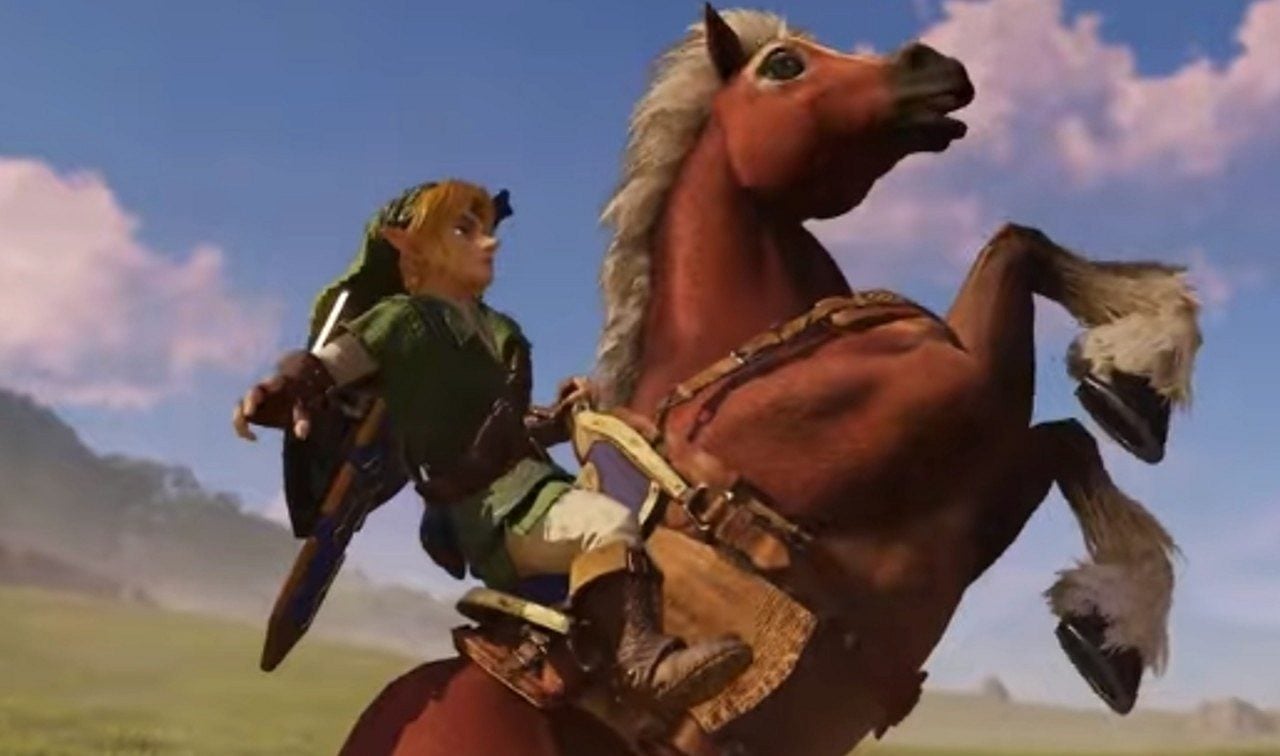
Nintendo broadcast a 20-minute gameplay presentation of The Legend of Zelda: Ocarina of Time for Nintendo Switch 2 during a 40th anniversary showcase on stream. Producer Eiji Aonuma demonstrated how developers rebuilt the Nintendo 64 foundation with contemporary control schemes and refined mechanical assets. Frame-by-frame inspections of the demonstration revealed 40 structural adjustments across the entire adventure.
Visual upgrades transform Kokiri Forest and character attire
Kokiri Forest introduces physical wooden staircases, dynamic foliage that sways with wind currents, and volumetric lighting that filters through canopy branches. Link wears a multi-layered tunic featuring tailored embroidery along the hemline, beaded decorative elements, and a distinct feather crest attached to his cap in both young and adult models.
Refined movement mechanics and interface overhaul
Exploration across early environments incorporates a dedicated jump action mapped directly to the X button, ending reliance on automated leaps over environmental gaps. Swimming mechanics now permit bursts of accelerated speed on command, while a vertical three-segment gauge beside Link replaces the legacy countdown timer for underwater breath limits. Players also navigate town buildings without interruption, as developers removed loading screens when entering local Kokiri Forest shops. Combat animations look visibly smoother.
The inventory interface displays clear item silhouettes across individual equipment slots to organize collected items such as the Deku stick. Outside the local market, the village now features a wooden combat training dummy alongside an open doorway that leads into an entirely new interior chamber.
Control adjustments streamline item usage and navigation
Producer Eiji Aonuma showcased how players can rotate the camera three hundred and sixty degrees around Link during real-time movement, which directly solves visibility constraints while navigating tight stealth segments, platforming hazards, or lifting boulders in front of characters like Mido. Wall climbing allows players to tap the jump input for rapid upward ascension without burning stamina resources. A horizontal quick-select menu permits on-the-fly equipment swaps without opening the pause screen.
Directional buttons on the Joy-Con 2 and Pro Controller manage gear shortcuts, with the Ocarina mapped to the left button and fairy companion Navi bound to the right. Rolling forward while holding the movement trigger transitions seamlessly into a continuous sprint.

Updated dungeon architecture and environmental systems
Inside the Great Deku Tree, a collapsing suspension bridge replaces the original floating platform in the slingshot chamber, establishing a clearer visual progression toward climbable vines. Dungeons abandon arbitrary falling ladders, requiring players to shoot wall-mounted winches to trigger mechanical counterweights. Gyroscope sensors now calibrate projectile targeting directly from a third-person camera perspective.
Hyrule Castle Town eliminates fixed angles in favor of a trailing third-person camera that follows Link through fully rendered 3D back alleys. Real-time day-and-night cycles now operate inside settlements, prompting market vendors to close their doors as night falls.
Key enhancements across Hyrule and modern hardware integrations
The demonstration highlighted multiple technical and structural refinements across the broader world:
- Starting wallet capacities now hold 200 rupees instead of capping out at 99.
- The green magic meter features visible graduation marks to track the precise mana cost of spells and elemental arrows.
- Water Temple corridors preserve wall-mounted guidance lights to direct players between water-level control panels.
- Link equips and removes the Heavy Boots instantly with a single button press.
- Story cutscenes incorporate full voice acting for Saria, Princess Ruto, Ganondorf, and Princess Zelda.
- The mobile Nintendo Switch app adds a Zelda Notes companion feature for quizzes and location spotting.
- A full orchestral recording replaces original MIDI tracks with acoustic flutes, harpsichord, and strings.
A large stone monument now stands outside the Hyrule Castle drawbridge on Hyrule Field. Link also pushes doors open using both hands rather than triggering automated opening animations. Dialogue text displays significantly faster across all non-player interactions. An optional guide system called Threads of Time outlines navigation hints for primary objectives.
Players input ocarina notes through standard face buttons, using the sequence Y-X-A-Y-X-A to perform Zelda’s Lullaby. The system also supports vocal humming or musical instrument notes through the Switch 2 console microphone.
New amiibo figures representing young Link and Zelda unlock retro headgear resembling low-polygon Nintendo 64 character models. Nintendo will release a dedicated 40th anniversary Switch 2 hardware bundle featuring gold Triforce iconography on October 29, 2026. The standalone game arrives at retailers on November 5, 2026.





