James Webb finds 27 pristine icy worlds orbiting past Neptune
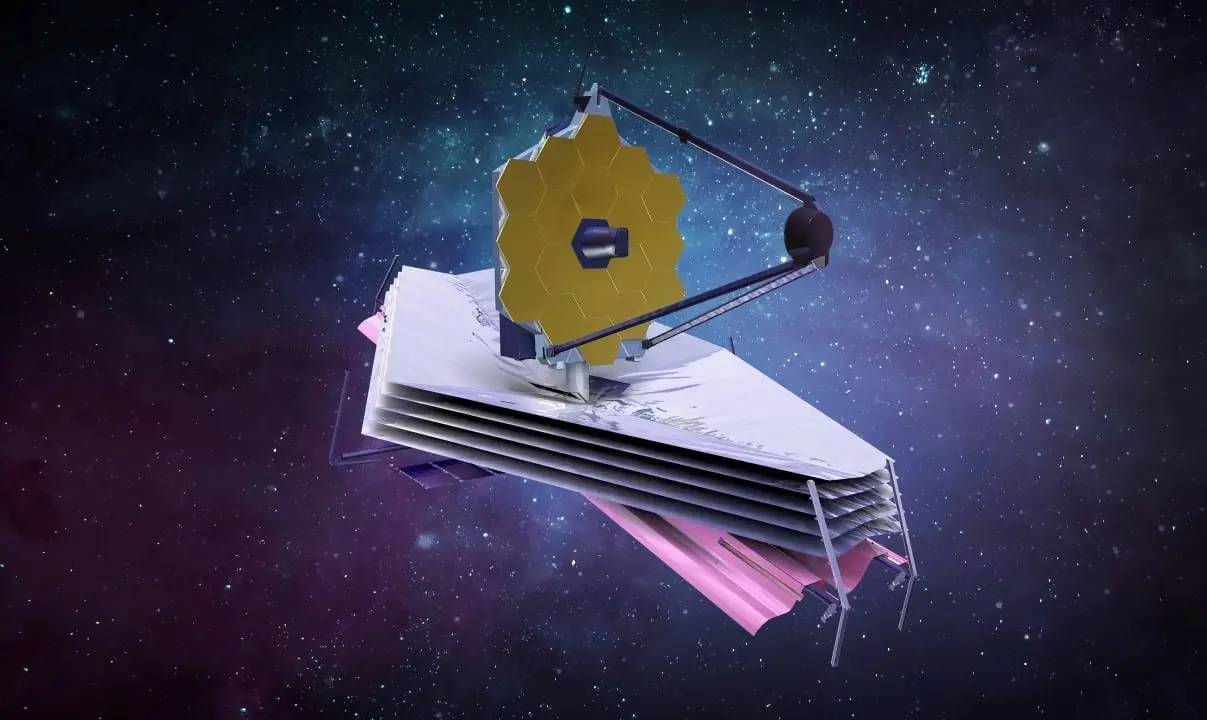
The James Webb and Hubble space telescopes detected 27 celestial bodies situated past Neptune on September 8, 2026. Every identified structure measures less than 40 kilometers across, with the most compact object spanning 10 kilometers in this remote perimeter.
Astronomers confirmed that these smaller fragments preserved their original physical state without alterations. This finding challenges earlier theories assuming frequent cosmic impacts continually reworked the rocky crusts of these worlds. The new measurements reveal untouched primordial matter.
Distant icy worlds preserve signatures from early planetary era
Trans-Neptunian objects follow expansive pathways around the Sun well beyond the planetary boundary of Neptune. These frozen fragments emerged during the initial stages of the Solar System after failing to aggregate sufficient matter to construct full planets.
Theoretical frameworks previously suggested that continuous violent collisions over billions of years would pulverize and reshuffle the exterior crusts of these remote formations, altering their original coloration and erasing the structural evidence recorded during planetary assembly in the outer Solar System. Observations contradicted that expected erosion pattern entirely. Space weathering did not mask their makeup.
They retained their ancient surfaces.
Anastasia Morgan, a researcher at Northern Arizona University who led the spectral and color evaluations, reported that the smallest objects provide an unmediated archive of their accretion history. Her team isolated distinct chromatic groups across the survey.
The catalog divides into two specific orbital populations residing in the distant zone. Dynamically cold bodies travel along circular paths that mirror the general plane of the Solar System. Gravitational shielding kept these particular objects stable over time.
Dynamically hot bodies formed between Uranus and Neptune before outward planetary migration scattered them toward higher inclinations. Giant planets pushed them into elongated pathways during early instability.
These displaced wanderers kept their original chemistry beyond Neptune.

David Trilling, an astronomer at Northern Arizona University, noted that these dynamically hot bodies retain the chemical fingerprints of their birth environment despite undergoing dramatic orbital dispersal. The physical material survived the migration.
The discovery yields four primary deductions regarding deep space architecture:
- Collision rates on the outer edge of the Solar System remain lower than standard models anticipated;
- Mechanical impacts occurring in the belt fail to transform the outer crust of smaller celestial objects;
- Dynamically cold and dynamically hot populations share comparable size distribution profiles;
- The total count of compact trans-Neptunian objects falls below classical mathematical estimates.
Infrared sensors determine physical sizes across outer Solar System
James Webb measured the dimensions of all 27 targets situated in the trans-Neptunian region. Visible light cannot reliably distinguish between a large dark rock and a tiny icy body because both reflect comparable amounts of solar radiation.
Infrared radiation emitted by these objects scales directly with total surface area rather than superficial reflectivity. Instruments on James Webb captured this thermal output to calculate exact cross-sectional sizes. The observatory resolved small bodies previously lost in glare.
The census confirmed fewer small bodies exist than predicted in the outer Solar System.
The targets exhibited faint visual brightness ratings ranging between magnitudes 24.1 and 29.3. Detecting such dim reflections required extraordinary optical sensitivity across prolonged observation runs from Earth. Engineers spent months refining the exposure parameters.
This program completed the deepest astronomical survey ever executed beyond Neptune, releasing the core dataset on September 8, 2026. The findings appeared in two separate scientific publications detailing color variations and body sizes.
Researchers at Northern Arizona University cataloged the final physical dimensions across both published papers.