
Astronomers trace stellar origin of interstellar comet 3I/ATLAS

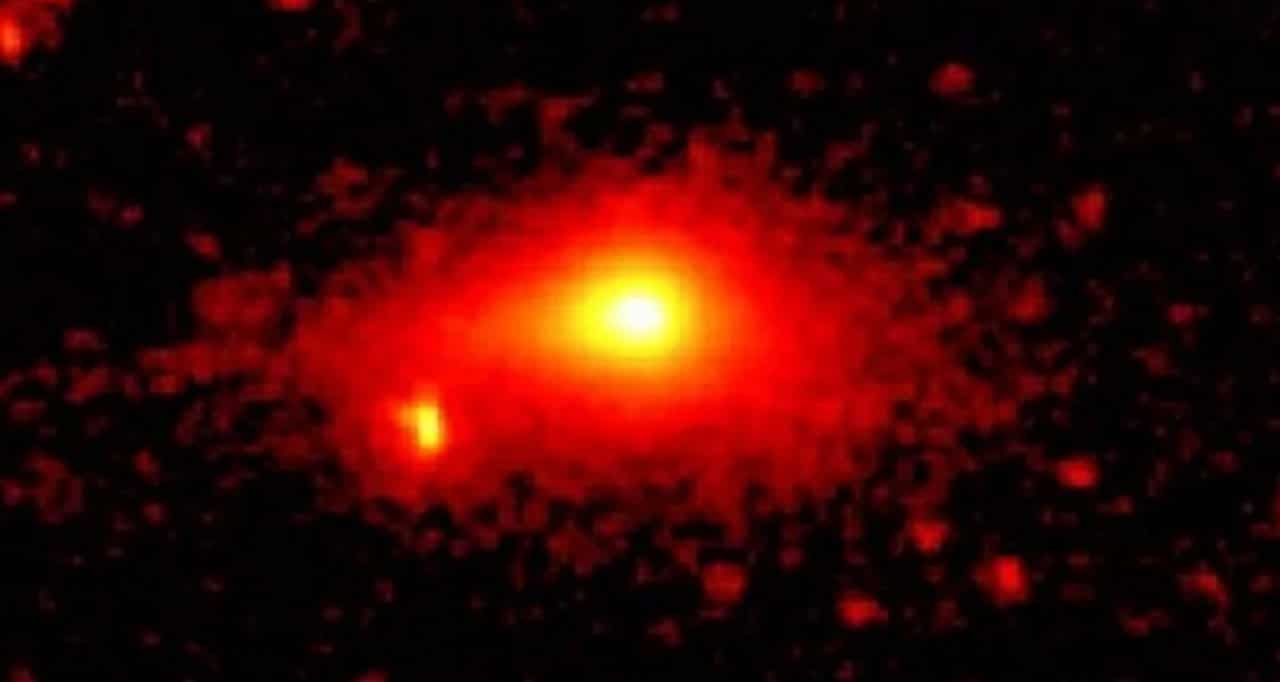
Astronomers mapped trajectory parameters for interstellar comet 3I/ATLAS on September 11, 2026, to identify the alien planetary system that ejected the cosmic wanderer before it entered the Solar System. The celestial body ranks among the rarest interstellar travelers detected by modern observatories across the globe.
Trajectory calculations isolate gravitational shifts across space
By analyzing slight trajectory alterations caused by gravitational forces encountered along its flight path, researchers reconstruct the dynamic history of 3I/ATLAS to identify the specific stellar nursery that expelled the comet into deep interstellar vacuum.
Scientists monitor the vector velocity of 3I/ATLAS since its initial detection in distant coordinates. Deep space surveys continue. Dynamic flight calculations trace the past route traveled by the visitor prior to its current solar rendezvous.
Orbital markers confirm foreign origin outside the Sun realm
Comprehensive orbital reconstructions prove that comet 3I/ATLAS does not originate from within the gravitational boundaries of the Sun. The hyperbolic path shows an inbound flight trajectory unlinked to any traditional reservoir of our planetary neighborhood.
Catalog parameters record the rare celestial visitor
Astrophysical databases established precise baseline metrics to classify the interstellar traveler during ongoing evaluations on September 11, 2026.
- Formal catalog designation: 3I/ATLAS
- Astronomical classification: interstellar comet
- Object nature: interstellar body
- Monitoring record date: September 11, 2026
Physical properties survive cosmic ejection intact
Investigations into mechanical deviations narrow down the margin of error surrounding the comet’s parent star. The nucleus retains primordial physical properties that survived intact through millions of years drifting across the cold galactic void. Precise origin tracing reveals conditions governing planet formation around other stars in distant reaches.
Follow-up telescope readings expand the orbital database
Mathematical models refine the previous navigation trajectory of the wandering icy core. Upcoming telescope observations add additional orbital data points to the international scientific registry.





