
NASA’s Roman Telescope: mission has fuel for 22 years and refueling technology

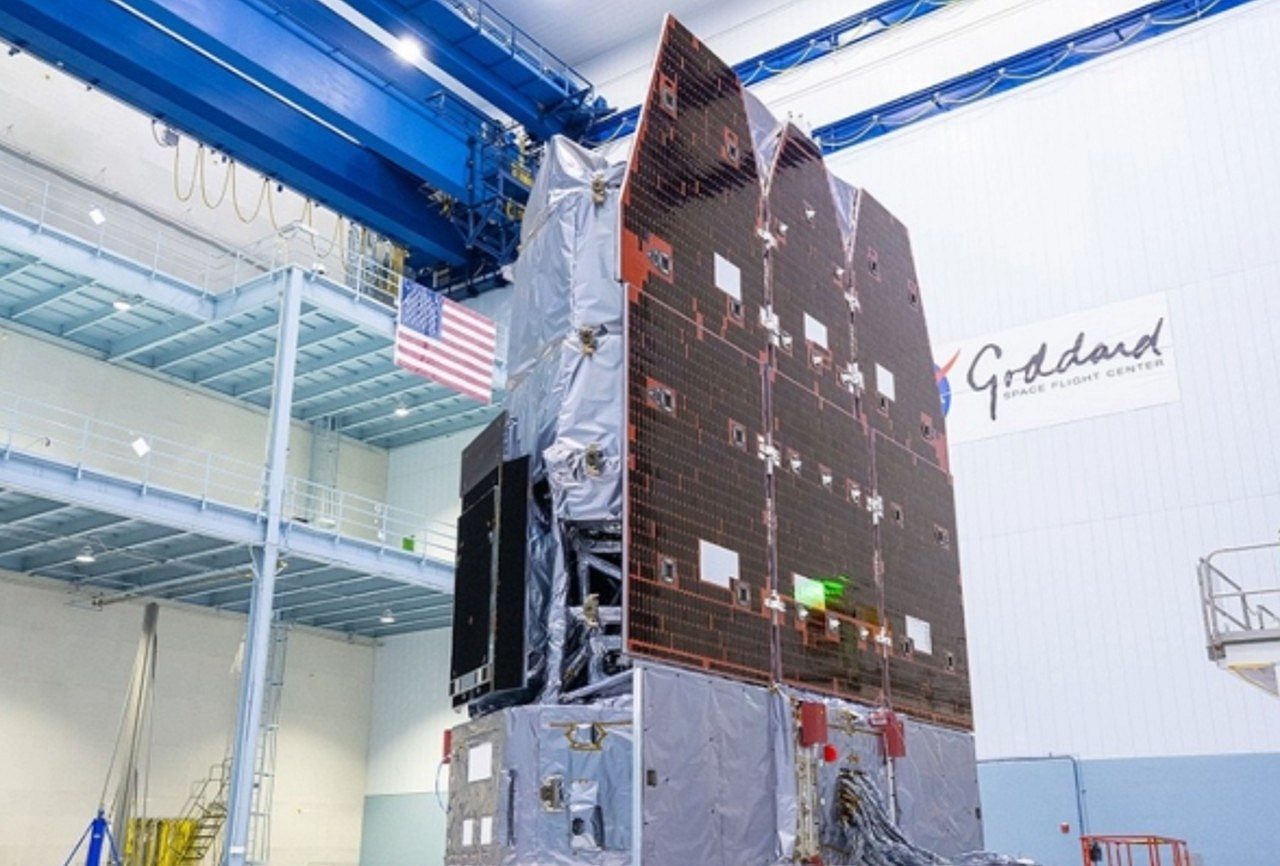
Engineers built the Nancy Grace Roman Space Telescope as NASA’s first orbital observatory engineered to receive in-space propellant servicing.
The Nancy Grace Roman Space Telescope continues its transit toward an observation post on a flight path that exceeded precision projections. Agency engineers confirmed that the spacecraft holds sufficient propellant to double original operational timelines.
Designers of the $4.3 billion observatory originally filled Roman’s four fuel tanks to support five years of primary operations plus an optional five-year mission extension, calculating that an accurate injection would leave ample reserves.
“As a result of exquisite planning by our orbital dynamics team, brilliant execution by the operations team, and a precise launch from SpaceX, Roman has fuel for at least 22 years of potential science operations,” said Jamie Dunn, center director at NASA Goddard Space Flight Center. The announcement establishes a 22-year horizon for deep-space science.
The James Webb Space Telescope previously gained a comparable operational boost following an accurate launch aboard an Ariane 5 rocket in 2021.
The Roman telescope lifted off August 30 from Kennedy Space Center in Florida aboard a SpaceX Falcon Heavy rocket. Optical instruments aboard Roman match the resolution of the Hubble Space Telescope across a field of view 100 times larger. A single month of Roman operations matches a century of sky surveys conducted by Hubble.
Astronomers intend to track galactic clusters and cosmic filaments using Roman’s Wide Field Instrument, an array of 18 near-infrared sensors that captures imagery equivalent to a 300-megapixel camera. The resulting maps will provide empirical data to evaluate dark energy and cosmic expansion.
The Falcon Heavy placed the Roman space observatory onto an injection path toward the Sun-Earth L2 Lagrange point located approximately 1 million miles from Earth, where the spacecraft will settle into a halo orbit to conduct broad-scale astronomical observations after completing its initial three-month cruise.
Engineers fired Roman’s control thrusters one day into flight to complete an initial course correction. That maneuver consumed 40 pounds, or 18 kilograms, of hydrazine fuel. Flight managers had allocated 441 pounds, or 200 kilograms, for the operation before liftoff.
“I do thank SpaceX for putting us down the middle,” said Amit Kshatriya, NASA associate administrator, at the American Astronautical Society’s Glenn Space Technology Symposium. “It’s going to help us in terms of long-duration performance, how long we can stay at L2, as well as our positioning capability.”
Roman departed nine months ahead of the timetable approved by NASA during a 2020 confirmation review. Structural mass remained unusually low. Both accomplishments mark rare outcomes across major space science developments.
Roman weighed 17,760 pounds, or 8,056 kilograms, upon final completion, coming in roughly two tons under allowable thresholds. Ground teams at Kennedy Space Center loaded 290 gallons of hydrazine to supply 24 external thrusters across the structure.
With fully loaded propellant tanks, Roman reached a launch mass of 20,224 pounds, or 9,173.5 kilograms, allowing thrusters to burn for shorter intervals due to the half-ton margin under the design limit.
“A spacecraft’s mass changes throughout the design and build process, so we base the propellant budget on a set maximum value so we won’t come up short,” said Alison Rao, Roman propulsion lead at NASA Goddard. “We track the propellant needed based on actual mass throughout integration and testing as well, to make sure we have wiggle room.” Rao explained that lower hardware weight enabled engineers to fill the tanks to maximum capacity rather than targeting a 10-year baseline requirement.
A second midcourse maneuver will guide Roman toward a December insertion burn to enter its operational orbit around L2. Projections indicate that both orbital burns will require less hydrazine than budgeted, further extending propellant reserves for future research.
Roman will fire thrusters every 28 days to maintain station while desaturating momentum accumulated by six onboard reaction wheels that govern telescope pointing.
Substantial fuel margins reduce the near-term necessity for robotic servicing missions. Propellant serves as the primary consumable constraining mission life, which prompted NASA to mandate refueling compatibility early in design.
Astronauts previously serviced the Hubble Space Telescope during five Space Shuttle missions to repair optics and install scientific upgrades. That low-Earth orbit observatory lacks an independent propulsion system. Space Shuttle orbiters routinely boosted Hubble to counteract atmospheric orbital decay.
Engineers prepared Roman for uncrewed servicing by installing a grapple fixture modeled after robotic interfaces used on the International Space Station and the Space Shuttle. Retroreflectors and external alignment targets will assist robotic spacecraft during rendezvous and docking maneuvers.
“While Roman is nowhere near as serviceable as the Hubble Space Telescope was, we do have everything that’s necessary to enable the rendezvous and capture and docking with a hypothetical servicer; that’s the point of the grapple fixture,” said Jackie Townsend, Roman project manager at NASA Goddard. Townsend noted that project baselines established in 2020 focused design efforts directly on refueling access. “The blanketing around the fueling port has been designed especially so that it’s easier for a robot to get in there if we needed to refuel.”
Thermal insulation around the fueling port features a magnetic closure designed for robotic opening and resealing during future orbital servicing.
Current spaceflight capabilities do not include operational servicing craft able to operate 1 million miles from Earth at the L2 position. Commercial developers in the United States pursue refueling technologies for low-Earth orbit under US Space Force contracts. In geosynchronous orbit, two Chinese spacecraft completed an autonomous orbital refueling demonstration.
All core flight subsystems on Roman have operated smoothly since liftoff, NASA officials reported. Ground controllers commanded the telescope aperture door open on September 1, exposing the primary mirror to starlight.
“All the preliminary checks are good,” Amit Kshatriya stated regarding initial telemetry. Instrument teams confirmed that optical mirrors and charge-coupled devices continue cooling to designated cryogenic operating levels. “All that’s green across the board on all 18 detectors,” Kshatriya added.
The coronagraph instrument designed to image exoplanets passed initial checkouts.
“When we get first light, it’s going to be a big party,” Amit Kshatriya said. Science teams anticipate formal optical observations once commissioning maneuvers conclude.





