SpaceX schedules 14th Starship test flight to complete orbit
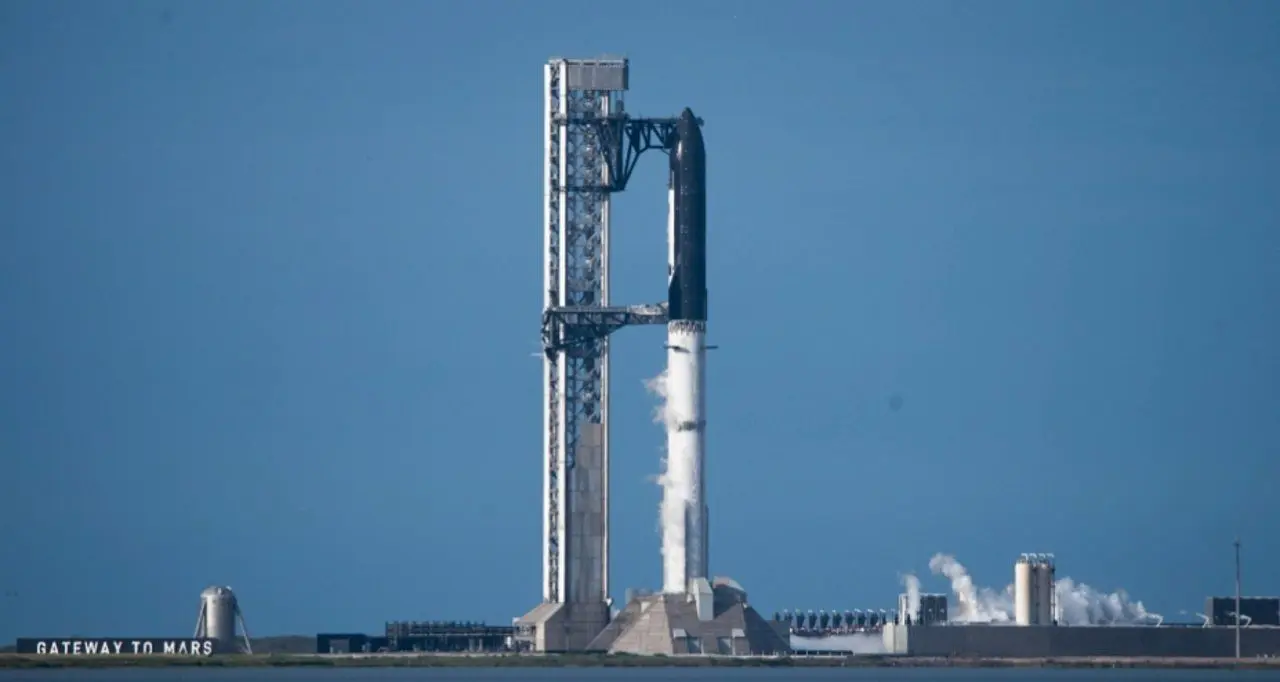
SpaceX announced plans on September 15, 2026, to conduct a new test launch of its Starship rocket from Texas within the coming days. The company founded by Elon Musk develops the spacecraft to transport astronauts and heavy cargo on future missions to the Moon and Mars.
Designated as the 14th experimental mission, this upcoming operation intends to propel Starship into a complete orbit around Earth for the first time. Engineers designed the ambitious flight profile to surpass every previous launch attempt where the upper stage merely reached space on suborbital arcs before falling back through the atmosphere without completing a single sustained revolution around the planet. Ground teams adjusted internal control software to support this extended trajectory.
Flight timing and launch pad preparations in Texas
Liftoff will take place from a Texas facility at 8:15 a.m. Brasília time after a minimum interval of one week. The test targets space.
SpaceX plans to deploy 26 next-generation Starlink satellites during the mission to expand its global broadband internet constellation.
Every previous Starship mission followed suborbital paths where the spacecraft reached space without circling the Earth. Those hardware iterations executed parabolic trajectories that initiated an immediate descent toward oceanic waters. Tracking stations recorded telemetry throughout those brief ballistic flights.
The upcoming flight seeks to generate the velocity and altitude necessary to maintain Starship in a stable orbit around Earth. Flight controllers consider this sustained insertion the most demanding technical objective attempted by the program so far.
The company employs rapid prototyping cycles to accelerate aerospace development. Engineers push test articles to failure during live flight to discover structural flaws and implement immediate modifications. This iterative development model caused multiple prototypes to rupture and explode during early campaigns. Technical crews continuously redesigned heat shields and fuel headers following those destructive trials.
Performance assessment of the July flight trial
Starship flew its previous trial in July and secured internal ratings as an operational success. That mission occurred one month after the company set record numbers during an initial public offering on United States financial exchanges.
Starship remains distant from conducting routine commercial operations despite the achievements recorded in July. Human spaceflight campaigns targeting the Moon and Mars still require extensive operational certification. Program leaders must demonstrate sustained vehicle reliability across multiple successful flights.
Technical milestones required for deep space operations
SpaceX designs Starship as a fully reusable transportation system to lower the financial threshold of space access. The architecture relies on catching both the booster and spacecraft for rapid turnaround and relaunch.
The spaceflight company must validate three core technical capabilities before certifying Starship for operational service:
- Executing orbital flights to demonstrate the rocket can maintain its planned trajectory around Earth.
- Mastering in-space propellant transfer, an orbital maneuver essential for long-duration interplanetary travel.
- Refining atmospheric reentry and recovery mechanisms to safely decelerate, touch down, and reuse the spacecraft.
Proving these operational capabilities directly dictates when regulatory bodies will approve Starship for commercial payloads and crewed voyages to the Moon and Mars. Mission architecture schedules remain tied to the outcomes of these live flight tests. Future launch dates will shift based on hardware performance during the forthcoming orbital attempt.