
Comet 3I/ATLAS images reveal chemical makeup found by NASA


NASA unveiled detailed spectroscopic images and analyses of interstellar comet 3I/ATLAS on February 6, 2026, mapping the precise composition of the gas and dust cloud surrounding the visitor as it journeys through the inner solar system. The instruments captured the chemical envelope in high detail.
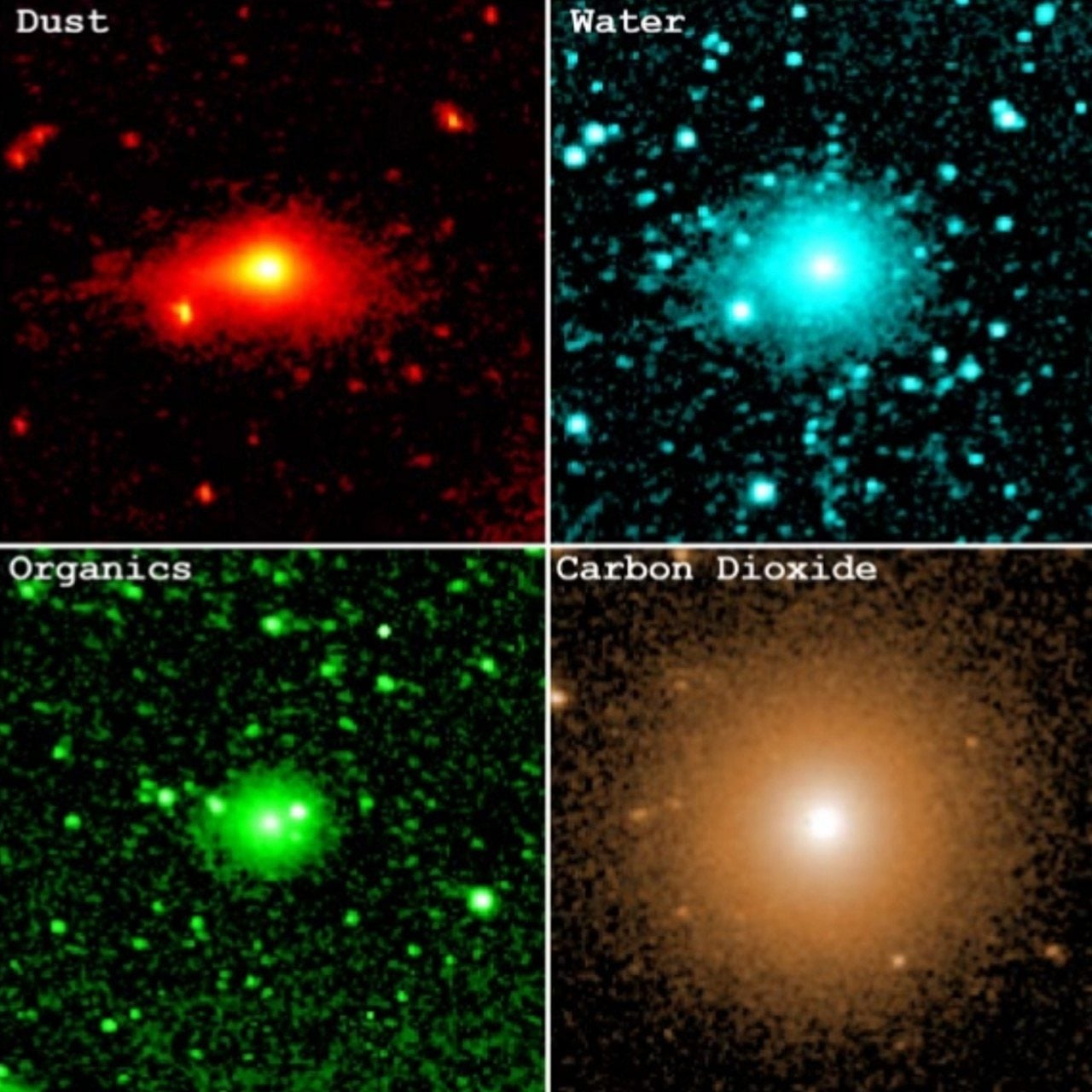
The SPHEREx space telescope gathered the spectral observations, identifying water, dust particles, carbon dioxide, and organic molecules within the plumes expelled by the comet.
On Earth, comparable organic compounds serve as fundamental building blocks of life. Non-biological mechanisms also produce these identical chemical structures across deep space.
The expelled gas and dust combine to build the coma, an expansive halo that develops whenever solar heat warms the icy core of 3I/ATLAS.
Frozen deposits turn straight into gas through sublimation. This rapid phase change sweeps mineral grains outward into open space.
The resulting particulate cloud expands across thousands of kilometers and provides the illumination that makes 3I/ATLAS detectable to ground facilities.

Solar heat drives gas outbursts that form comet tails
Proximity to the Sun drives violent outgassing across the frozen surface. Internal reservoirs burst open under thermal stress, launching jets that feed the extended tails.
SPHEREx isolates the infrared emissions by breaking the incoming radiation into over 100 discrete bands to distinguish specific molecular signatures.
This optical technique functions like a specialized laboratory test. Each substance imprints an unmistakable spectral fingerprint that optical detectors measure.
NASA published separate diagnostic panels that indicate the exact spatial distribution of water and carbon compounds throughout the coma of 3I/ATLAS.
These readings allow astrophysicists to map the core ingredients of the traveler. Researchers also trace how solar radiation alters these primitive compounds over time.
An ATLAS survey telescope operating in Chile first spotted 3I/ATLAS in July 2025.
Observatories on Earth and in orbit tracked the trajectory immediately after discovery. The measured velocity shows 3I/ATLAS originated outside the Solar System and will depart back into deep space.
Astronomers classify 3I/ATLAS as an exceptionally rare discovery, having identified only 3 interstellar travelers throughout recorded history.
These celestial bodies preserve chemical compounds that remain virtually unaltered since their initial formation. Such cosmic visitors remain rare.
The pristine material serves as a natural time capsule holding physical data from planetary systems that formed billions of years ago.
Unverified claims on social networks suggested 3I/ATLAS represented an artificial extraterrestrial structure. Astronomers stated that physical measurements invalidate that claim completely.
NASA rejected the artificial object hypothesis and affirmed that empirical observations confirm an entirely natural body.
“The object 3I/ATLAS is a comet — its appearance, behavior, and all scientific evidence point in this direction,” said Amit Kshatriya, associate administrator at the agency. Kshatriya addressed the rumors during a technical review.
Astronomer Cássio Barbosa stated that all spectral signals from 3I/ATLAS match established natural mechanisms.
“These emissions stem from hydroxyl radicals formed when solar ultraviolet radiation breaks comet water molecules,” Barbosa said. He confirmed that this reaction produces an expected chemical pattern.
Planetary scientists previously identified identical hydroxyl signatures to detect water ice on asteroids and across the Moon.
Public debates widened when Harvard University researcher Avi Loeb suggested an artificial origin for 3I/ATLAS, echoing arguments he raised concerning ʻOumuamua in 2017. Loeb defended the possibility of manufactured technology.
Barbosa rejected the assertion: “The scientific community considers this hypothesis the least probable, as nothing in the evidence supports it,” adding that sensational claims spread because “it is a way to generate clicks.”
Trajectory models indicate 3I/ATLAS may predate the Sun by up to 3 billion years. This extreme age classifies the comet as an undisturbed relic of ancient star formation.





