
Elias 2-24 b sets record as youngest planet under 1 million years

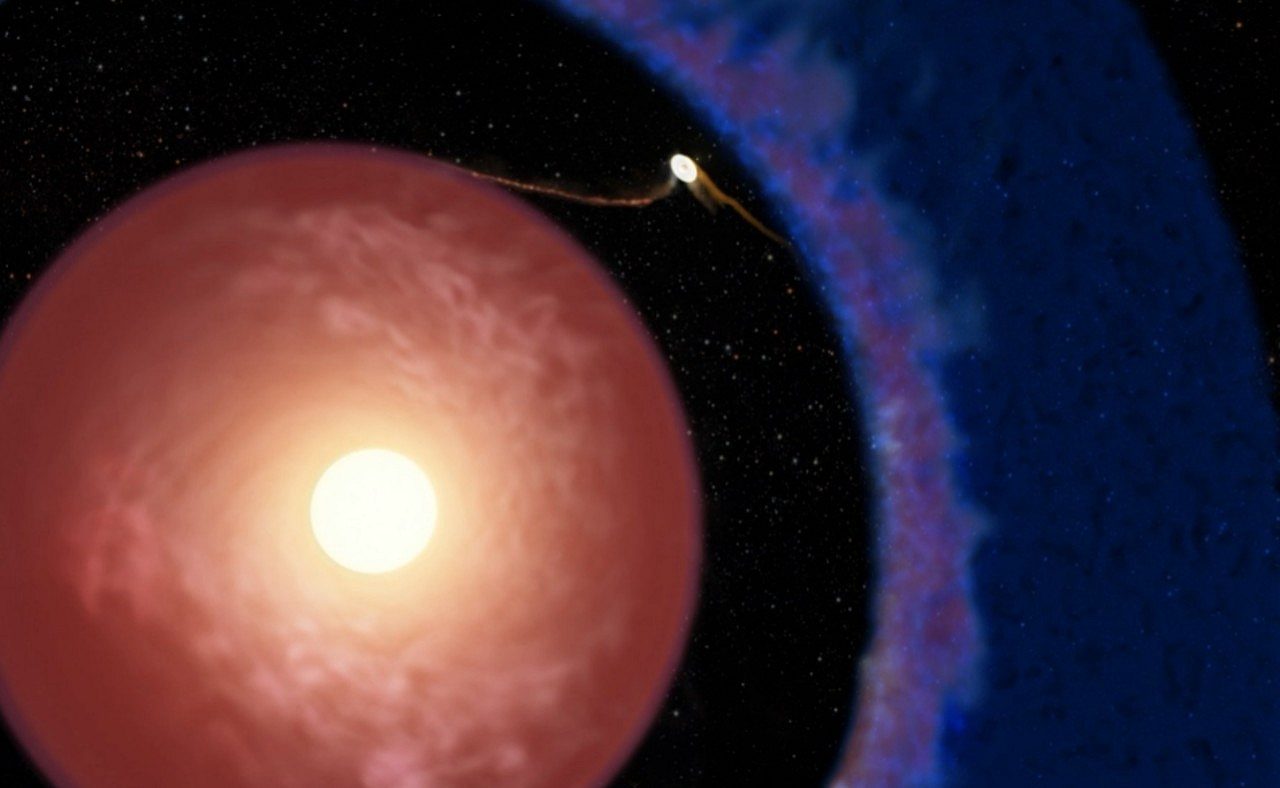
Astronomers verified the direct detection of planet Elias 2-24 b at a distance of 450 light-years from Earth after structural scans proved that the celestial body is younger than 1 million years. The discovery establishes the formation as an unprecedented milestone in deep space research. Numerical assessments firmly validated the cosmic benchmark.
The verified observation introduces an unprecedented reference point for tracking nascent worlds beyond our own terrestrial solar system. Scientists now possess tangible evidence of planetary creation occurring on a timeline far faster than previous data indicated.
By registering an age under 1 million years, the cosmic formation surpassed prior astronomical thresholds established for identifying planetary structures during their initial development phases. Researchers completed evaluations through structured measurement protocols that tracked the physical indices of the emerging body along its distant trajectory, officially placing the object ahead of all cataloged planetary formations documented by observational astronomy across decades of deep space exploration. The chronological evaluation officially categorizes the object as the youngest planet recorded to date. This physical classification resets the historical baseline for evolutionary models in exoplanetary science.
Direct analysis confirms developmental phase under one million years
Computational data gathered by astronomers demonstrate that Elias 2-24 b continues to undergo its primordial phase of physical consolidation far from Earth. Detailed diagnostic metrics confirmed that the timeframe represents an absolute temporal record for planetary science.
Prior investigations hunting for newborn celestial objects relied exclusively on significantly older parameters of orbital consolidation across distant cosmic fields. The scientific team adjusted these historical thresholds upon evaluating the young atmosphere and orbital environment surrounding Elias 2-24 b. The new metrics demonstrate that young planets consolidate their fundamental structures much earlier than previously assumed.
The empirical result redefines the established timescale required to confirm developing worlds as they circle their original host cores in outer systems. This chronological boundary shatters every preceding baseline documented throughout modern observational astronomy.
Deep space gap places the newborn system 450 light-years away
The stellar environment hosting Elias 2-24 b sits at an exact span of 450 light-years from Earth. Lead researchers validated the spatial dimensions using direct astronomical measurement tools. These readings confirm the geographic position of the system without ambiguity.
Pinpointing the exact coordinate of Elias 2-24 b required rigorous geometric calculations to map the path of the celestial body through its local stellar environment. Technicians processed multiple observation cycles to ensure that ambient spatial interference did not distort the orbital path.
Verified physical parameters established for the stellar body
- Official celestial identification: Elias 2-24 b
- Maximum calculated age: under 1 million years
- Confirmed distance from Earth: 450 light-years
- Current scientific status: record holder among newborn exoplanets
Age calculations surpass previous records in observational astronomy
Astronomers emphasized that Elias 2-24 b eclipsed all earlier milestones during the ongoing search for newly formed worlds in the cosmic landscape. Developing within less than 1 million years distinguishes this celestial body from every other planetary discovery recorded by modern observatories. The findings provide concrete evidence regarding how matter coalesces during planetary birth.
Analytical modeling validated the youth of Elias 2-24 b without room for ambiguous classifications against existing astronomical catalogs. The data solidly anchors the planet in its own developmental tier.
Maintaining an interval of 450 light-years from Earth allows dedicated research teams to continuously monitor the ongoing physical evolution within the host system. Ongoing tracking will reveal how quickly the infant world accretes surrounding material. Observers plan to gather subsequent wave data across several seasonal viewing windows.
Direct sensor scans certify that the celestial matter around Elias 2-24 b remains in an early stage of physical accretion and orbital stabilization. Gravity continues to pull nearby dust and gas into the emerging planetary body.
The calculations confirmed the record. Mathematical verification eliminated previous discrepancies regarding the speed of planetary aggregation in deep space. The resulting figure stands as an unmatched reference point for global astronomical databases.
Future research campaigns will continuously evaluate new readings from Elias 2-24 b against existing telemetry obtained across the 450 light-years separating the system from Earth. Comparative studies will focus on refining the orbital trajectory of the planetary body.





