
Tyrannosaurus rex clocks 36.3 degrees in Carter County fossils

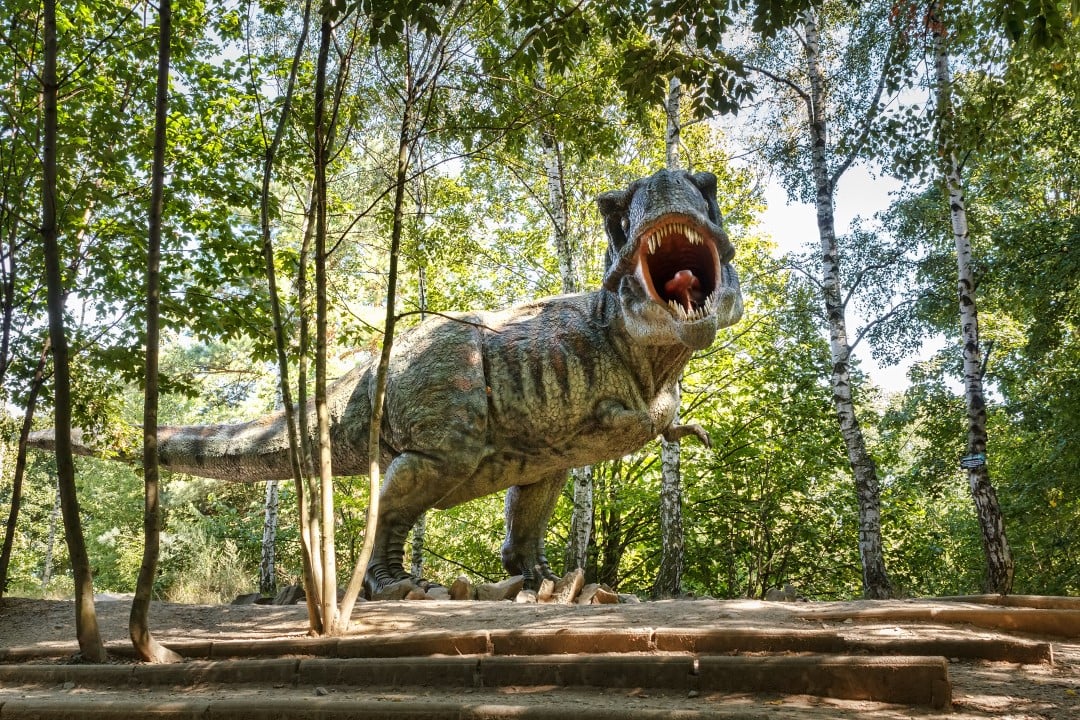
Tooth enamel from Tyrannosaurus rex fossils confirmed on September 18, 2026, that the apex predator maintained warm blood with an internal body temperature comparable to human biology. Researchers determined that three tooth specimens recovered in Montana registered an average thermal reading of 36.3 degrees Celsius, featuring an analytical margin of plus or minus 2.5 degrees Celsius.
Human bodies maintain an average baseline of 37 degrees Celsius. Existing terrestrial giants like elephants sustain an internal mark of 36 degrees Celsius, while ostriches reach roughly 39 degrees Celsius. The chemical data dispels depictions that portrayed the theropod as a sluggish reptile dependent on ambient heat.
Internal thermal regulation provided the predator with the physiological endurance needed to sustain rapid acceleration during hunts. This metabolic independence separated the animal from ectothermic reptiles that rely on solar radiation.
“He is no longer a reptile the way people imagine reptiles,” said UCLA geoscientist Aradhna Tripati, lead author of the study published in the journal Science Advances. “An animal at 36 degrees Celsius does not wait for the Sun to warm it; it is thermally independent of its surrounding environment and, in that respect, closer to an elephant or an ostrich than to a crocodile.”
Geographic distribution across Cretaceous North America
Tyrannosaurus rex inhabited western North America throughout the Cretaceous Period approximately 66 million years ago. Its fossil record spans from the Canadian provinces of Alberta and Saskatchewan to Montana, Wyoming, the Dakotas, New Mexico, and Texas.
Tripati noted that climate simulations demonstrate how the carnivore occupied expansive territories across the continent, including cold regions where it encountered freezing temperatures. The findings present an animal with significant environmental mobility.
Endothermy designates the biological capacity to generate and preserve heat through metabolic energy. This trait provides constant physical stamina and thermal stability against seasonal climate shifts. Ectotherms rely on ambient sunlight. In contrast, while endothermy allowed this massive apex theropod to wander across freezing landscapes without losing muscular efficiency, maintaining such an elevated internal system demanded substantial calorie intake from continuous predatory expeditions across prehistoric North America.
Metabolic demands and biological lineage
“Endothermy is common in large animals and even in some fish, however, it comes at a cost,” said UCLA geobiologist Robert Eagle, a coauthor of the research. “Higher metabolic rates mean greater food needs and, potentially, more active hunting to obtain it, requiring an endothermic T. rex to seek more prey, although it granted energy to migrate and endure cold regions.”
Mammals and avian species form the primary groups of living warm-blooded creatures. Extinct carnivorous dinosaurs belonged to theropods, the branch that produced modern birds from feathered ancestors. Small living birds operate at roughly 42 degrees Celsius.
“Our temperature estimate for T. rex sits at the lower end of the endotherm range,” Tripati said. The measurement establishes the predator at the base thermal threshold of warm-blooded organisms.
Chemical extraction from fossilized dental enamel
Fossilized teeth guided the investigation because enamel locks chemical conditions in place during animal growth. Enamel mineral composition functions directly as an internal thermometer. Tripati confirmed that the structure preserves chemical signatures formed during development.
Scientists applied clumped isotope analysis to measure the ancient body temperature. The methodology calculates paleotemperatures by tracking how rare isotopes of carbon and oxygen bond within mineral crystals.
Researchers extracted five milligrams of dental powder from each tooth using a rotary drill tipped with tungsten carbide. The resulting sample represented a volume smaller than a pinch of salt. This extraction process preserved the physical structure of the historical fossils.
The Natural History Museum of Los Angeles County supplied three specimens discovered in Carter County, Montana. Two teeth came from a juvenile Tyrannosaurus rex named Thomas, alongside a fragment from another individual.
Research teams simultaneously evaluated comparative specimens retrieved from the identical geological layer:
- Five crocodile teeth from the same stratum registered an internal average of 30.9 degrees Celsius.
- The crocodile values matched modern ectothermic standards, showing dependence on outside climate conditions.
- The discrepancy between the groups demonstrated that internal metabolism drove the higher body heat of Tyrannosaurus rex.
Divergent thermal adaptations among extinct reptiles
“Many dinosaurs are believed to have been warm-blooded, but not necessarily all of them,” Eagle said regarding the wider dinosaurian lineage. “However, even among warm-blooded organisms, questions remain about the degree, as they could be warm-blooded like sloths or anteaters with low-level endothermy, modern large mammals, or avian endotherms with metabolic rates higher than mammals.”
Tripati advised caution before applying these findings across every dinosaur classification. The data reflects a single species rather than a universal reptilian physiological trait. Fossil evidence continues to point toward multiple ecological strategies across dinosaur families.





