Apple launches Mac mini M6 desktop for $899 in US stores
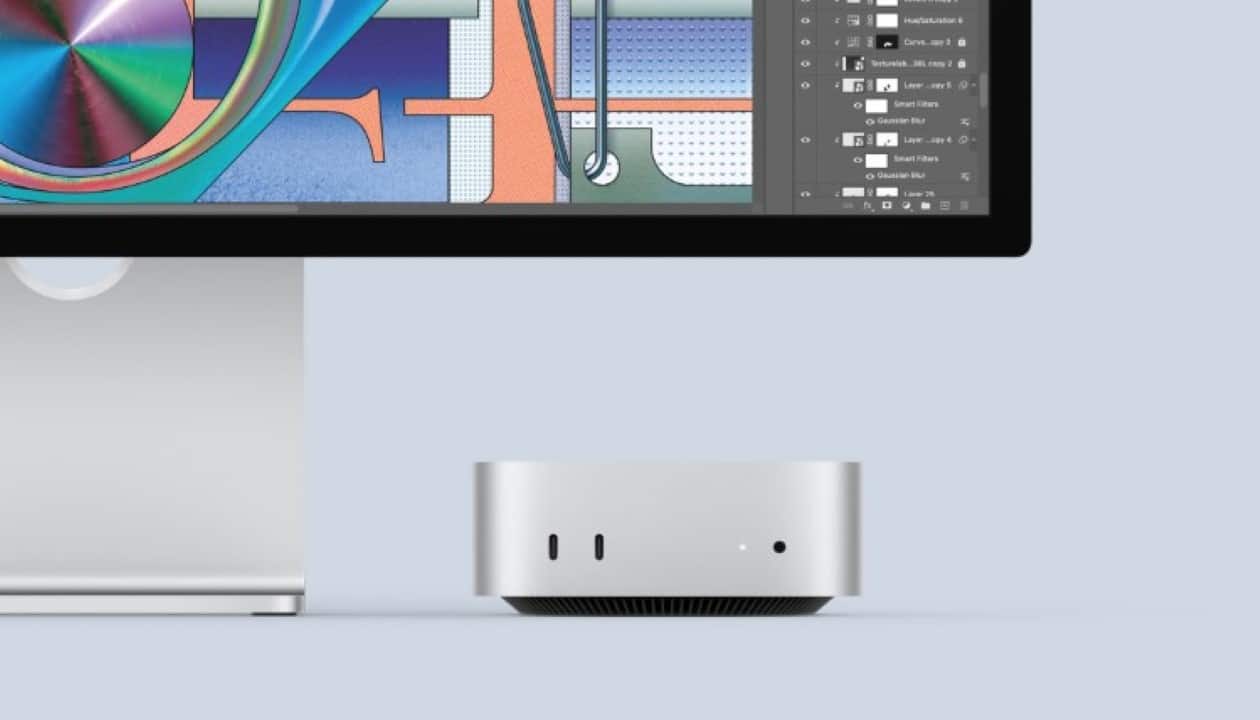
Apple released the Mac mini M6 desktop across United States retail outlets at a base price of $899. The hardware rollout removes the lower entry cost previously established during the 2024 product cycle.
During 2024, the company retailed the previous generation for $599 following an extensive overhaul of the compact aluminum casing. Rising international demand for artificial intelligence hardware inflated memory and component expenses worldwide. Apple bypassed a standard M5 desktop iteration to introduce the M6 hardware tier at the $899 price point.
The chassis remains compact. This updated hardware lineup also terminates the recurring $499 discount promotions that appeared throughout earlier production runs.
Processor options and memory limits for updated compact desktops
Buyers select between the entry M6 silicon featuring 12 combined processing cores and an M5 Pro silicon option packing up to 18 central execution cores. Apple equipped the basic model with twelve processing cores and thirty-two gigabytes of unified memory, while the upgraded configuration supports up to eighteen central cores alongside sixty-four gigabytes of memory that delivers three hundred and seven gigabytes per second of bandwidth. The base architecture restricts system memory to 32 gigabytes alongside a transfer rate of 170 gigabytes per second.
Workstation segmentation continues to guide product tiers for creative workflows requiring higher throughput than the $899 model delivers. For extreme production pipelines, Apple sells the Mac Studio at $2,499 to replace the retired Mac Pro line.
Internal benchmarks from Apple show the M6 chip executing language model commands in LM Studio 13.5 times faster than the original M1 processor. The M5 Pro processor expands that local execution margin to 22.3 times the baseline output. Spreadsheet calculation speeds inside Microsoft Excel advance 2.3 times on the M6 processor and 4.6 times on the M5 Pro configuration against that same silicon generation.
The enclosure retains square five-inch dimensions that mirror the physical profile of the preceding unit. Weighing 1.5 pounds, the desktop occupies a physical footprint comparable to an Apple TV set-top box.
Engineers placed the primary power button along the underside surface near the rear connector panel. Physical access remains awkward during daily use without a desk repositioning. Apple Magic Keyboard accessories offset this placement through dedicated power keys along the top row.
Two front USB-C ports run on USB 3.0 standards, while the back panel incorporates an HDMI connection, a 2.5 Gbps Ethernet port, and three 40 Gbps Thunderbolt 4 ports. Integrated SD card slots remain absent from this desktop line, preserving dedicated card reader hardware exclusively for Mac Studio units.
Benchmark scores and gaming frame rates across modern titles
Single-core testing inside Geekbench 6 showed an M6 configuration with 24 gigabytes of memory and a 1 terabyte SSD outpacing the older M4 Pro chip by 16.5 percent. The older silicon retained an advantage across multi-core benchmarks due to its higher core allocation. The generational architecture change delivers noticeable responsiveness in everyday tasks.
The M6 processor surpassed the MacBook Pro M5 by 6 percent in single-threaded operations and gained an 18 percent advantage in multi-core metrics. Graphical workloads measured in Geekbench 6 showed a 30 percent rendering uplift over that portable machine.
System cooling remained silent throughout office multitasking involving multiple web browsers, Slack channels, video conferencing, and image software. Internal fan noise stayed imperceptible under loads that regularly caused audible airflow on the older M4 Pro system. Thermal regulation held firm without acoustic spikes during intensive concurrent routines.
Gaming evaluations in Cyberpunk 2077 at 1080p produced an average of 55 frames per second on default presets, climbing to 60 frames per second after minor visual adjustments. The action game Lies of P achieved 70 frames per second at 1440p using the highest visual settings available on the M6 processor.
Transcoding a 4K video project into a 1080p video file required 18 seconds on the Mac mini M6 hardware. That export pace beat the 23 seconds recorded on a MacBook Air M5 and finished ahead of the ASUS ProArt PX16 laptop. Media encoding engines in the updated processor accelerated timeline rendering considerably.
Component upgrade prices and retail configurations for buyers
The updated desktop delivers competitive day-to-day processing speed within Apple product catalog. The $899 starting price permanently separates the