
The Macaw Society relocates 25 macaws to wild foster nests

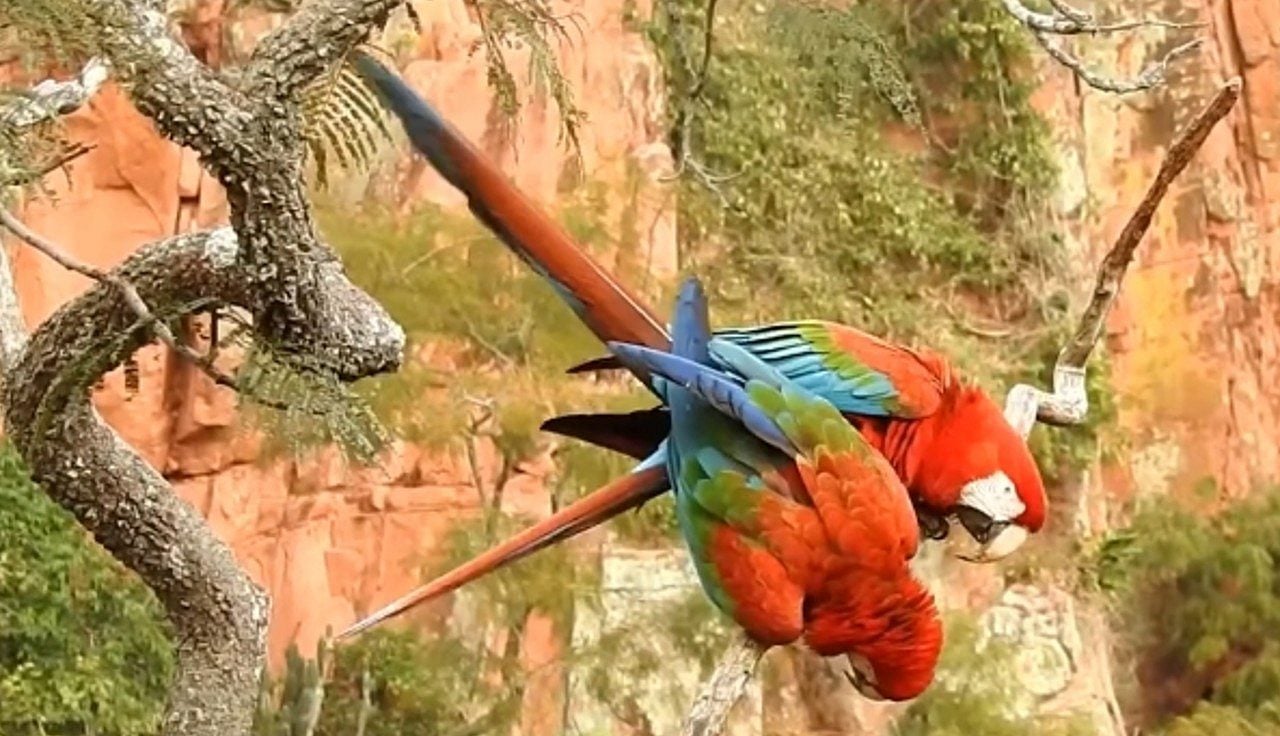
Field researchers from The Macaw Society extracted abandoned scarlet macaw nestlings facing starvation inside Tambopata National Reserve in southeastern Peru. Biologist Gabriela Vigo-Trauco directed the scientific team that climbed natural nesting trees to retrieve malnourished chicks and place them into foster cavities occupied by wild pairs of the same species. The intervention targeted late-hatched birds that wild parents systematically ignore once older siblings claim the available food supply.
Long-term population monitoring conducted since 2007 established that breeding females in the reserve produce clutches of up to four eggs during each annual nesting cycle. Third and fourth chicks almost invariably perish because parent birds feed the firstborn hatchlings that emerge four to five days earlier.
The young bird survived. Intensive veterinary care stabilized its vitals at the Tambopata field station before placement into an active wild nest box. Monitoring teams confirmed regular feedings from the foster parents shortly after the transfer.
Parental neglect threatens late-hatching chicks in tree cavities
Field cameras placed deep inside natural tree cavities revealed that parent macaws systematically favor their firstborn offspring while depriving smaller nestlings of nourishment and warmth during critical nights when temperatures drop significantly in the southwestern Amazon basin. Data evaluated in collaboration with Texas A&M University documented that roughly 25% of second-hatched chicks also die from direct parental neglect in clutches with multiple hatchings. Gabriela Vigo-Trauco noted that severe developmental gaps prevent adult birds from meeting the divergent feeding schedules and body-heat requirements of different-sized young at the same time.
Field teams established a specialized rescue framework in the Peruvian rainforest to curb avoidable mortality among nestlings with poor survival odds:
- Emergency removal of malnourished hatchlings before irreversible organ failure occurs
- Intensive hand-feeding every two hours for three consecutive weeks at the jungle station
- Systematic surveys to identify compatible wild foster pairs raising broods of identical age
- Controlled introduction into host cavities alongside regular post-placement predator checks
Field technicians maintained strict sanitation standards during nursery feedings to prevent infectious outbreaks among rescued nestlings. The protocol eliminated human habituation by limiting visual contact before moving the birds back into the forest canopy.
Field interventions enabled vulnerable fledglings to reach the canopy
Field biologists removed an underweight fourth chick named Parker from a natural tree cavity in November 2018 while its eyes remained unopened. The bird gained weight during supervised rehabilitation at the research compound before moving into the nest cavity of a breeding female named Tambo on December 22 of that year. The successful fostering marked the first documented instance in decades at the Peruvian reserve where a fourth-hatched chick fully feathered and took flight into the jungle canopy.
Between 2017 and 2019, the 20-person conservation team successfully integrated 25 rescued macaws into wild foster broods across Tambopata National Reserve. Lightning strikes, arboreal predators, and disease caused the loss of three other chicks inside monitored cavities during that experimental period.
Regional conservation programs adapt adoption methods across Central America
Biologist Rony García-Anleu directed similar foster experiments for the Wildlife Conservation Society in Guatemala until 2019, when the scarcity of synchronized wild nests prompted a shift toward specialized flight enclosures for pre-release conditioning. Guatemalan teams now rear rescued fledglings in captive flocks to ensure flight agility and flock behaviors before returning the birds to their natural range. In Costa Rica, conservationist Christopher Vaughan introduced artificial nest boxes and community patrols beginning in 1994 to counteract the poaching of wild chicks and severe deforestation.
Field staff in Peru began testing immediate chick swaps between wild nests directly after hatching in 2020 to bypass the labor-intensive nursery phase and lower operational costs across remote field sites.
Forest canopy observations confirmed integration with wild foster families
In September 2019, field monitors tracked Parker flying alongside its adoptive parents and a foster sibling through the upper canopy of Tambopata National Reserve. The young macaw navigated forest feeding grounds and displayed normal social vocalizations within the wild flock.





