
Elias 2-24 b breaks age record at 450 light-years from Earth
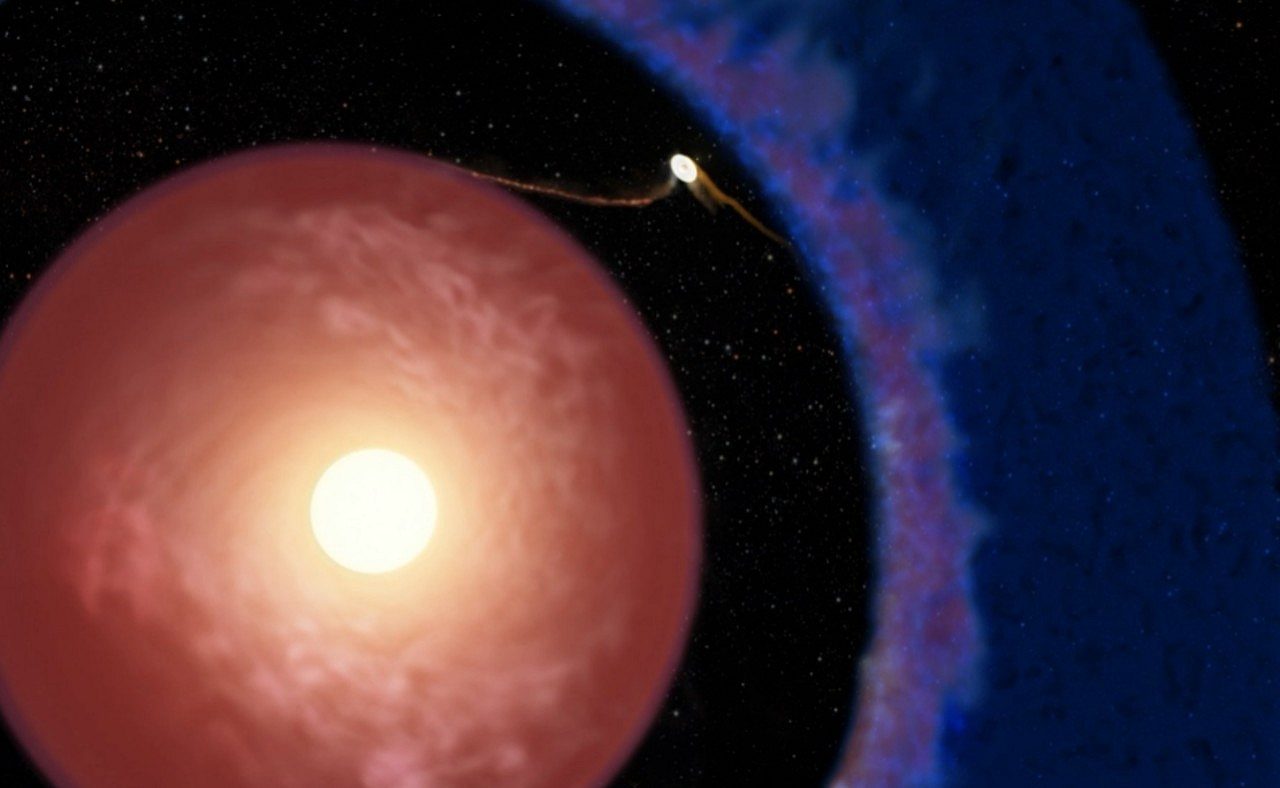
Astronomers confirmed the identification of planet Elias 2-24 b at a distance of 450 light-years from Earth after direct analyses determined that the celestial body is under 1 million years old in interstellar space. The computation established a new record.
The finding marks an unprecedented milestone in the astronomical tracking of newly formed worlds. Observers registered the body relative to the Solar System. The discovery updates existing astronomical benchmarks.
With an age below 1 million years, the cosmic formation bypassed prior astronomical records that tracked celestial structures during early stages of physical development. Direct spectroscopic evaluations completed by researchers mapped the physical characteristics of the formation in deep space, confirming that the newly cataloged celestial body remains in the earliest developmental stages ever documented across modern observational astrophysics without exception.
Measurements verify physical formation under one million years
Computed metrics reveal that planet Elias 2-24 b continues to undergo initial physical consolidation far from Earth. The data verified an unprecedented milestone in interstellar space.
Past surveys focused on older orbital consolidation markers in remote regions of the cosmos. Researchers previously depended on those mature parameters to identify newborn celestial objects.
The outcome obtained by researchers modifies the timeframe required to identify forming worlds directly around stellar cores. Those parameters exceeded previous marks documented in observational astronomy. The measurement establishes a distinct standard for planet formation analysis.
Orbital position sits 450 light-years away from Earth
The stellar system hosting planet Elias 2-24 b is located 450 light-years away from Earth. Researchers verified the exact spatial coordinates during the study.
Determining the position of the celestial body required structured distance calculations across the host stellar environment. Scientists followed the orbital pathway to confirm the coordinates. The measurements mapped the trajectory of Elias 2-24 b accurately.
Technical parameters verified for the newly found body
- Official celestial designation: Elias 2-24 b
- Calculated maximum age: under 1 million years
- Confirmed separation from Earth: 450 light-years
- Scientific status: record holder among newly formed planets
Recorded metrics surpass earlier deep space benchmarks
The data demonstrated that the planetary body exceeded earlier benchmarks in the ongoing search for newly formed worlds. An age below 1 million years separates Elias 2-24 b from previously registered astronomical finds.
The observational work documented the age profile of planet Elias 2-24 b without conflicting classifications against earlier planetary catalogs. The analysis confirmed the young developmental phase of the object. The evidence places the body into a distinct age bracket.
The 450 light-years span between the stellar system and Earth keeps the object under active observation for physical evolution tracking. Researchers continue monitoring the celestial body in its native system.
Scientific metrics confirm that the matter within Elias 2-24 b remains in an initial aggregation phase in outer space. The material preserves its orbital parameters around the host star. The celestial structure continues its physical assembly.
Calculations confirmed the absolute record.
Subsequent evaluations will compare incoming data on Elias 2-24 b with measurements gathered across the 450 light-years span. Scientific teams plan to maintain orbital checks on the coordinates.





