Moon collision forms 222-meter McGetchin crater seen by Nasa

Instruments aboard the Lunar Reconnaissance Orbiter located a 222-meter-wide impact feature on the Moon that scientists named McGetchin crater. The fresh geological formation sits along the boundary of Mare Crisium, a 555-kilometer expanse of solidified volcanic basalt in the eastern lunar region. Orbital records confirm the site represents the widest impact basin documented across the lunar terrain since 2009.
Analysis links fresh formation to massive spring collision
Researchers comparing previous satellite passes with new surveys discovered that a cosmic body measuring between 9 and 21 meters in diameter struck the surface at hypersonic speed during the northern hemisphere spring of 2024, releasing kinetic energy comparable to 15,500 tons of TNT. Planetary sensors caught the visual differences between April and May of that year.
Nicholas Schmerr, a planetary geophysicist based at the University of Maryland in College Park, described the site as a monstrous depression by contemporary observation standards. Statistical models suggest that strikes generating craters of this scale happen only once every 132 years. Two distinct reports detailing the impact dynamics appeared in the journal Science Advances. The geological feature honors late lunar researcher Tom McGetchin.
Mark Boslough, an impact physics specialist at the University of New Mexico who did not join the research team, reviewed the published measurements. He confirmed the structural significance of the findings for lunar engineering models.
Future astronaut habitats face direct debris exposure
Space agencies from the United States and China continue developing architecture for crewed polar outposts scheduled to deploy during the 2030s. Mission designers plan to install nuclear reactors to support astronauts residing near the lunar south pole for continuous months. Calculating the exact rate of incoming meteoric material has therefore become a critical factor for base construction.
Unlike Earth, the Moon lacks an atmospheric shield to burn up incoming debris. Earth burns through most space rocks smaller than 9 meters before ground contact occurs.
Ground observatories, orbital cameras, and Artemis 2 crew observations have tracked momentary light bursts across the lunar crust. Scientists calculate that falling objects the size of heavy truck tires generate roughly 140 nine-meter craters across the Moon each year.
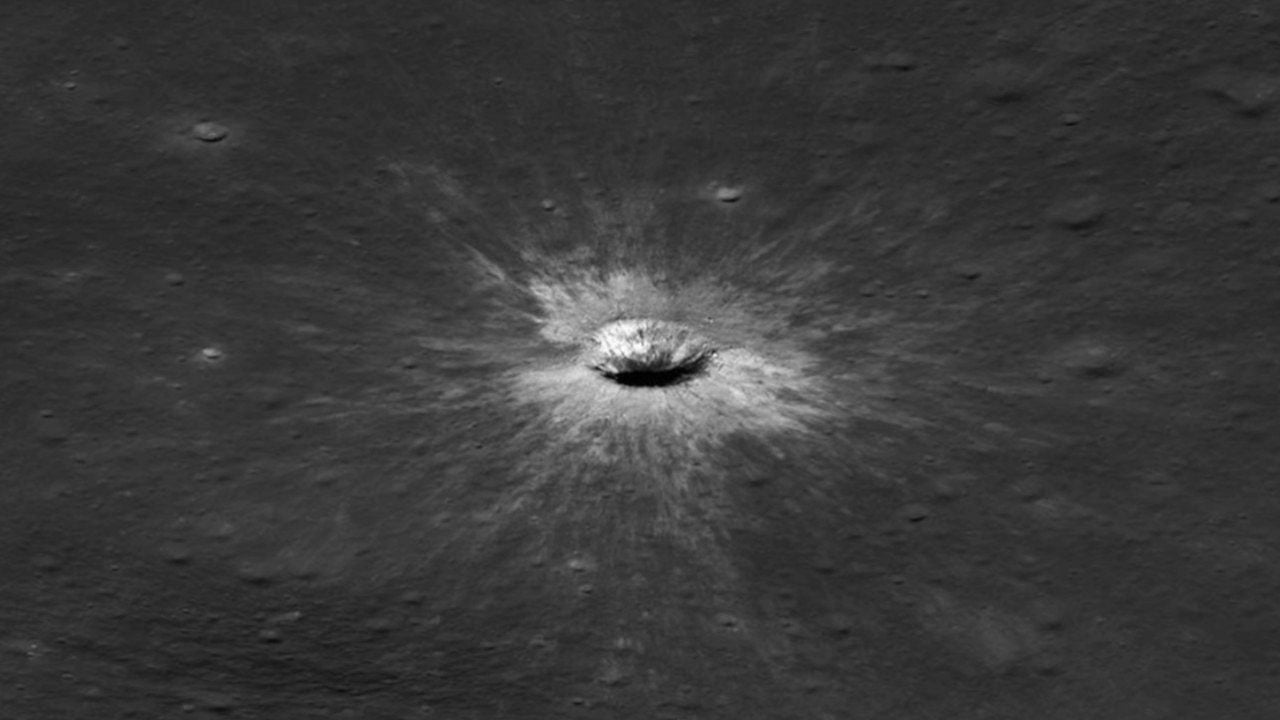
Recorded lunar impact dynamics and surface damage
Physical calculations from the McGetchin strike reveal distinct structural patterns:
- Incoming projectile diameter ranged between 9 and 21 meters before surface detonation.
- Explosive force matched 15,500 tons of conventional TNT high explosive.
- Secondary fragments created auxiliary impact craters across surrounding plains.
Mark Boslough noted that unmitigated strikes create an ongoing hazard for sustained surface activities. The total absence of air ensures that every incoming projectile strikes intact.
Ejected fragments travel far across lunar basalt plains
Elisha Jhoti, an author of one study and doctoral researcher at the University of California, Los Angeles, tracked the dispersion of dislodged rock. Primary impacts blast boulders outward, forming secondary craters when they strike the surrounding ground.
Julie Stopar, a planetary scientist at the Lunar and Planetary Institute in Houston who coauthored the companion paper, established that the bulk of the ejected mass landed near the primary rim. Secondary debris trails still spread radially across 96 kilometers of terrain away from the crater. Rocks flew in every direction.
Automated warning systems struggle to track compact asteroids before they collide with celestial bodies. Impact risks remain very real.