Nasa spots 220-meter McGetchin crater on Moon after comet hit

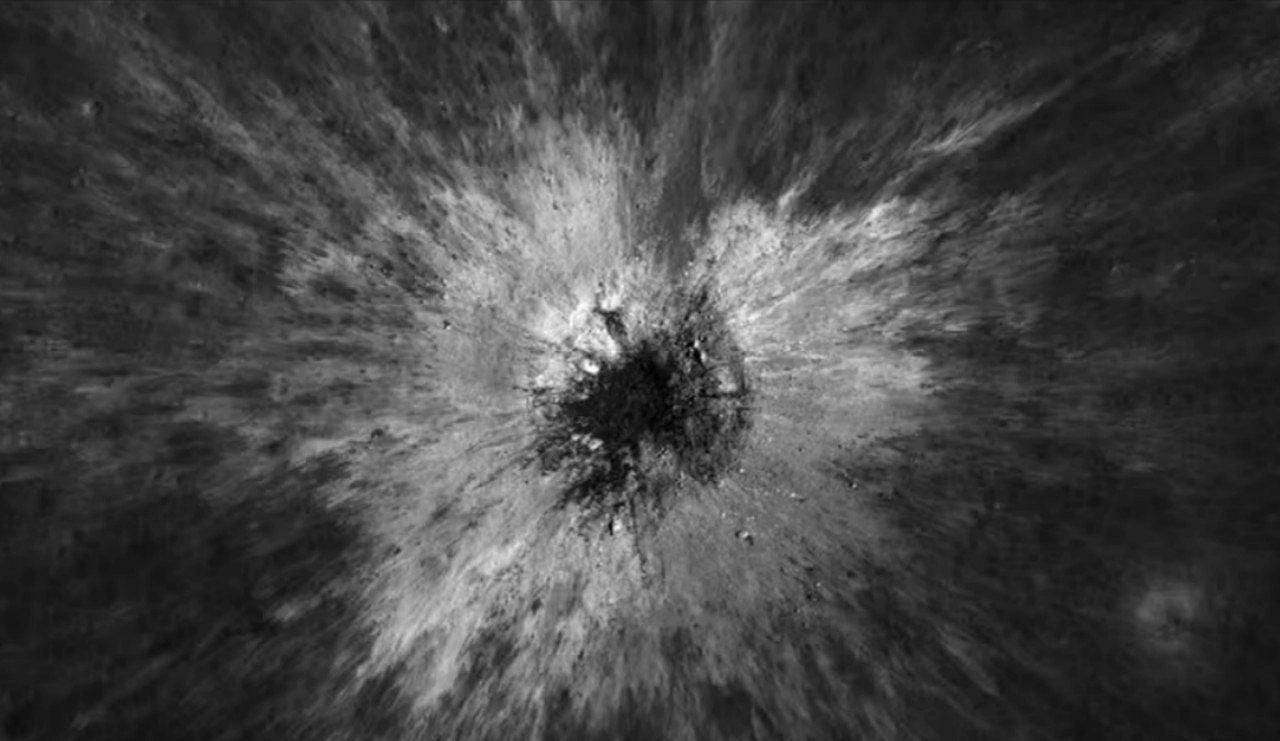
Nasa confirmed the discovery of a lunar crater named McGetchin on the Moon following a celestial impact that happens only once a century or even less. The feature drew immediate scientific attention due to the extreme rarity of such collisions on the lunar surface.
The fresh geological depression measures 220 meters across and plunges 43 meters deep after a comet or asteroid struck the lunar terrain.
Astronomers calculated that the incoming space projectile matched the dimensions of a three-to-six-story building before hurtling through vacuum and smashing directly into the exposed surface of the Moon between April 11 and May 22 of 2024. Orbital instruments verified the exact timing window through sequential photography. The violent collision gouged out thousands of tons of compacted regolith.
Image specialist Robert Wagner of Intuitive Machines identified the landmark feature during a routine inspection of camera feeds. The visual records originated from Nasa’s Lunar Reconnaissance Orbiter.
Wagner systematically examined temporal maps of the same lunar territory recorded at separate intervals. He spotted an anomalous bright mark wrapped in a dark halo across the high-resolution frames. This stark visual contrast confirmed that a fresh violent disturbance had disrupted the terrain.
Wagner said: “I just stopped, dropped everything and started investigating what that spot was.”
Subsequent photographic assessments verified that the site represents the largest fresh impact crater ever observed across the entire Solar System. The discovery remains unmatched.
Meteoroids strike the Moon continuously due to the absolute lack of a protective atmospheric envelope. Incoming space rocks reach the ground without burning up during descent. Earth avoids similar strikes because its dense air layer incinerates most debris.
The Lunar Reconnaissance Orbiter has operated in lunar orbit for over 17 years. Throughout this extended deployment, the spacecraft cataloged at least 1,000 new impact sites and tracked roughly 100,000 surface modifications caused by flying ejecta.
Most lunar collisions generate substantially smaller cavities on the crust. Formations spanning approximately 9 meters across appear at an average rate of 140 times each year. The McGetchin event vastly eclipses these regular occurrences.
Sensors recorded thermal anomalies reaching 6.4 kilometers beyond the central rim of the excavation. Nighttime temperatures across this exterior radius dropped approximately 9°C below surrounding territories.
Researchers determined that the blast pulverized and churned the regolith layer across the crash zone. This powdery blanket of rock debris became significantly less dense following the shockwave. The disturbed material consequently loses heat much faster once lunar darkness falls.
Mission planners will utilize the resulting data to evaluate how massive strikes alter the mechanical integrity of lunar soil. The findings guide the navigation routes of robotic rovers and human exploration landers on the Moon.
The peer-reviewed findings appeared in the scientific journal Science Advances.