
The Galileo Project, directed by Harvard University astrophysicist Avi Loeb, published its first autonomous triangulation measurements of objects moving through the sky on Thursday, September 24, 2026. The research recorded and calculated the three-dimensional trajectories of 365 aerial paths over Las Vegas, Nevada, achieving a 1.4% median relative error in distance calculations against known aviation data.
The system registered no extraterrestrial craft or unconventional anomalies during the seven-day monitoring trial, using conventional passenger jets and localized weather formations as natural calibration targets. “No objects beyond ordinary natural and human-made ones have been identified during the analyzed week,” stated Loeb, who directs the project and serves as a professor of astronomy at Harvard University.
Triangulation network deployed across Las Vegas
The monitoring network in Nevada relies on three automated observation stations positioned across the Las Vegas metropolitan area, named Sphere, Hideout, and Wildhorse. Sphere is separated by 10.1 kilometers from Hideout and Wildhorse, while the latter two stations sit 2.0 kilometers apart from each other. This geometry creates an asymmetric triangular baseline designed to determine physical coordinates through simultaneous optical and infrared detection.
See also: Avi Loeb finds 7 possible interstellar meteors in NASA fireball data
Each station operates autonomously with edge computing hardware, GPS-disciplined timing systems, automated thermal management, and long-wave infrared cameras that monitor all directions down to 10 degrees above the horizon. The core camera system utilizes an array of eight sensors that provide 360-degree horizontal coverage and 160-degree vertical coverage. One station, Hideout, operates an Automatic Dependent Surveillance–Broadcast receiver, known as ADS-B, which registers commercial aircraft transponder signals to serve as real-world reference points.
Kinematic separation divides aircraft and clouds
The initial analysis examined data gathered between Sunday, May 24, 2026, and Saturday, May 30, 2026. During that week, the three Las Vegas stations simultaneously tracked 365 trajectories that each provided at least 201 data points. The processing software separated these targets into two distinct dynamical categories based strictly on speed, path length, and altitude, without relying on advance identification.
The first group accounted for 301 trajectories that matched commercial aircraft behavior, traveling at speeds between 116 and 298 meters per second at a median altitude of 10.6 kilometers. Cross-referencing against transponder data confirmed that 284 of these tracks were scheduled aircraft, while 17 remained unregistered by transponders but showed identical flight dynamics. The second group consisted of 64 slow-moving targets operating below 30 meters per second at altitudes between 3 and 5 kilometers, which physical inspection proved to be small clouds drifting with ambient winds.
Check out: Scientists debate how interstellar objects could be sources for autonomous spacecraft
Technical metrics recorded by the Nevada array
The Las Vegas baseline tested the mathematical pipeline against civilian aviation traffic to measure sensor precision across varying atmospheric distances:
- 10.1 kilometers: geographic distance separating the Sphere station from Hideout and Wildhorse across the Las Vegas valley.
- 5,626: total aircraft detections resolved by station pairs to compute camera orientation and optical calibration.
- 100%: share of aircraft tracked simultaneously by all three stations that yielded distance estimates within 5% of transponder data.
- 1.4%: median relative error in distance measurements achieved across all three-station aircraft detections.
- 116 to 298 meters per second: physical speed range registered for all confirmed commercial airliners.
- 30 meters per second: maximum physical speed recorded for the 64 targets categorized as clouds.
Overcoming distance limits established since 2021
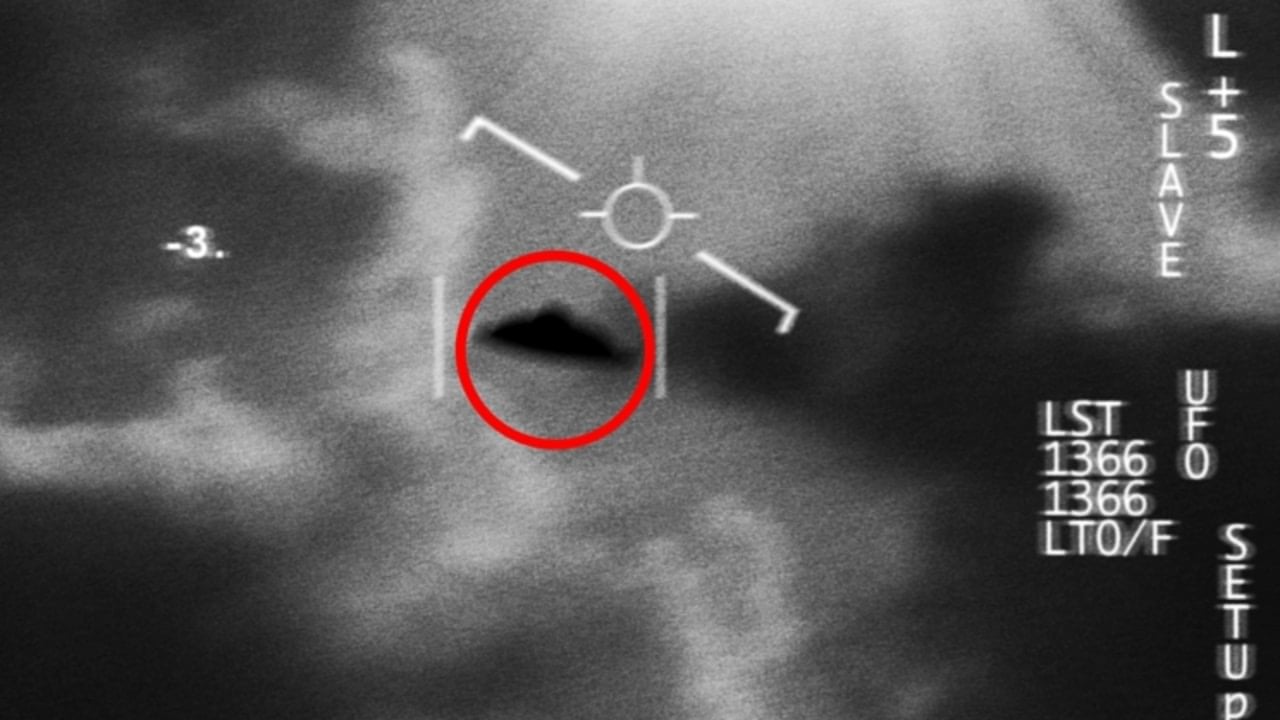
Loeb launched the Galileo Project in July 2021 at Harvard University to bring open, standardized scientific instrumentation to the investigation of Unidentified Anomalous Phenomena, commonly designated as UAP. For decades, aerial encounters recorded on video faced severe analytical limitations because a single sensor cannot record physical distance. An object passing close to a lens can appear to move at extreme velocities across the sky, while a distant object must travel at supersonic speeds to cover the identical angular distance.
Without an absolute distance measurement, researchers could not calculate true acceleration or separate optical artifacts, birds, and drones from authentic flight anomalies. The Las Vegas results demonstrated that multi-station optical triangulation can resolve three-dimensional flight paths without making assumptions about an object’s flight profile. Loeb noted that standardized instrument data replaces speculative interpretations of aerial videos. “The ground truth will not be dictated by viral tweets on social media but rather by evidence,” he stated.
Expansion to Ithaca and journal review status
Follow: Harvard Astronomer Avi Loeb Takes on White House Counsel to Investigate UFOs
The Galileo Project is preparing its fourth stationary observatory, which will be built at the former residence of astronomer Carl Sagan in Ithaca, New York. This planned installation is configured specifically to capture high-resolution imagery and spectral data of spherical aerial targets to identify their material composition.
Formal acceptance of the complete Nevada technical manuscript and its assigned volume number in a peer-reviewed academic journal have not yet been announced. Research teams are continuing to process recorded multi-station sky archives from the Las Vegas network under the calibrated triangulation model.