
Paramount Network’s flagship drama Yellowstone and Netflix’s Australian production Territory stand at the center of the modern neo-Western television genre, yet their trajectories have diverged sharply since Territory premiered in October 2024. While both productions examine fierce generational succession battles and territorial conflicts over massive agricultural holdings, they anchor their stories in vastly different cultural landscapes: the rural valleys of Montana in the United States and the arid expanse of Australia’s Northern Territory. That transatlantic and transpacific contrast took a definitive turn in February 2025, when Netflix executives confirmed that Territory would not return for a second season, even as the Yellowstone television universe continued expanding with new spinoff programming on May 15, 2026.
Created by Timothy Lee and Ben Davies and produced by Easy Tiger Productions and Ronde Media, Territory arrived on Netflix in late October 2024 positioned as an Australian counterpart to the American ranching phenomenon. The six-episode drama quickly drew 6.4 million views within its first four days on the platform, reaching the second spot on Netflix’s Global Top 10 English TV shows list. It entered the Top 10 rankings in 74 countries and claimed the number-one position in 11 territories, including Australia, New Zealand, and Brazil.
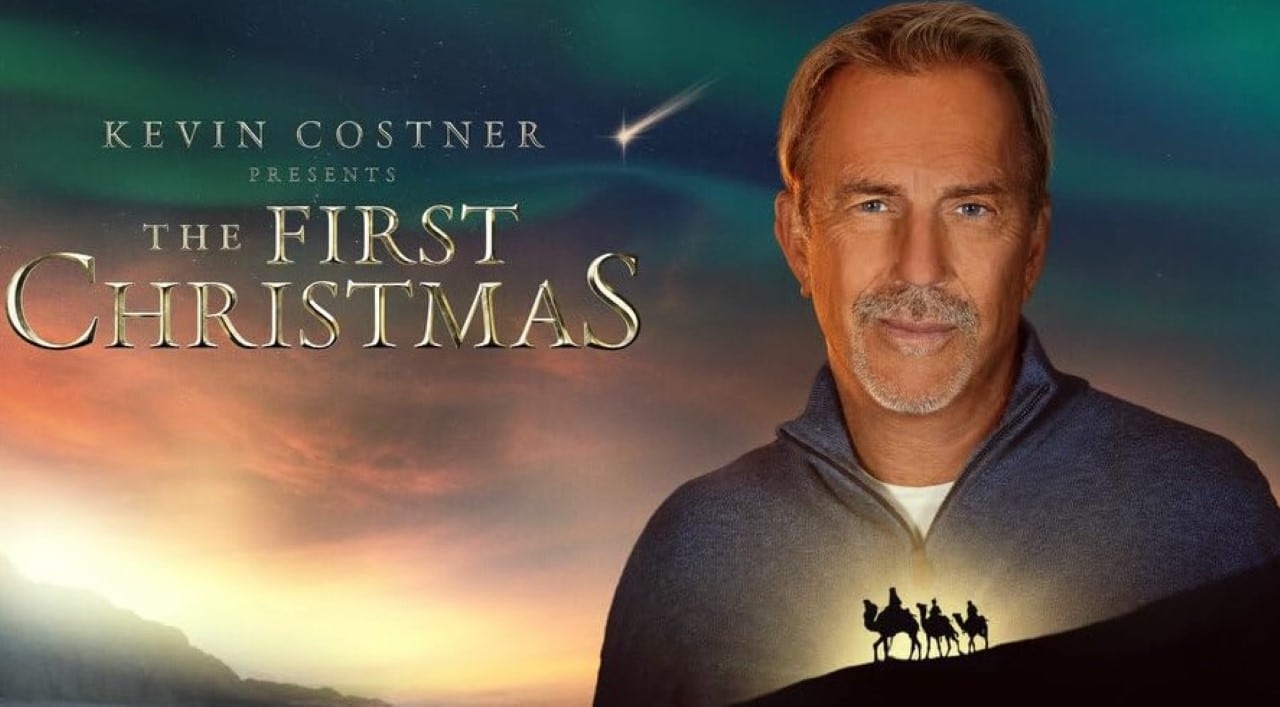
Divergent paths for Netflix’s outback drama and Paramount’s franchise
Despite those viewership metrics and an unresolved first-season cliffhanger, Netflix Australia and New Zealand confirmed in February 2025 that Territory had been canceled after its single six-part run. Industry reports indicated that logistical challenges around production timing prevented the streaming service from delivering a second season quickly enough to retain audience momentum. Que Minh Luu, Netflix’s director of content for Australia and New Zealand, stated in an official release that the company was “incredibly thankful to have had the chance to work with the wonderful cast and production team to bring Territory and the stunning Australian outback into the homes of millions around the world,” adding that the streamer would not continue with another season.
Meanwhile, the American franchise created by Taylor Sheridan and John Linson completed the second part of its fifth season in late 2024 following an airing schedule that began on November 10, 2024, without lead actor Kevin Costner returning for the final six episodes. Rather than slowing down, the property broadened its footprint beyond earlier historical prequels 1883 and 1923. On May 15, 2026, Paramount+ launched the nine-episode sequel series Dutton Ranch, starring Yellowstone veterans Kelly Reilly and Cole Hauser, which secured a second-season renewal in June 2026.
Lush Montana valleys versus the arid expanse of Marianne Station
Geography operates as an active force in both dramas, shaping how each family defends its borders. Yellowstone takes place in the US state of Montana, where the Dutton family controls the Yellowstone Dutton Ranch, depicted as the largest contiguous cattle ranch in the United States. Surrounded by mountain ranges and green pastures, the property faces constant encroachment from commercial real estate developers, rival land barons, a bordering Indigenous reservation, and the adjacent national park.
Territory shifts that frontier struggle to the unforgiving climate of the Australian outback, centering the plot on Marianne Station, billed within the narrative as the largest cattle station in the world. To capture the scale of the Northern Territory and South Australia, more than 200 cast and crew members lived and filmed for two months at Tipperary Station, an active working cattle property located two hours south of Darwin that spans more than 200,000 hectares. The production also filmed on location inside Kakadu National Park, a UNESCO World Heritage site whose ancient rock formations and arid plains contrast sharply with Montana’s alpine scenery while grounding the narrative in authentic Indigenous history.
Patriarchs and fractured dynasties in the Dutton and Lawson families
At the core of both narratives is a dysfunctional dynasty fighting to keep a vast agricultural empire from fracturing from within. For most of its five-season run, Yellowstone revolved around patriarch John Dutton, played by Kevin Costner, who even assumed office as the governor of Montana to block outside development and preserve his family’s land. The relentless friction among his children—each holding conflicting visions for how the ranch should be operated and defended—drives the internal betrayal and political maneuvering of the American series.
In Territory, the succession crisis is triggered immediately by the death of Daniel Lawson, the favored younger son who had been expected to lead Marianne Station. With no clear heir in place, family patriarch Colin Lawson, portrayed by Robert Taylor, presides over a crumbling domestic hierarchy that closely mirrors John Dutton’s predicament. As internal divisions widen, external predators—including rival cattle barons, desert gangsters, and billionaire mining magnates—move in to seize pieces of the Lawson empire.
The ensemble cast of the Australian drama places heavy emphasis on generational resentment within the homestead. Michael Dorman plays Graham Lawson, Colin’s eldest son and a potential successor who struggles with alcoholism and a volatile relationship with his domineering father. Anna Torv stars as Graham’s wife, Emily Lawson, who maneuvers to protect her family’s stake in the station alongside cast members Sam Corlett, Philippa Northeast, Clarence Ryan, and Jay Ryan.
Key structural differences between the two neo-Western dramas
- Primary setting: Yellowstone is set at the Yellowstone Dutton Ranch in Montana, United States, whereas Territory takes place at Marianne Station in Australia’s Northern Territory, filmed at the 200,000-hectare Tipperary Station and Kakadu National Park.
- Central families and leads: Kevin Costner leads the Dutton family as patriarch John Dutton in Yellowstone, while Robert Taylor, Anna Torv, and Michael Dorman anchor the Lawson family in Territory.
- Episode format: Yellowstone utilizes a traditional American television structure with seasons frequently spanning 10 or more episodes (including a 14-episode fifth season split into two parts), while Territory was produced as a condensed six-episode season.
- Franchise status in 2026: Yellowstone spawned the prequels 1883 and 1923 alongside the May 2026 sequel series Dutton Ranch, whereas Territory was canceled by Netflix in February 2025 after one season.
How each series approaches Indigenous land sovereignty
While both productions address the historical displacement of native populations, they allocate different levels of narrative weight to Indigenous perspectives. Yellowstone incorporates disputes and occasional alliances between the Dutton family and the neighboring Broken Rock Indian Reservation, examining ancestral land claims primarily through the lens of how those claims threaten or assist the Dutton ranch’s survival.
Territory integrates Aboriginal Australians directly into the central power struggle of the Northern Territory. Featuring Indigenous elders and leaders—including a pivotal character portrayed by actor Hamilton Morris, alongside cast members Clarence Ryan and Tuuli Narkle—the Australian series places sovereignty, sacred sites within Kakadu, and native land rights at the forefront of the plot. Episodes written by a team that included Indigenous screenwriters Kodie Bedford and Steven McGregor examine the complex, ongoing friction between colonial pastoralists and Australia’s First Nations communities.
Condensed six-part storytelling versus multi-series expansion
The pacing of the two shows reflects the structural differences between American cable franchises and international streaming commissions. Yellowstone built its audience over multiple years through expansive seasons of 10 or more episodes, allowing subplots to simmer across years and creating a template for multi-generational spinoffs like the 10-episode prequel 1883, starring Sam Elliott, Tim McGraw, and Faith Hill, and 1923, led by Harrison Ford and Helen Mirren.
Conversely, Territory was engineered as a tight, six-episode thriller directed by Greg McLean. That shorter runtime eliminated filler subplots and compressed the war among the Lawsons, rival station owners, and mining interests into an urgent, fast-moving narrative. Easy Tiger CEO Rob Gibson and Ronde Media CEO and series co-creator Ben Davies noted in a joint statement following the show’s conclusion that the team remained proud of the production’s global reach and the 200 local jobs generated across the Northern Territory and South Australia, leaving the six episodes available on Netflix as a standalone portrait of the Australian outback.