Meteor over Northeast Brazil seen in Pernambuco, Paraíba, Alagoas, Ceará and Rio Grande do Norte

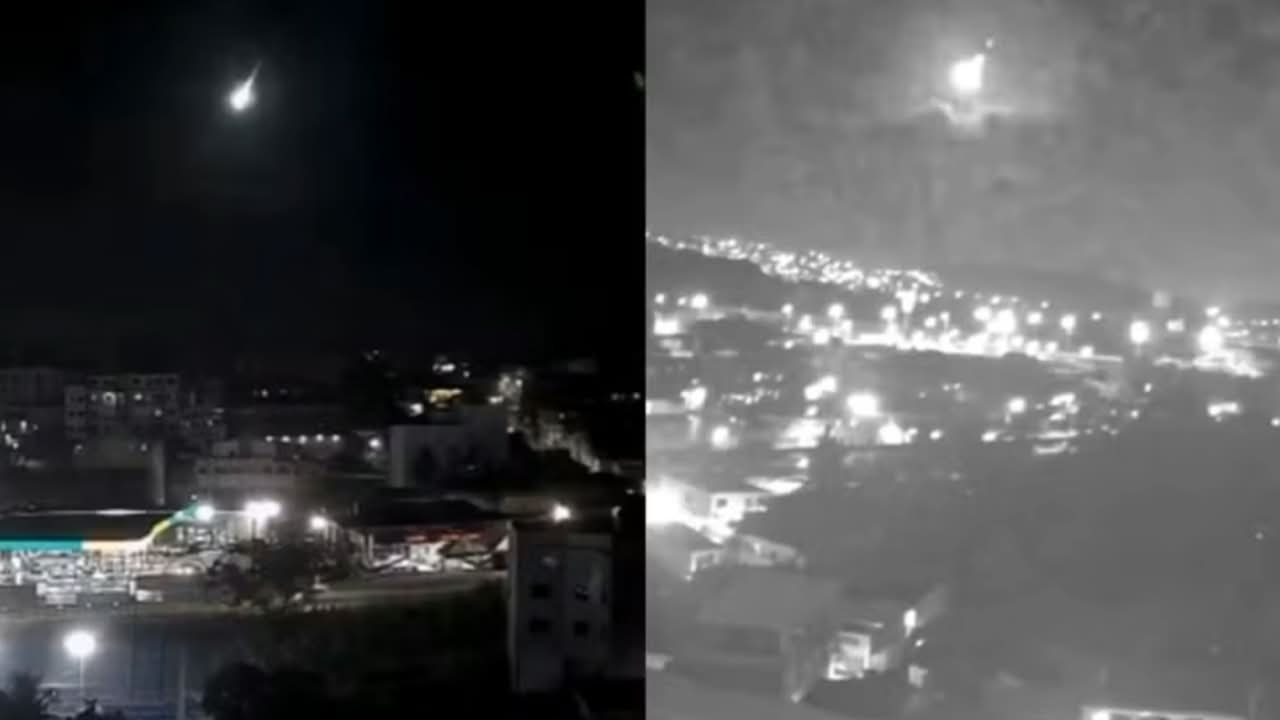
Security cameras and phones recorded a bright meteor that crossed the sky of five Northeast Brazil states at 9:34 p.m. on Thursday, November 19, 2026. The states were Pernambuco, Paraíba, Alagoas, Ceará and Rio Grande do Norte. The flash lasted only a few seconds, and no material damage or injuries were reported.
In Pernambuco, residents reported the phenomenon in Jaboatão dos Guararapes, Paulista and Ipojuca, in Greater Recife. People also saw it in Vitória de Santo Antão and Aliança, in the Zona da Mata, and in Afogados da Ingazeira, in the Sertão, two inland regions of the state. Sightings in towns hundreds of kilometers apart point to a very high point of entry into the atmosphere.
In Paraíba, security cameras in João Pessoa captured the luminous trail. Astronomer Marcelo Zurita, of the Associação Paraibana de Astronomia (APA), released the images.
Witnesses described a sudden flash followed by a trail in bluish and greenish tones. The fact that many cities saw it at the same moment indicates the object entered the atmosphere far above the ground.
Why the object glowed blue and green
Antônio Carlos Miranda, PhD in Stellar Astrophysics and member of the research group Desvendando o Céu Austral at the Universidade Federal Rural de Pernambuco (UFRPE), said the event was a bólido. In Portuguese, the word names a meteor much brighter than an ordinary shooting star, popularly called a fireball.
Miranda explained the mechanism behind the light in a few words. His view is that the rock broke up and caught fire on re-entry, driven by the Sun’s heat and friction.
“It seems that this fireball was a fragment of a comet that passes through our region and releases pieces because of the Sun’s heat, and when it re-enters the atmosphere it catches fire,” said Antônio Carlos Miranda.
Check out: Manchester City vs Fulham live score: Fulham lead 1-0 in Premier League
The color of the flames depends on the chemical composition of the space rock, which can contain metals and other elements. Astrophysicist José Dias do Nascimento said the green tone seen in the Northeast may be linked to magnesium in the object.
According to Miranda, bólids become visible to the naked eye when they reach altitudes close to those of large commercial flights, between 10 and 20 kilometers. Along the way, part or all of the rock wears away from friction and heat.
Where researchers think a piece may have landed
A fragment that survives the passage and reaches the ground is called a meteorite. Miranda said a piece of this object did survive and reach the soil, and he stressed the scientific value of such material. These rocks are billions of years old and formed at the same time as Earth and the Sun.
Research groups began looking for fragments based on the trajectory recorded by the cameras. The APA estimates the highest chance of a fall is near João Pessoa, in the Pocinhos and Nazaré area of Paraíba.
Follow: Deportivo Alavés host Deportivo La Coruña in LaLiga round 13
Marlon Tenório, geographer of the Associação Astronômica de Arcoverde, in Pernambuco, offered a different assessment. He said the object broke apart while crossing the atmosphere without risk to the population, and that small pieces most likely fell into the sea.
Researchers are still collecting videos and reports from different cities to reconstruct the bólido’s path and confirm whether any meteorite reached Paraíba’s soil. As of Saturday (21), no fragment had been found and identified by scientists.
Why the Leonids shower does not explain the fireball
The sighting happened during the activity of the Leonids, a meteor shower that peaked on the night of November 17, 2026. The shower remains visible in Brazil until November 30, with up to 15 meteors per hour under ideal dark skies.
Miranda placed the episode within the period of the Leonid or Orionid showers. Initial analyses released in Paraíba, however, indicated the object was not part of the Leonids despite the matching dates. Cross-checking the records from all five states should clarify the exact origin of the celestial body.