Russian jets enter South Korea air defense zone near Ulleungdo

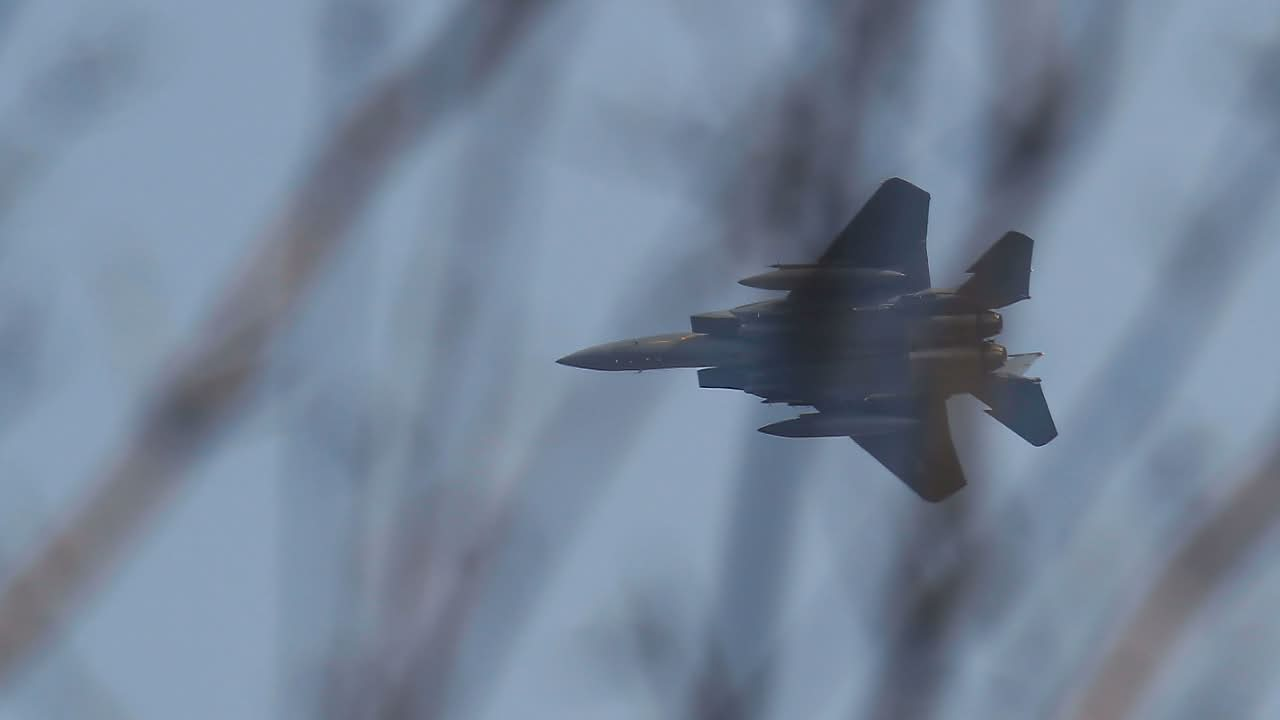
Five Russian military aircraft entered South Korea’s Air Defense Identification Zone (KADIZ) on 24 November 2026, pushing Seoul to scramble fighter jets and issue an air-raid alert on Ulleungdo island. The planes flew over the East Sea, also called the Sea of Japan, and came up to the edge of South Korean airspace without entering it.
The alert reached phones on Ulleungdo at 7:52 a.m. local time, which is 7:52 p.m. on 23 November in Brasília. Residents were told to take shelter in closed or underground spaces. The warning lasted about six minutes and ended after the aircraft moved away from the coast under escort of Air Force fighters.
Province message named North Korea before correction
Captain Jang Do-young, spokesperson of the Joint Chiefs of Staff, said the Russian aircraft approached Ulleungdo in a way that suggested a possible incursion into its territorial airspace. “We issued the alert in advance to protect the public, since a possible intrusion seemed imminent,” Jang Do-young said at a press briefing.
The official communication also failed. An early message from the Ministry of the Interior and Safety said the airspace had been violated, while the provincial government of North Gyeongsang, which administers Ulleungdo, sent a notice that cited a suspected North Korean aircraft. About 40 minutes later, at 8:39 a.m. local time, the province published a correction confirming the aircraft were Russian and said it had warned the official responsible for the error.
Defense ministry summons Russian military envoy in Seoul
The Ministry of National Defense summoned Colonel Nikolai Marchenko, the military attaché of the Russian Embassy in Seoul, to present a formal protest. Kim Hak-jo, director-general of the ministry’s International Policy Department, asked Moscow to take measures to prevent similar incidents in the region. Seoul’s Foreign Ministry also said it had expressed regret to Russia through diplomatic channels.
Russia’s Ministry of Defense said strategic bombers Tu-160 carried out a scheduled flight of about 10 hours over neutral waters of the Sea of Japan, in line with international aviation rules. Moscow does not recognize the KADIZ, arguing that Seoul created the zone unilaterally and that no international treaty supports it. The Russian Embassy in Seoul later said Russia acted in compliance with international law.
Check out: Alexsander admits to Russian espionage and treason in Ukraine
Russian flights into the zone reach five in 2026
An air defense identification zone is not the sovereign airspace of a country. It is a monitoring strip where governments ask foreign aircraft to identify themselves for security reasons. No international law requires advance notice, although most countries notify before entering the zone. Defense Ministry and Air Force data sent to the National Assembly show Russian military aircraft entered the zone without notice more than 60 times between 2020 and 2024.
The 24 November flight was the third unannounced entry by Russian military aircraft in eight days, after entries on 17 and 19 November. It was also the fifth in 2026, following flights on 27 June, which took place during a joint air drill with China, and 26 August. It was the first time South Korea‘s military triggered a preliminary air-raid alert over a possible Russian airspace incursion.