Voyager 1 reaches one light-day from Earth after 49 years of travel

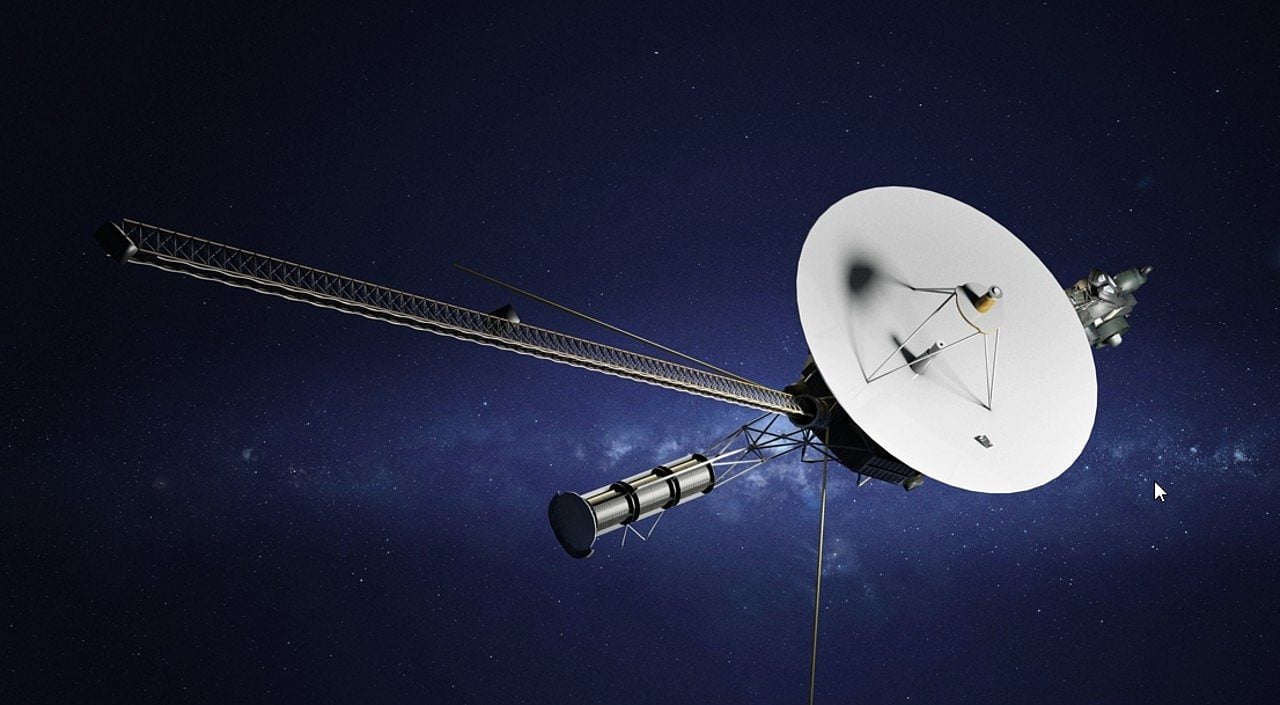
The Voyager 1 probe, operated by NASA, has covered one light-day of distance from Earth and became the first human-made object to reach that mark. The milestone was reached on November 18, 2026, after more than 49 years of flight, and radio signals from mission control now need exactly 24 hours to reach the spacecraft.
A full exchange with the probe takes 48 hours, because a command needs a day to get there and a reply needs another day to come back. NASA said the milestone occurred at 2:16 a.m. PST, which is 5:16 a.m. EST. The spacecraft is the most distant object built by people and still operates outside the Solar System.
“It is a truly impressive feeling to know that Voyager 1 is one light-day from Earth,” said Nicky Fox, associate administrator of NASA’s Science Mission Directorate. According to her, the probe’s distance leads researchers to think about the size of the universe.
Check out: PRIMA space telescope earns NASA selection as first Probe Explorer mission
How a 24-hour signal delay is changing NASA’s mission work
A light-day is the distance that photons, the particles that make up light, cover in a full day through a vacuum. Radio waves used in space communications travel at the speed of light, so the time data takes to travel grows as Voyager 1 moves away from the planet.
Twin probes launched in 1977 to explore the outer planets
Historian Jordan Bimm, of the University of Chicago, said that crossing this boundary marks a change in how people approach space exploration. “It is a rhetorical shift we are adopting to signal our hope and ambition for future space missions that are faster and reach even greater distances,” said Bimm. NASA also said the probe has sent no science or engineering data since November 14, although its carrier signal remains detectable and engineers are investigating the cause.
Voyager 1 launched on September 5, 1977, a couple of weeks after its twin, Voyager 2. The two probes were first designed to observe the giant planets of the outer Solar System, such as Jupiter and Saturn, before heading toward the limits of the Sun’s influence.
Follow: NASA's Webb says interstellar comet 3I/ATLAS formed 10 to 12 billion years ago
Almost half a century later, Voyager 1 and Voyager 2 form the longest-lasting pair of spacecraft in the history of space exploration. Both still send scientific information and trajectory data from interstellar space, although neither was designed to return to Earth. NASA has turned off most of the probe’s instruments to save power, and the output of its power source drops by about four watts every year. Voyager 2 is expected to reach one light-day from Earth in 2035.