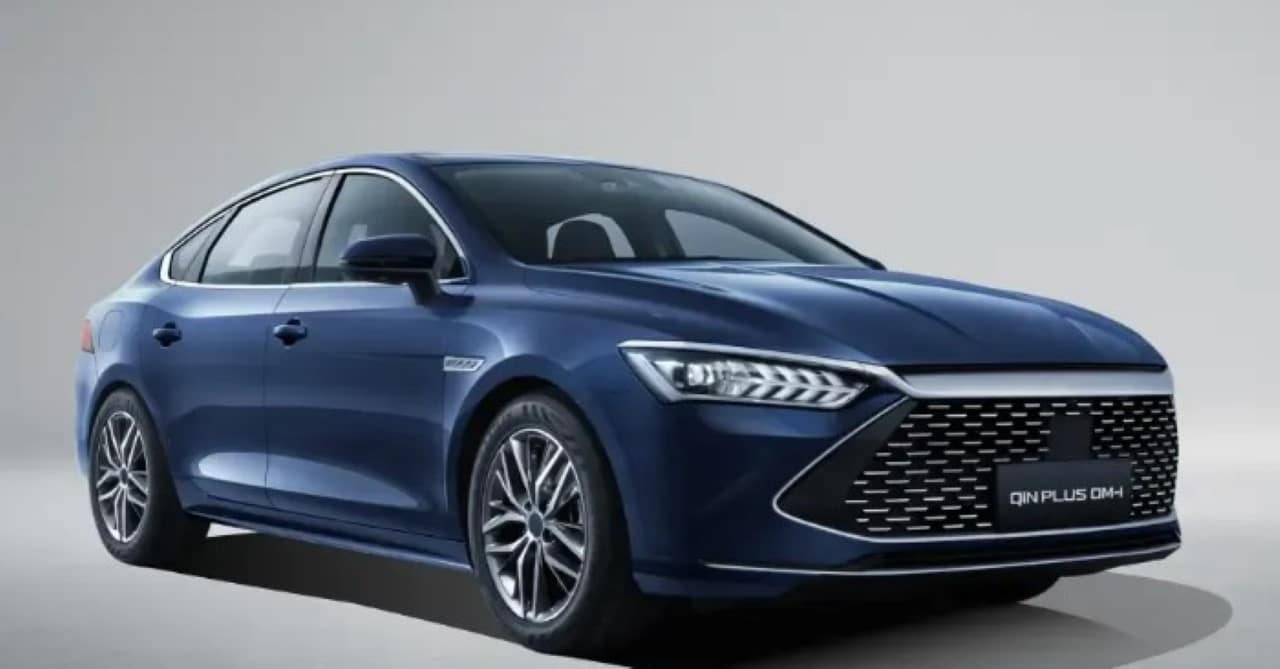
Risk of battery fire leads BYD to recall almost 89,000 Qin Plus DM-i cars

Chinese automotive giant BYD has announced a large-scale recall involving 88,981 units of its popular plug-in hybrid sedan, the Qin Plus DM-i. The measure was taken due to a defect identified in the high voltage battery pack, which presents a potential fire risk under certain conditions, generating alert among consumers and regulatory authorities.
The call covers vehicles manufactured between January 2021 and September 2023, a period of intense production and growth for the brand. The recall was formalized with Administração Estatal for Regulação of Mercado of
This move highlights the growing complexity and safety challenges associated with electric and hybrid vehicle technology, especially with regard to energy storage systems. Lithium battery safety remains a critical issue for the entire global automotive industry, requiring strict quality controls and rapid responses to any detected faults.
High Voltage Battery Failure Details
According to the official statement issued by BYD, the root cause of the problem lies in an inconsistency in the manufacturing process of the power battery system sampling harness. Essa failure may result in improper securing of the harness within the battery pack.
Over time and normal vehicle vibration, this poor fixation can lead to wear on the harness, which can come into contact with other internal components. Essa condition creates a high risk of a short circuit, which, in turn, can trigger thermal runaway in the battery, resulting in a fire.
Solution presented by the automaker
To correct the flaw and mitigate the risks, BYD outlined a two-step action plan. The first measure consists of implementing an Over-The-Air (OTA) software update, which will be sent remotely to affected vehicles without the need for a dealership visit.
This new firmware improves the battery management system (BMS) by optimizing the monitoring algorithms. The objective is to allow the system to detect anomalies earlier and issue warning alerts to the driver before a critical situation develops.
If the software update is not sufficient or if the system detects an underlying problem, owners will be instructed to take their vehicles to an authorized dealer. In Nesses cases, a technical team will perform a thorough inspection and, if necessary, replace defective battery harness components at no cost to the customer.
History of recalls and brand expansion
This is not an isolated incident for BYD, which has become the world’s largest electric vehicle maker. The company has already carried out other significant recalls in recent years, reflecting the challenges inherent in a fast-paced production expansion and the constant introduction of new technologies.
Previously, models such as the SUV Tang DM-i and the electric Yuan Pro were also recalled for fixes related to failures in battery components and energy management systems. Esses events raised discussions about quality control in the company’s supply chain.
The popular model Dolphin and the Yuan Plus, which is also sold in international markets, including the Brasil, have already been subject to recalls for different issues, such as problems with components in the cooling system and fixing parts. Cada recall serves as a learning experience for the automaker, which seeks to improve its processes.
These summonses, although negative in the short term, demonstrate greater supervision by regulatory bodies and a commitment by the company to deal with failures in a transparent manner, a crucial factor in maintaining consumer confidence in an increasingly competitive and globalized market.
Actions for vehicle owners
BYD will begin communicating with owners of recalled vehicles through several official channels. Notifications will be sent through the brand’s app, in addition to direct contact by phone and text messages, ensuring that information reaches everyone involved clearly and efficiently. Adicionalmente, the company has made a consultation tool available on its official website, where customers can enter the vehicle identification number (VIN) to check whether their unit is among those affected by the safety campaign.
The automaker’s express recommendation is that owners of Qin Plus DM-i models manufactured in the indicated period pay attention to communications and, upon being notified, schedule service at the nearest dealership as quickly as possible. The company emphasizes that all inspections and possible repairs will be carried out free of charge. Até Once the procedure is completed, caution and attention are advised to any alerts displayed on the vehicle’s dashboard related to the battery system.
Supervision of the automotive market in China
BYD’s recall comes at a time of intense surveillance in the Chinese auto market, the largest in the world. The Administração Estatal to Regulação from Essa The Chinese government’s stricter stance aims not only to protect local consumers, but also to strengthen the reputation of Chinese brands on the global stage, where competition is fierce. Transparency in communicating recalls and the effectiveness of proposed solutions are seen as fundamental elements to consolidate international trust in high-tech products manufactured in the country, especially in the new energy vehicle (NEV) sector, which is strategic for the Chinese economy.
Implications for BYD’s reputation
Despite its dominant position in the market and significant sales growth, recurring recalls represent a challenge to BYD’s image. Battery safety is a top concern for consumers when considering purchasing an electric vehicle, and incidents like this can fuel hesitancy among potential buyers. The way the company manages this crisis, with transparent communication and effective solutions, will be decisive in preserving its reputation and the loyalty of its customers in the long term.