
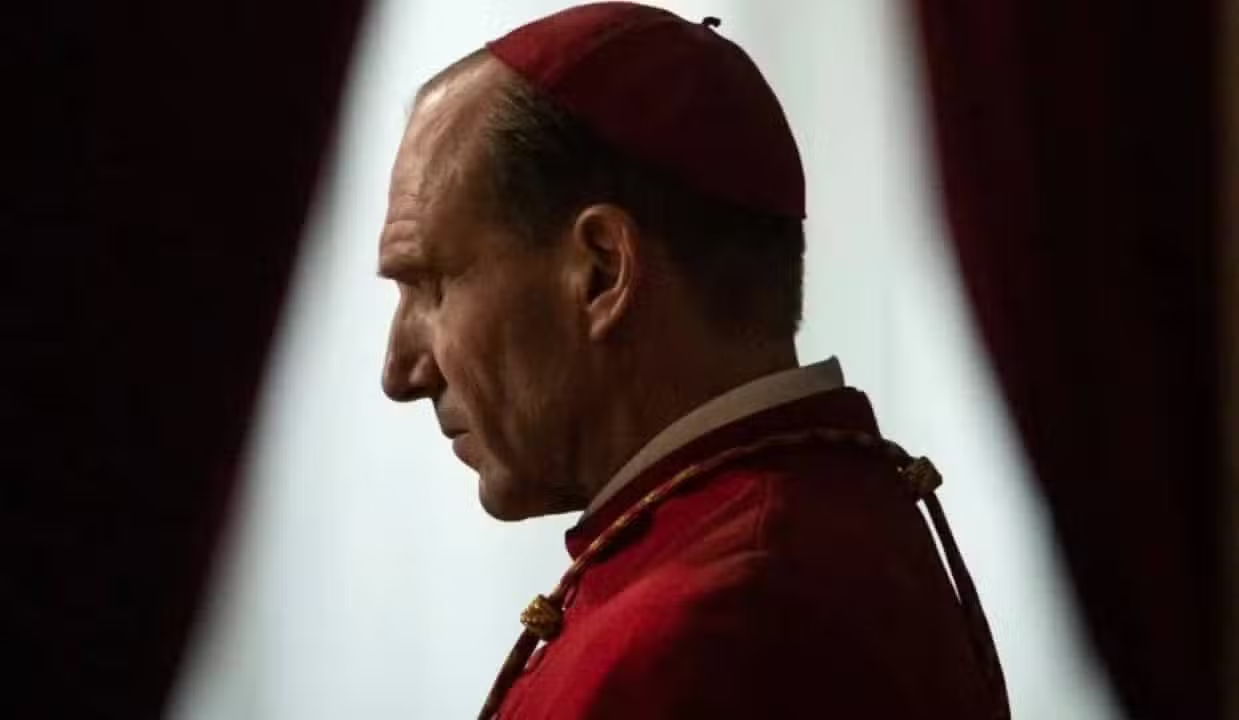
The film Conclave, directed by Edward Berger and based on the acclaimed novel by Robert Harris, won the Best Screenplay award at the 2025 Golden Globes, standing out as one of the most praised productions of the year. The event, held at the Beverly Hilton Hotel in Los Angeles, brought together the biggest names in the film industry. Peter Straughan’s adaptation was widely praised by critics for transforming a complex literary narrative into an engaging cinematic screenplay.
With six Golden Globe nominations, including Best Motion Picture – Drama, Best Director, Best Actor in a Drama Film for Ralph Fiennes, and Best Supporting Actress for Isabella Rossellini, Conclave was one of the night’s highlights. Its win in the Best Screenplay category underscores the importance of a well-crafted narrative for a production’s success, especially in a year filled with strong contenders like Emilia Pérez and The Brutalist.
The victory for Conclave is also a testament to Straughan’s ability to preserve the essence of the original novel while adapting it for cinema. The film delves into the intrigue, politics, and religion behind a papal conclave, making it a captivating and culturally relevant production.
Plot and themes explored in Conclave
Conclave offers audiences an intricate and thought-provoking look into the process of electing a new pope after the death of the previous Catholic Church leader. Set in a context of secrets and rivalries, the film highlights the complexity of political and spiritual decisions involved in the conclave. The narrative focuses on Cardinal Lomeli, played by Ralph Fiennes, who faces ethical and emotional challenges while overseeing the process.
The screenplay balances moments of high tension and deep reflection, addressing themes such as faith, power, and corruption within one of the world’s oldest and most influential institutions. The richness of the dialogue and the depth of the characters are direct reflections of Straughan’s work, translating the nuances of Harris’s book for a broad audience.
Production and artistic contributions
The production of Conclave involved a talented team that collaborated to create a high-quality work. Edward Berger’s direction brought an impressive visual approach, emphasizing the grandeur and mystery of the Vatican. Stéphane Fontaine’s cinematography was praised for capturing the film’s unique atmosphere, while Volker Bertelmann’s original score heightened the emotions embedded in the narrative.
The art direction and production design meticulously recreated the Vatican’s settings, transporting viewers directly into the conclave. From religious garments to intricate details in the voting chambers, every aspect of the production contributed to the audience’s immersion and authenticity.
Additional recognitions and award season impact
Beyond its triumph at the Golden Globes, Conclave has received widespread acclaim at international festivals. At the Palm Springs International Film Festival, the cast received the Best Ensemble Performance award, showcasing the chemistry between actors such as Ralph Fiennes, Stanley Tucci, John Lithgow, Lucian Msamati, and Isabella Rossellini. The performances stood out for their intensity and believability, adding significantly to the film’s overall impact.
The soundtrack also earned praise for its crucial role in creating the film’s solemn and tense atmosphere. Bertelmann’s compositions perfectly complemented the plot, enhancing the emotions and deepening audience engagement with the story.
Key facts about Conclave
- The adaptation was based on Robert Harris’s novel, originally released in 2016.
- The film was produced with an estimated budget of $50 million.
- Conclave premiered at the Venice Film Festival, receiving a standing ovation during its screening.
- The cast included major names like Ralph Fiennes, Stanley Tucci, and Isabella Rossellini.
- The production was filmed in real locations and detailed sets to capture the Vatican’s essence.
Importance of adapted screenplays in contemporary cinema
The win for Conclave at the 2025 Golden Globes underscores the crucial role of adapted screenplays in the film industry. Stories based on books often provide rich, structured narratives, forming a solid foundation for cinematic productions. In the case of Conclave, the transition from literary text to screenplay retained the characters’ depth and the story’s dynamism.
Peter Straughan’s work exemplifies how screenwriters can use original material as a starting point to create something unique and accessible to a broader audience. His ability to preserve the essence of Harris’s novel while adding cinematic elements was fundamental to the film’s success.
Cultural relevance and critical reception
Conclave resonated with critics and audiences for its exploration of traditional institutions and their mysteries. The film was praised for its reflections on leadership, morality, and the complex interactions between power and faith. These universal themes struck a chord with viewers, making the film relevant not only as entertainment but also as a culturally significant work.
The Golden Globe victory cemented Conclave’s position as one of the year’s most important productions. Critics pointed to the combination of a captivating narrative, exceptional performances, and high production quality as key factors contributing to its success.
Industry impact and future prospects
The triumph of Conclave at the Golden Globes could pave the way for further success during awards season, including the Oscars. The production is already considered a strong contender in several categories, such as Best Picture, Best Director, and Best Actor. Regardless of future results, the legacy of Conclave as a remarkable cinematic work is already secured.
Moreover, the film highlights the importance of well-crafted narratives in the contemporary film industry. Its blend of cultural relevance, artistic quality, and emotional impact sets a new standard for literary adaptations in cinema.