Club World Cup 2025: Adidas Unveils Official Ball with Innovative Technology and Design Inspired by the US Flag

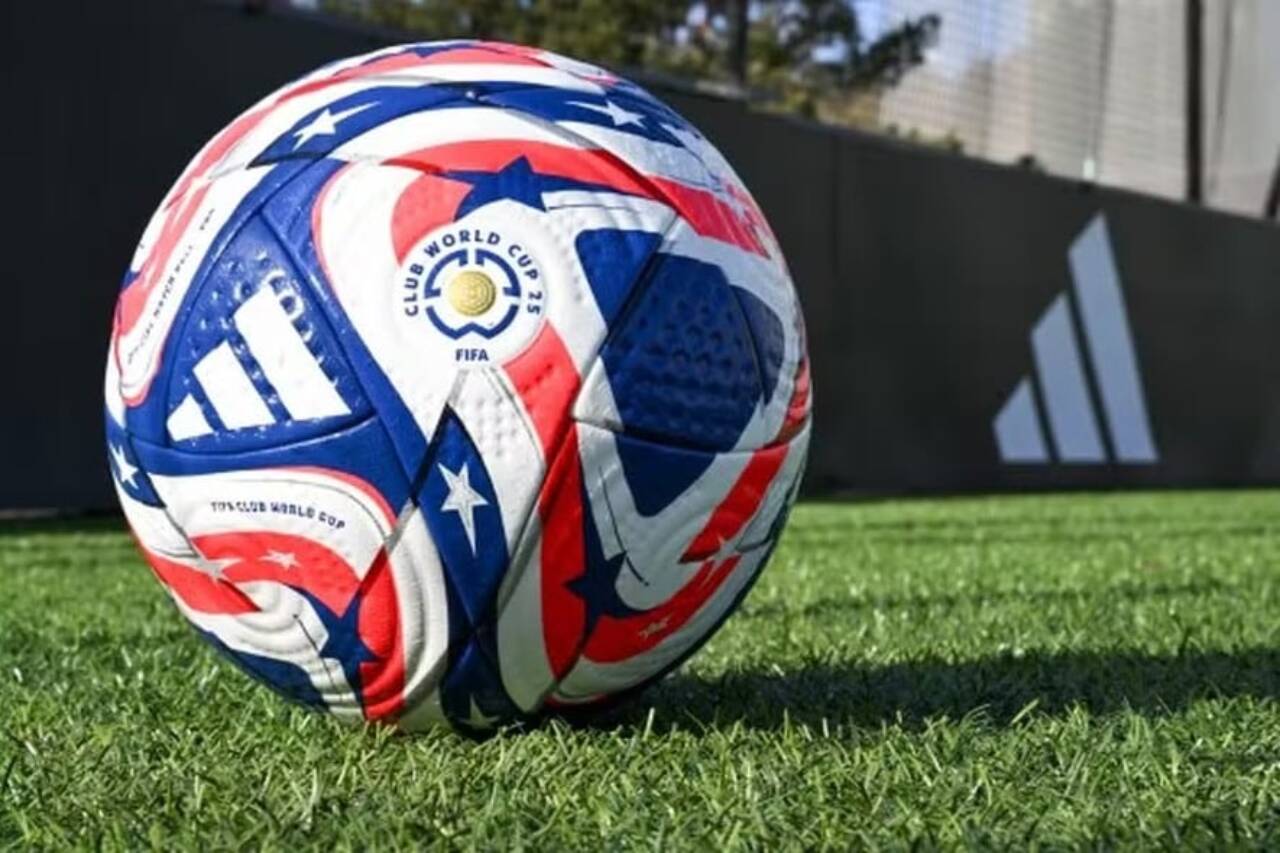
Adidas, FIFA’s official sports equipment supplier, has unveiled the official ball for the 2025 Club World Cup, which will be held in the United States between June and July. The launch marks the debut of the tournament’s new expanded format, bringing together 32 teams from different continents. The ball, predominantly white with blue and red details, pays tribute to the colors of the host country’s flag. Unlike World Cup editions, this time, the ball has not been given a specific name. However, the standout feature is the embedded technology, which promises to assist referees with even greater precision.
The 2025 Club World Cup will kick off on June 14, with a match between Inter Miami of the United States and Al-Ahly of Egypt. Four Brazilian clubs are confirmed for the competition: Palmeiras, Flamengo, Fluminense, and Botafogo. With the new format, the competition aims to elevate the technical level and bring even more visibility to world football. In addition to the technological innovations in the ball, FIFA has also announced a new trophy for the 2025 edition, developed in collaboration with renowned jeweler Tiffany & Co.
The official ball, beyond its striking design, features an internal chip that enables direct communication with FIFA’s semi-automatic offside detection system. The technology also registers any type of surface contact, helping referees detect hand or arm touches, even in difficult-to-observe situations. This advancement represents another step in modernizing football and enhancing fair play within matches.
the countdown is on, and the ball is ready to go. ????⏳
— adidas Football (@adidasfootball) January 31, 2025
introducing the Official Match Ball FIFA Club World Cup 2025. ????✨
see you this summer ???????? pic.twitter.com/e83K9SOS4u
A revamped tournament for modern football
FIFA announced the new Club World Cup format to increase competitiveness and further globalize the tournament. For the first time, 32 teams will compete for the title in a structure similar to the FIFA World Cup. The goal is to provide unprecedented matchups between top clubs from different continents, increasing the tournament’s appeal to a global audience. With this change, the 2025 Club World Cup is set to become one of the most anticipated events on the sports calendar.
The group stage will feature eight groups of four teams each, with the top two advancing to the knockout phase. The Round of 16, quarter-finals, semi-finals, and final will follow the traditional single-elimination format. This structure aims to bring more balance and excitement, ensuring that the best teams progress to the decisive stages. FIFA expects the new model to expand public interest and make the tournament a broadcasting success.
The debut of the new ball technology in the Club World Cup
The introduction of advanced technology in football has been a growing trend in recent years, and the 2025 Club World Cup ball reinforces this evolution. With an internal sensor, the ball can transmit real-time data to the refereeing team, assisting in identifying infractions that might have previously gone unnoticed. This system has already been tested in previous competitions and has proven effective in analyzing offside calls and controversial handball incidents.
This development aims to minimize errors and ensure that crucial decisions are made with greater accuracy. FIFA has been investing in the modernization of refereeing, and the adoption of this technology is a significant step in that process. Beyond offside detection, the ball will also contribute to analyzing dubious plays inside the penalty area, preventing misinterpretations of potential infractions.
Brazilian teams competing for the title
Brazil will have four representatives in the 2025 Club World Cup: Palmeiras, Flamengo, Fluminense, and Botafogo. These clubs secured their spots through victorious campaigns in continental and national tournaments, demonstrating the strength of Brazilian football on the global stage. With a history of triumphs in the competition, Brazilian teams enter the tournament with high expectations and hope to replicate past successes.
Fans are eagerly awaiting the participation of national teams, which will face some of the world’s top football clubs. The presence of traditional clubs and the technical quality of Brazilian players promise thrilling matches throughout the tournament. Player adaptation to the schedule and physical preparation will be key factors in the teams’ performance in the competition.
The main stadiums hosting the matches
FIFA has selected iconic stadiums across the United States to host the 2025 Club World Cup matches. The MetLife Stadium in New York will be the venue for the grand final, while arenas in other major cities will host group stage and knockout round matches. The United States has a history of hosting major sporting events and is expected to provide top-tier infrastructure for athletes and fans.
The stadiums were chosen based on infrastructure and audience capacity, ensuring an unforgettable experience for football enthusiasts. With an expected high turnout of fans from various parts of the world, FIFA hopes the tournament will be one of the most successful in history. The event’s organizers are working to deliver a flawless competition, from logistics to participant security.
The evolution of the Club World Cup over the years
Since its inception, the Club World Cup has undergone several transformations. Initially, the tournament featured only continental champions, but over the years, FIFA expanded its reach, allowing more teams to participate. The 2025 format represents the most significant change in the competition’s history, making it even more similar to the FIFA World Cup.
Previous editions have been marked by memorable matchups and titles won by historic clubs. With the new configuration, FIFA aims to establish the Club World Cup as one of the most important events in world football, increasing visibility for teams and boosting fan engagement.
Financial impact and audience expectations
The 2025 Club World Cup is expected to be a financial and viewership success. FIFA estimates that the competition will generate billions of dollars in revenue, driven by sponsorships, broadcasting rights, and ticket sales. The tournament is set to attract millions of viewers worldwide, solidifying its place as one of the premier sporting events on the calendar.
The expectation is that the competition will set viewership records, especially in key markets such as Europe, South America, and Asia. The matches will be broadcast by various media outlets and streaming platforms, ensuring that fans from all over the world can follow the action. With the growing popularity of football in the United States, the tournament could further boost the sport’s presence in the country.
The future of the Club World Cup and the impact of the 2025 edition
The 2025 Club World Cup edition will mark a new chapter in the tournament’s history. FIFA expects the new format to be a success and serve as a foundation for future editions. The goal is to make the competition increasingly relevant and attractive, promoting an international showcase for the world’s best clubs.
Technological innovation, combined with an increased number of participants, elevates the Club World Cup to a higher level within the football landscape. The 2025 tournament will be a true test for the new structure, and if successful, it could influence other international competitions to adopt similar models.