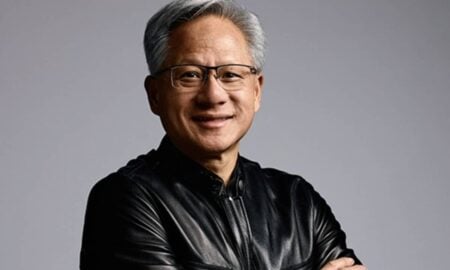
Stephen Park, reveals toxic environment and racism behind the scenes of Friends: “It was common in Hollywood”


Stephen Park, an actor known for his roles in productions like Friends, has shed light on troubling memories from his time on the iconic 1990s sitcom. Appearing in two episodes between 1996 and 1997, he encountered what he described as a hostile and racially charged atmosphere. In a recent interview on the podcast Pod Meets World, Park recounted incidents that led him to question Hollywood’s culture at the time, exposing how racism was casually accepted behind the scenes of one of television’s most beloved series. His statements reignite discussions about the lack of diversity and the challenges faced by minority actors in the entertainment industry.
Park’s account centers on a specific episode involving himself and fellow actor James Hong, both of Asian descent, who were targeted with derogatory remarks by an assistant director. The experience, he said, was so impactful that it forced him to reevaluate his career and publicly address the struggles of Asian American professionals during that era.
Friends guest star Stephen Park called the show out for creating an allegedly toxic environment where he and others endured racist name calling and more. https://t.co/IDkNgk9S6u
— Us Weekly (@usweekly) March 7, 2025
Friends, aired from 1994 to 2004, won over millions of fans worldwide with its lighthearted humor and stories of friendship in New York. Yet, Park’s revelations paint a stark contrast to the show’s carefree image, suggesting that harmony was far from universal off-camera.
Painful experience on set
During his stint on Friends, Stephen Park appeared in “The One With the Chicken Pox” from Season 2 and “The One With the Ultimate Fighting Champion” from Season 3. Behind the scenes, he encountered an environment he labeled “toxic” and unwelcoming. While filming, an assistant director referred to him and James Hong, another Asian actor in the cast, in a disrespectful manner. “Where the hell is the oriental? Bring the oriental,” the professional allegedly said, according to Park. The term “oriental,” used to describe people of Asian descent, carries a historical weight of stereotypes and colonialism, widely regarded as offensive.
Park emphasized that such behavior wasn’t an isolated incident but part of a normalized culture in 1990s Hollywood. He noted that no one on set—neither directors nor castmates—stepped in or addressed the issue, amplifying his sense of helplessness in the face of prejudice. “It was an environment where this was seen as normal, and no one felt the need to say anything about it,” he stated. The ordeal left a lasting mark, prompting him to view the industry through a more critical racial lens.
Seeking recourse, Park turned to the Screen Actors Guild, the U.S. actors’ union, but found little immediate support. The representative he spoke with suggested he write an article for the Los Angeles Times, a step he pursued, though the piece was never published. Undeterred, he turned his draft into an open letter, emailed to personal contacts, which gained traction long before “going viral” became a common phrase.
Contrast with Friends’ image
Originally broadcast on NBC, Friends follows the lives of six friends—Rachel, Monica, Phoebe, Joey, Chandler, and Ross—in New York, becoming a global television milestone. Marking its 30th anniversary in 2024, the series remains a fixture on streaming platforms like Max, retaining a devoted fanbase. However, it has faced criticism for its lack of racial diversity in the main cast, all of whom were white, reflecting the industry’s limitations at the time.
Stephen Park’s statements cast a shadow over a lesser-known aspect of the production, suggesting that inclusivity issues extended beyond the screen. While the scripts celebrated friendship and humor, the off-camera reality revealed a setting that, for some, was anything but friendly. Park’s encounter with the assistant director and the lack of support on set underscore the invisible barriers minority actors faced, even in high-profile projects.
Reaction and career impact
The experience on Friends profoundly shaped Stephen Park’s career path. He admitted that the incident heightened his awareness of racial issues to the point of frustration. “I became so angry that I started seeing everything through the lens of race. I felt there was no freedom,” he shared. The disillusionment was so intense that he briefly quit acting, informing friends and colleagues of his intent to leave the profession.
Despite this, Park gradually returned to the industry, landing roles in projects like Wes Anderson’s Asteroid City, released in 2023, and Bong Joon-ho’s upcoming Mickey 17, slated for 2025. His perseverance mirrors the journey of many Asian American actors who, despite facing prejudice, carved out a place in Hollywood. His story emerges at a time when the industry faces increased scrutiny over its history of discrimination and lack of representation.
The unpublished Los Angeles Times piece evolved into a sort of manifesto. In it, Park addressed not only the racism on Friends’ set but also broader challenges for Asian actors, such as being typecast in stereotypical roles. Shared via email, the letter reached a wide audience and foreshadowed conversations that would gain momentum decades later.
Changes in Hollywood over time
While the behavior Park described was commonplace in the 1990s, the entertainment industry has since undergone significant shifts. The Screen Actors Guild, which offered him limited help at the time, now plays a more active role in fostering inclusive workplaces. Efforts like diversity campaigns and anti-harassment policies have reshaped how film sets operate, aiming to curb discriminatory practices.
- Rise in representation: Films like Everything Everywhere All at Once, starring James Hong and a multiple Oscar winner in 2023, highlight growing visibility for Asian actors.
- Stricter guidelines: Unions and studios have implemented robust codes of conduct, including diversity training and reporting channels.
- Public pressure: The rise of social media has amplified the voices of professionals facing discrimination, driving structural change.
These advancements, however, don’t erase the experiences of those like Park who endured bias in a less accountable era. His testimony serves as a reminder of the hurdles that once existed—and, to some extent, still linger—in the industry.
Timeline of the controversy
Stephen Park’s experience on Friends and its aftermath can be traced through key moments:
- 1996-1997: Park appears in two episodes of the sitcom, facing racist remarks on set.
- 1997: After seeking Screen Actors Guild support, he pens an open letter, distributing it via email to widespread attention.
- 2000s: The actor slowly resumes his career, appearing in series like Law & Order.
- 2023: Park joins the cast of Asteroid City, cementing his return.
- 2025: Set to star in Mickey 17, he reflects on his past in the Pod Meets World interview.
This timeline illustrates how the incident, though formative, didn’t derail Park’s career but helped spotlight systemic issues in Hollywood.
Friends’ legacy under new scrutiny
Spanning 254 episodes across ten seasons, Friends remains a cultural touchstone, yet its diversity shortcomings are increasingly debated. Co-creator Marta Kauffman has publicly acknowledged the show’s failure to reflect New York’s multicultural reality. In an earlier interview, she admitted to having internalized systemic racism, a realization that came with hindsight.
Park’s account adds depth to this conversation, revealing that the issues weren’t confined to the storyline or main cast but permeated the production’s backstage dynamics. The casual acceptance of racist remarks, like those directed at him and James Hong, reflects a culture that prioritized some over others’ dignity. For Park, the experience was “extremely painful,” a sharp contrast to the show’s breezy tone.
Today, the success of more diverse shows like Quinta Brunson’s Abbott Elementary signals a shift. Brunson has drawn parallels between her series and Friends, emphasizing the inclusion of Black characters in leading roles—something the 1990s sitcom notably lacked.
Stories that resonate
James Hong, referenced by Park as a co-star in Friends, also embodies resilience in the industry. Beginning his career in the 1950s, Hong navigated decades of stereotyping before earning acclaim in works like Everything Everywhere All at Once. His presence in the same episode as Park underscores how Asian actors were often treated as “other” on predominantly white sets.
The lack of intervention, as Park recalled, exposed a silent complicity that perpetuated the issue. He noted that the assistant director didn’t even bother learning Hong’s name—a veteran with 40 years in the business—highlighting the entrenched disrespect within the power structure.