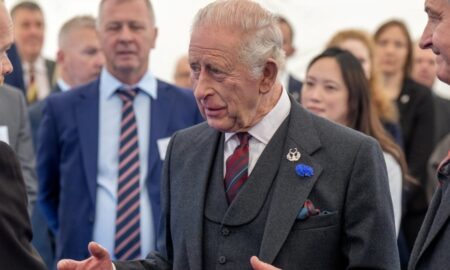
King Charles III Faces Hospitalization Due to Cancer Effects: Royal Family Stays Silent


King Charles III, the United Kingdom’s monarch, was hospitalized on Thursday, March 27, after experiencing temporary side effects from his ongoing cancer treatment, first diagnosed in February 2024. The news, released by Buckingham Palace, stirred concern among the public and reignited discussions about the health of the 76-year-old sovereign, who ascended the throne in September 2022 following the death of his mother, Queen Elizabeth II. Though discharged quickly, the event underscored the fragility of the king at a pivotal moment for the British monarchy, while the royal family maintained a reserved stance, sticking to official statements. Charles returned to Clarence House, his London residence, and is now resting, but his public engagements have been halted, raising questions about the trajectory of his reign.
The hospitalization took place at the London Clinic, the same facility where Charles underwent prostate surgery in January 2024, which initially uncovered the cancer. According to the Palace, the king underwent a scheduled procedure on the morning of March 27, but unexpected side effects necessitated brief medical observation. Released later that day, he was spotted on Friday, March 28, leaving Clarence House and waving to onlookers before heading to Highgrove House, his countryside retreat in Gloucestershire. The suspension of public duties, including a planned trip to Birmingham, reflects medical advice to prioritize his recovery amid a treatment regimen ongoing for over a year.
While the specific type of cancer remains undisclosed, British media speculation has pointed to pancreatic cancer, though no official confirmation has emerged. The royal family, historically tight-lipped about health matters, offered no further details on Charles’s condition, with close sources describing the hospitalization as a “minor setback” in an otherwise “positive” process. Queen Camilla, Prince William, and other senior royals have refrained from public comment, fueling global curiosity about how the monarchy is navigating this latest challenge. The lack of transparency aligns with a long-standing tradition, even as the king’s brief hospital stay captured international attention.

Early effects of Charles III’s hospitalization
Charles III became king at 73, the oldest monarch to take the British throne, after seven decades as heir to Elizabeth II. His reign, launched with hopes of modernization, has faced personal and institutional hurdles, with the 2024 cancer diagnosis standing out as a defining moment. The recent hospitalization, though short-lived, reinforces the image of a vulnerable sovereign whose public role has been curtailed since treatment began. The indefinite pause in engagements, now extended through at least late March, highlights the focus on his health over ceremonial duties.
The day after his discharge, Charles made his first public appearance since the health scare, waving to supporters in London. Footage of the moment, widely circulated online, showed a smiling yet noticeably thinner king, amplifying speculation about the toll of his treatment. His retreat to Highgrove with Queen Camilla was seen as an effort to maintain normalcy amid uncertainty. Meanwhile, Buckingham Palace issued an apology on the king’s behalf to those affected by the postponement of his scheduled events, signaling a cautious approach to his recovery.
The king’s health has been under scrutiny since early 2024, when he underwent surgery for a benign prostate enlargement. That procedure unexpectedly revealed the cancer, which then-Prime Minister Rishi Sunak described as caught in its early stages. Since then, Charles has oscillated between retreat and gradual returns to duty, such as in April 2024, when he resumed public appearances after encouraging treatment progress. The March hospitalization, however, indicates lingering challenges, despite the Palace’s upbeat framing of his condition.
The royal family’s strategic silence
The royal family’s response to Charles III’s hospitalization mirrors a centuries-old practice of discretion regarding health issues. Unlike other monarchies or public figures, the Windsors rarely disclose medical specifics, a custom briefly broken in February 2024 when the cancer diagnosis was announced to curb rumors. Even then, the lack of detail about the disease’s nature or progression keeps the situation shrouded in mystery, a choice that balances public interest with privacy.
Prince William, the heir apparent, and Queen Camilla, who often steps in for the king, have stayed silent on the matter. William, increasingly groomed for a larger role since his father’s diagnosis, has avoided public statements, possibly to prevent further speculation, while Camilla has continued her solo engagements in recent weeks. Kate Middleton, William’s wife, who faced her own cancer battle in 2024 and is now in remission, also remained quiet. The Palace’s reliance on formal updates suggests a coordinated effort to control the narrative without inviting undue attention.
Key moments in the king’s health
- January 2024: Charles underwent prostate surgery at the London Clinic, leading to the cancer discovery.
- February 2024: The Palace publicly confirmed the diagnosis, withholding specifics.
- April 2024: The king resumed public duties after treatment showed progress.
- December 2024: An official update noted the treatment was on a positive track.
- March 2025: Hospitalization for side effects marked a new hurdle, with a same-day discharge.
A monarchy in flux
Charles III’s health casts a spotlight on a monarchy in transition. Following Elizabeth II’s 70-year reign, the king inherited an institution under pressure to evolve. His environmental advocacy, a hallmark of his time as Prince of Wales, brought a forward-thinking agenda to the throne, but physical limitations now threaten his ability to pursue it fully. At 76, he contends with both cancer and the challenge of stepping out from his mother’s towering legacy, a figure whose popularity he has yet to match.
Prince William, next in line, emerges as a central figure amid this uncertainty. The eldest son of Charles and Princess Diana, he has taken on additional duties since the diagnosis, signaling readiness for an earlier-than-expected reign. Meanwhile, Queen Camilla, once a polarizing figure due to her history with Diana, has solidified her role as a key support, often representing the king publicly. Family dynamics, shaped by past scandals and reconciliations—like Prince Harry’s visit after the diagnosis—underscore the complexities of unity during this period.
The British monarchy, overseeing the UK and 14 Commonwealth realms, faces a moment of instability. Nations like Jamaica and Barbados have moved toward republicanism, while Australia and New Zealand weigh their ties to the Crown. Charles’s health, beyond a personal struggle, could sway the institution’s global standing, with each health setback prompting broader questions about its relevance and cost in a rapidly shifting world.
Timeline of Charles III’s health
The king’s medical journey over recent years provides context for his challenges:
- 2020: Charles contracted Covid-19, recovering after a week in isolation.
- January 2024: Prostate surgery uncovered cancer, initiating treatment.
- February 2024: Public disclosure of the diagnosis marked a rare openness.
- April 2024: He returned to public life after months of recovery.
- March 2025: Hospitalization for treatment side effects posed a fresh obstacle.
Physical toll of treatment
Experts note that the side effects Charles experienced are typical for cancer patients undergoing prolonged therapy. Treatments like chemotherapy or radiation, though not confirmed in his case, often lead to fatigue, nausea, and immune suppression, particularly in those over 70. The brief hospital stay suggests an acute reaction, possibly managed with fluids or medication, but recurring incidents could signal cumulative strain after over a year of care.
Visibly, the king has changed since his diagnosis. Recent images reveal a slimmer, more fatigued Charles, a stark contrast to his pre-2024 vigor. Weight loss, common in cancer patients, may be compounded by age, slowing his recovery. Yet, he continues handling state papers and private meetings from home, reflecting his resolve to fulfill his role as head of state despite the physical demands.
The break from public life, while essential, limits Charles’s visibility at a time when he aims to cement his legacy. Unlike Elizabeth II, who remained active into her later years, Charles faces frequent interruptions, relying more on William and Camilla. This shift raises questions about how the monarchy will balance tradition with adaptation as the king navigates his health and leadership.
Public and media response
Charles III’s hospitalization sparked widespread concern among Britons, who have tracked his health since the cancer revelation. On Friday, March 28, crowds gathered near Clarence House, hoping to catch a glimpse of him post-discharge. His wave, broadcast by outlets like the BBC, brought relief but also prompted scrutiny of his frailty. Globally, media highlighted the royals’ reticence, contrasting it with more open approaches by other public figures.
In the UK, tabloids speculate on treatment impacts, while outlets like The Guardian explore succession implications. The lack of specifics fuels theories, yet reflects the monarchy’s firm grip on its narrative. Online, support mixes with debates about the monarchy’s 86-million-pound annual Sovereign Grant, drawn from the Crown Estate’s 16.5-billion-pound profits in 2022, spotlighting its cost amid economic strain.
Coverage also draws parallels with Kate Middleton, whose 2024 cancer fight was more openly shared before remission. Charles’s traditional reserve, managed through Palace statements, contrasts with modern expectations of transparency, highlighting generational divides within the royal family and its public role.
William and Camilla’s roles in the crisis
With Charles sidelined, Prince William steps into a larger spotlight. At 42, the Prince of Wales juggles his duties with preparations for a potential reign, maintaining a steady presence. His approach differs from Prince Harry’s, who, despite a post-diagnosis visit, remains detached from royal duties since stepping back in 2020.
Queen Camilla, 77, has become indispensable, taking on solo engagements like cultural events and diplomatic meetings to keep the monarchy active. Her evolution from a divisive figure to a cornerstone of support is striking, especially amid overlapping health crises. Together, William and Camilla bolster Charles, allowing him to focus on recovery without halting the institution.
The active royal circle has shrunk, with Harry and Meghan absent and Prince Andrew sidelined by scandal. This leaves few senior members to shoulder public roles, amplifying pressure on William and Kate, now the face of the next generation amid ongoing uncertainties.
Health facts about the royals
- Charles’s 2024 diagnosis overlapped with Kate Middleton’s, making it a tough year for the family.
- The London Clinic, where he was treated, also cared for Prince Philip in his final years.
- Charles is the first British monarch to publicly acknowledge a cancer diagnosis, albeit minimally.
- Past royal health crises, like George VI’s 1951 pneumonia, hastened Elizabeth II’s rise.
A reign under strain
Charles III took the throne aiming to modernize it, but his health tests that vision. His environmental advocacy, from organic farming to climate action, defined his princedom, yet now vies with the need to conserve energy. The March hospitalization, framed as minor, reminds that time may limit his ambitions for a lasting mark.
The Commonwealth, spanning 56 nations, watches closely. Where Elizabeth II symbolized continuity, Charles faces pushback from realms like Jamaica, planning a republican vote, and New Zealand, mulling independence. His health could hasten these shifts, reshaping the monarchy’s global reach.
Financially, the monarchy’s 86.3-million-pound Sovereign Grant in 2022-2023, with total costs exceeding 107 million, fuels debate. Charles’s reduced visibility may sharpen criticism, as the family strives to justify its place in a cost-conscious era.
Charles III’s immediate future
Post-hospitalization, Charles spent Friday, March 28, resting at Clarence House before heading to Highgrove. His rescheduled agenda aligns with medical advice to limit exertion, though the Palace assures treatment progresses. The king’s determination to lead, even from behind the scenes, persists amid this latest challenge.