
Pope Benedict XVI dies at 95: legacy and resignation mark the history of the Church

Joseph Ratzinger, known as Pope Benedict XVI, passed away at 95 in the Mater Ecclesiae Monastery in the Vatican at 9:34 a.m. on December 31, 2022. The pope emeritus, who led the Catholic Church from 2005 to 2013, had been facing deteriorating health due to advanced age, as announced by the Vatican days before his death. Benedict XVI made history as the first pontiff to resign in nearly six centuries, a decision that stunned the world and paved the way for Pope Francis’s papacy. His body was displayed in St. Peter’s Basilica starting January 2, 2023, with the funeral, presided over by Pope Francis, held on January 5 in St. Peter’s Square, gathering thousands of faithful and dignitaries.
Born on April 16, 1927, in Marktl am Inn, Bavaria, Germany, Ratzinger devoted his life to the Church, from his theological studies to his appointment as a cardinal in 1977. His journey culminated in his election as pope on April 19, 2005, succeeding John Paul II. During his eight-year pontificate, Benedict XVI faced challenges such as the Vatileaks scandal, allegations of sexual abuse in the Church, and the need to modernize the institution in a rapidly changing world. His resignation, announced in 2013, was driven by a lack of physical and mental vigor to lead, reflecting his pragmatic and humble vision.
The death of Benedict XVI reignited debates about his legacy, marked by profound theological contributions and controversies that divided opinions. He was a defender of Catholic tradition but faced criticism for his conservative approach and crisis management. The funeral, a rare event presided over by a sitting pope, symbolized respect for Ratzinger’s figure, whose life was dedicated to faith and intellectual reflection.
Joseph Ratzinger’s journey
Joseph Ratzinger began his path in the small town of Marktl am Inn, born into a devout Catholic family. Between 1946 and 1951, he studied philosophy and theology at the Higher School of Philosophy and Theology in Freising and the University of Munich. Ordained a priest in 1951, he stood out as a brilliant theologian, participating in the Second Vatican Council (1962-1965) as a theological consultant. His academic and ecclesiastical career led to prominent roles, such as Archbishop of Munich and Freising in 1977 and Prefect of the Congregation for the Doctrine of the Faith in 1981, where he oversaw doctrinal matters under John Paul II.
In 2005, at 78, Ratzinger was elected pope, taking the name Benedict XVI in homage to St. Benedict, founder of Western monasticism, and Pope Benedict XV, known for peace efforts. His election followed the death of John Paul II, one of history’s most charismatic pontiffs. Benedict XVI, with a more reserved and scholarly profile, sought to consolidate Catholic doctrine during a time of secularization and ethical challenges.
Leia também: Papa Bento XVI morreu aos 95 anos: legado e renúncia marcam história da Igreja
His pontificate was marked by efforts to strengthen Catholic identity, promoting traditional liturgy and interfaith dialogue. However, he faced criticism for his conservative stance on issues like same-sex marriage and condom use in HIV prevention. His resignation, announced in Latin on February 10, 2013, was a historic milestone, the first since Gregory XII in 1415.
- Key moments in Benedict XVI’s life:
- 1927: Born in Marktl am Inn, Bavaria, Germany.
- 1951: Ordained as a priest.
- 1977: Appointed Archbishop of Munich and Freising.
- 1981: Becomes Prefect of the Congregation for the Doctrine of the Faith.
- 2005: Elected Pope Benedict XVI.
- 2013: Resigns from the papacy.
- 2022: Passes away at 95 in the Vatican.

Challenges of Benedict XVI’s pontificate
Benedict XVI’s papacy was marked by moments of tension and crises that tested his leadership. One of the greatest challenges was the Vatileaks scandal, which surfaced in 2012 when confidential Vatican documents were leaked to the press. These documents revealed internal disputes, financial corruption, and allegations of blackmail involving clergy members. A 300-page report, prepared by three cardinals, detailed the irregularities and reportedly influenced Benedict XVI’s decision to resign, aiming to allow a younger leader to address the issues.
Another critical issue was the handling of sexual abuse allegations in the Church. During his time as Archbishop of Munich (1977-1982), Benedict XVI was accused of failing to act appropriately in four cases of abuse by priests. A 2022 report by the archdiocese confirmed these allegations, drawing criticism of his administration. In response, Benedict XVI acknowledged errors in handling these cases, expressing sorrow for the abuses that occurred during his tenure, though he did not directly address the accusations.
Despite the controversies, Benedict XVI also pursued progress in areas like interfaith dialogue. He held meetings with Muslim and Jewish leaders, though his 2006 speech in Regensburg about Islam sparked controversy for being perceived as offensive. The pope emeritus apologized and worked to mend tensions, demonstrating a commitment to reconciliation.
Historic resignation and impact on the Church
Benedict XVI’s resignation, announced on February 10, 2013, was one of the most significant events of the 21st century for the Catholic Church. In a Latin speech, he explained that, due to advanced age and lack of strength, he could no longer adequately fulfill the Petrine ministry. The decision was met with surprise and admiration, seen as an act of humility and realism in a world where leaders rarely relinquish power.
After resigning, Benedict XVI adopted the title of pope emeritus and lived in the Mater Ecclesiae Monastery in the Vatican Gardens. He pledged a life of prayer and discretion, avoiding interference in his successor’s pontificate, Pope Francis. Despite this, his presence in the Vatican sparked speculation about possible divisions in the Church, particularly among conservative sectors that saw Benedict XVI as a reference in opposition to Francis’s reforms.
The resignation paved the way for the election of Jorge Mario Bergoglio, the first Latin American pope, who brought a more pastoral and reformist style. The coexistence of a pope emeritus and a sitting pope was unprecedented in the modern era, raising questions about Benedict XVI’s role after his departure. His decision, however, set a precedent for future pontiffs, showing that resignation is a viable option in exceptional circumstances.
- Impacts of Benedict XVI’s resignation:
- First pope to resign in 597 years, since Gregory XII.
- Opened the way for the election of Pope Francis, with a reformist profile.
- Sparked discussions about the role of the pope emeritus in the modern Church.
- Set a precedent for future resignations due to health or age.
Benedict XVI’s theological legacy
Benedict XVI was one of the most prolific theologians to occupy the throne of St. Peter. Author of dozens of books and encyclicals, he left an intellectual legacy that continues to influence the Church. His three main encyclicals — Deus Caritas Est (2005), Spe Salvi (2007), and Caritas in Veritate (2009) — addressed themes such as Christian love, hope, and ethics in the global economy. His writings emphasized the centrality of Christ and the need for a rational faith in an increasingly secular world.
Cobertura completa: Europa
As Prefect of the Congregation for the Doctrine of the Faith, Ratzinger was already known for defending Catholic orthodoxy. During his papacy, he sought to revitalize the liturgy, promoting the use of Latin and the Tridentine Mass. This approach garnered support among traditionalist Catholics but also criticism from progressive sectors seeking greater openness to social changes.
Beyond his theological contributions, Benedict XVI was a defender of dialogue between faith and reason. In his lectures and homilies, he often cited philosophers and scientists, aiming to show that Catholic faith is compatible with modern thought. His emphasis on “new evangelization” sought to rekindle faith in regions like Europe, where secularism was growing.
Vatileaks scandal and its consequences
The Vatileaks scandal, which erupted in 2012, was one of the most challenging moments of Benedict XVI’s pontificate. Confidential documents, including letters and internal reports, were leaked to the press, exposing corruption, financial mismanagement, and power struggles in the Vatican. Benedict XVI’s butler, Paolo Gabriele, was identified as responsible for the leaks and sentenced to 18 months in prison but later pardoned by the pope.
The 300-page report prepared by cardinals Julián Herranz, Jozef Tomko, and Salvatore De Giorgi revealed disturbing details, including allegations of a blackmail network involving homosexual clergy and financial irregularities at the Institute for the Works of Religion, the Vatican bank. These revelations shook the Holy See’s image and increased pressure on Benedict XVI, who was already facing health challenges.
The impact of Vatileaks was profound, contributing to the perception that the Vatican needed urgent reforms. Benedict XVI’s resignation, announced months after the report’s delivery, was seen by many as an attempt to make way for a leader capable of addressing these issues with greater vigor. Pope Francis, elected in 2013, implemented measures to increase financial transparency and combat corruption, partly in response to the Vatileaks revelations.
Criticism and controversies over sexual abuse
Allegations of mishandling sexual abuse cases cast a shadow over Benedict XVI’s legacy. The 2022 report from the Archdiocese of Munich and Freising stated that, during his time as archbishop, Ratzinger failed to take appropriate action in four cases of abuse by priests. These allegations reignited criticism of how the Church addressed pedophilia allegations, a problem that gained global attention in the 1990s and 2000s.
In a letter published in February 2022, Benedict XVI expressed deep sorrow for the abuses that occurred during his tenure, acknowledging errors in handling these cases. He did not directly refute the accusations but highlighted his responsibility as a leader and asked for forgiveness from victims. The response was seen as a gesture of humility but also criticized for not specifically addressing the cases mentioned in the report.
The sexual abuse scandal affected the Church’s credibility during Benedict XVI’s pontificate. Although he implemented measures to address the issue, such as stricter norms for investigating allegations, many considered his actions insufficient. Pope Francis, his successor, intensified efforts to tackle the crisis, promoting a “zero tolerance” policy and meeting with victims.
Cobertura completa: Mundo
- Benedict XVI’s measures against sexual abuse:
- Introduced stricter norms for investigating allegations.
- Met with abuse victims in countries like the U.S. and Australia.
- Expelled priests convicted of pedophilia.
- Publicly acknowledged errors in 2022.
Life after resignation
After resigning, Benedict XVI led a secluded life in the Mater Ecclesiae Monastery, dedicating himself to prayer, reading, and writing. He was assisted by members of the lay association Memores Domini and his personal secretary, Dom Georg Gänswein. Despite his promise not to interfere in Pope Francis’s pontificate, his rare public appearances and occasional comments were interpreted by some as signs of support for conservative Church sectors.
His health began to decline significantly in 2022, with reports of weakness and mobility difficulties. In his final days, Benedict XVI received medical care at the monastery, and the Vatican reported that his condition was serious but stable. His death on December 31 marked the end of an era for the Church, which lost one of its most influential figures of the 20th and early 21st centuries.
Benedict XVI’s funeral, presided over by Pope Francis, was an event of great symbolism. Held in St. Peter’s Square, the ceremony was attended by religious and political leaders and thousands of faithful. The simplicity of the funeral, as requested by Benedict XVI himself, reflected his austere personality and vision of a Church centered on faith, not spectacle.
Significance of Benedict XVI’s death
The death of Benedict XVI marked the closure of a significant chapter in the history of the Catholic Church. His pontificate, though brief, left deep marks, both through his theological contributions and the controversies he faced. He was a transitional pope, governing during a time of crisis and change, paving the way for Francis’s reforms.
His resignation, an act of courage and humility, redefined the role of the papacy, showing that Church leadership can adapt to the needs of the time. His theological legacy, emphasizing rational faith and tradition, continues to inspire Catholics worldwide, particularly those who value doctrinal orthodoxy.
The coexistence of Benedict XVI and Francis in the Vatican, though peaceful, highlighted tensions between tradition and renewal in the Church. The pope emeritus’s death closed a period of duality, allowing Pope Francis to consolidate his vision for the institution’s future. The funeral, watched by millions worldwide, was a moment of unity, bringing together Catholics of different perspectives in homage to a leader who dedicated his life to faith.
- Facts about Benedict XVI:
- First German pope in over 400 years.
- Author of over 60 books and three encyclicals.
- Participated in the Second Vatican Council as a theologian.
- Passed away at 95, after nearly a decade as pope emeritus.
Mais notícias em Europa
Veja mais → Colisão de girocóptero com teleférico em Piemonte deixa dois mortos na Itália
 Cavalo Varenne, lenda do turfe, falece aos 31 anos após carreira vitoriosa
 Terremoto de 4.7 na escala Richter deixa rastros de destruição e feridos em Granada na Espanha
 Filho adolescente confessa assassinato da mãe brasileira em Portugal e revela histórico de maus-tratos
 Morte de Rossella Diaco: apresentadora da Rai Isoradio relatou doença nas redes sociais
 Terremoto de magnitude 5 atinge Espanha e deixa estragos na Europa
 Carro bate em avião particular em aeroporto na Itália
 Família arrisca travessia para Ceuta em meio a crise migratória que vitimou 18 na Espanha
 Jovem morre ao ser engolida por máquina de lavar
 Entenda como imigrantes chegaram a nado a Ceuta, na Espanha, vindos do Marrocos
 Polônia investiga queda de míssil russo em território e violação de espaço aéreo da OTAN
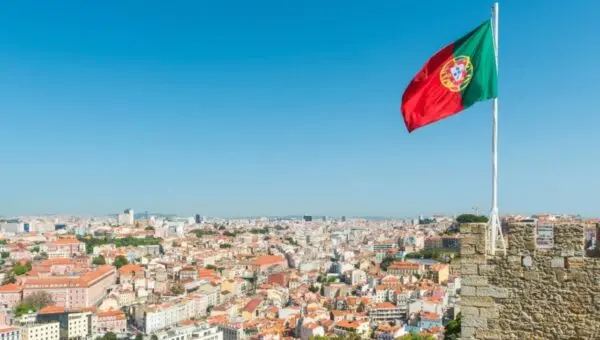 Criança de 12 anos é resgatada em Lisboa após família a prometer em casamento por dívida
Mais notícias na Mix Vale
- 1Europa e EUA enfrentam clima extremo com incêndios e calor recorde, evacuando milhares
- 2Incêndios florestais na Espanha e França forçam evacuação de mais de 270 mil pessoas na Europa
- 3Nova onda de calor na Europa pode levar termômetros a 41,8 °C e bater recordes
- 4Recrutador ligado a Jeffrey Epstein morre na França sob investigação de tráfico humano
- 5Promotores revelam que ex-ministra britânica, Ann Widdecombe, foi golpeada 21 vezes com martelo em Londres
- 6Movimento de petição busca afastar príncipe Harry da liderança dos Jogos Invictus
- 7Acordo histórico libera fronteira de Gibraltar com Espanha e encerra controles de movimentação
- 8Waymo inicia expansão para a Europa com lançamento de serviço de robotáxis em Londres previsto para 2026
- 9Mortes em excesso na Europa superam 10 mil após onda de calor recorde em junho
- 10Príncipe Harry visita crianças em Birmingham para firmar seu retorno ao Reino Unido