
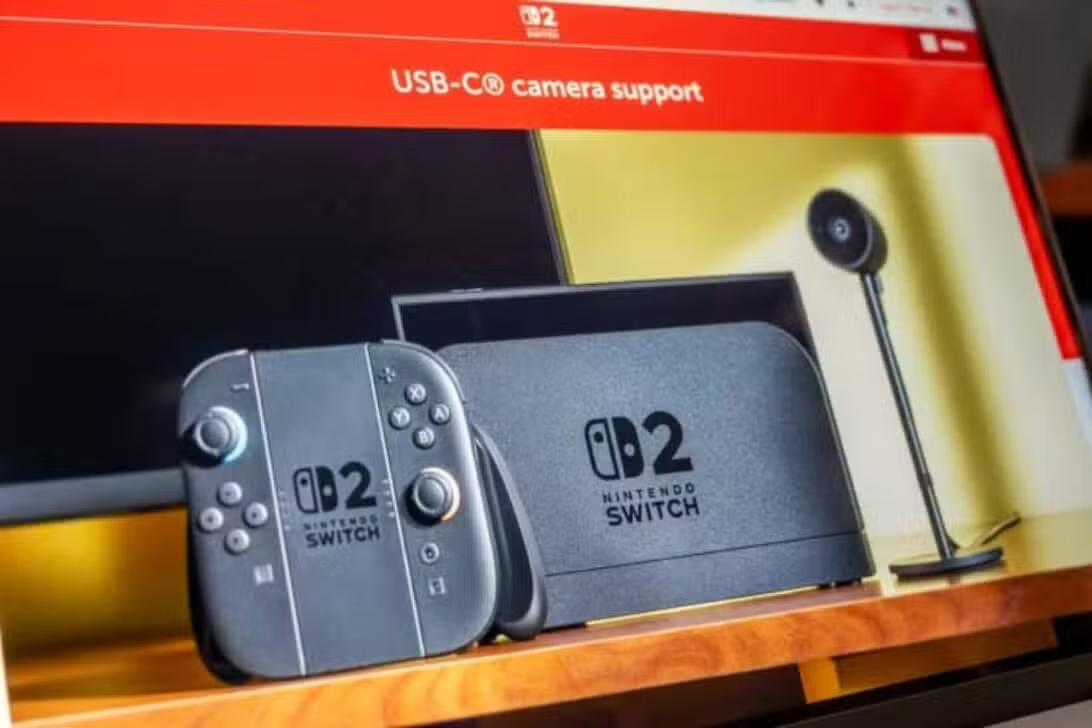
Nintendo has rolled out a groundbreaking update for the Nintendo Switch, version 20.0.0, marking a pivotal moment for the hybrid console that has captivated gamers since its debut in 2017. Released on April 29, 2025, this update introduces a suite of innovative features, including virtual game cards, GameShare functionality for titles compatible with the highly anticipated Switch 2, and the ability to transfer accounts and settings to the next-generation console. These enhancements aim to streamline the management of digital games, foster greater player connectivity, and lay the groundwork for Nintendo’s future hardware. By focusing on usability and interoperability, the update addresses long-standing community requests and underscores Nintendo’s commitment to keeping the Switch competitive in the fast-evolving gaming industry.
The significance of this update extends beyond technical upgrades, delivering a more seamless and social experience for users. Virtual game cards, for instance, allow digital games to be managed in a way that mirrors physical cartridges, with the added perk of lending them to family group members. This feature, teased during the March 2025 Nintendo Direct, has finally arrived and is generating buzz among players. Additionally, the partial support for Switch 2 titles signals Nintendo’s gradual shift toward its next console, expected to launch soon. The update also reflects Nintendo’s broader strategy to integrate its ecosystems, ensuring players can transition their accounts and progress effortlessly.
Another standout feature is GameShare, which enables local sharing of compatible Switch 2 games with nearby consoles on the same wireless network, perfect for multiplayer sessions. This addition caters to players who enjoy in-person gaming, such as at family gatherings or local gaming events. The ability to transfer settings and accounts to the Switch 2 further demonstrates Nintendo’s focus on a smooth generational transition, a strength that sets it apart from competitors like Sony and Microsoft. With these changes, the 20.0.0 update not only enhances the current Switch experience but also paves the way for the company’s future.
- Virtual game cards: Digital games and DLCs are now displayed as virtual cards in a dedicated menu.
- Game lending: Up to three virtual cards can be lent to family group members for 14 days.
- GameShare: Allows sharing of compatible Switch 2 games with nearby consoles for multiplayer.
- Switch 2 transfer: Supports migrating accounts and settings to the upcoming console.
How virtual game cards work
Virtual game cards are among the most innovative additions in the 20.0.0 update. This feature transforms all digital games and downloadable content (DLCs) purchased through the Nintendo eShop into virtual cards, accessible via a dedicated section in the Switch’s menu. Players can “load” or “eject” these cards virtually, enabling them to switch games between up to two Switch consoles linked to the same Nintendo Account. This functionality is a game-changer for households or groups sharing consoles, as it eliminates the need for multiple purchases of the same title.

The lending process for virtual game cards is straightforward but comes with clear restrictions to prevent misuse. Users can lend up to three virtual cards at a time, and recipients can only borrow one game at a time. Additionally, players cannot borrow games from multiple lenders simultaneously. The lending period lasts 14 days, after which the card automatically returns to the owner, who can then lend it again. This system mirrors the sharing of physical cartridges but with the convenience of digital formats, fulfilling a long-standing request from the Switch community.
Notably, the virtual game card feature is free, making it highly appealing. Unlike subscription-based services like Nintendo Switch Online, which provides access to classic games and online multiplayer, virtual game cards are available to all users at no extra cost. This move aligns with Nintendo’s strategy to offer accessible benefits, especially as the rising cost of games and subscriptions draws scrutiny. The virtual card menu is user-friendly, with an intuitive interface that simplifies game management, even for less tech-savvy players.
GameShare’s impact on players
The introduction of GameShare is a highlight of the 20.0.0 update, particularly for fans of local multiplayer gaming. This feature allows players to share compatible Switch 2 games with other Switch consoles on the same Wi-Fi network, enabling friends or family to play together without needing multiple copies of a title. It’s ideal for in-person gaming sessions, such as at social gatherings or gaming meetups, where direct interaction enhances the experience.
While GameShare is currently limited to Switch 2-compatible titles, it has sparked curiosity about its implementation on the upcoming console. Nintendo has long emphasized social gaming, as seen in enduringly popular titles like Super Smash Bros. Ultimate and Mario Kart 8 Deluxe. GameShare builds on this ethos, offering a practical solution for players who prefer local multiplayer over online play, particularly in regions with unreliable internet infrastructure.
The feature also has the potential to boost digital game sales, as players can share titles more easily. However, its restriction to local networks means it doesn’t compete with remote sharing options offered by other platforms. Nevertheless, GameShare is a significant step toward a more flexible Nintendo ecosystem, addressing fans’ calls for easier ways to share games without relying on physical cartridges.
- Enhanced local multiplayer: GameShare enables multiplayer without multiple game copies.
- Switch 2 compatibility: Only select Switch 2 titles support the feature for now.
- Wi-Fi dependency: Requires consoles to be on the same wireless network.
Preparing for the Switch 2
The ability to transfer settings and accounts to the Switch 2 is one of the most anticipated aspects of the 20.0.0 update. Although the new console has yet to launch, Nintendo is already laying the foundation for a smooth transition. The transfer includes user profiles, system settings, and save data, ensuring players can carry their progress to the new hardware. This is critical given the Switch’s massive success, with over 140 million units sold by 2025, according to industry estimates.
The inclusion of Switch 2 support suggests the console’s launch is imminent, potentially later in 2025. Speculation points to backward compatibility with original Switch games, and the data transfer feature is a key enabler of this. Nintendo has a track record of facilitating generational transitions, as seen with the Wii U to Switch migration, and the 20.0.0 update continues this tradition. For players, the ability to preserve their progress in games like The Legend of Zelda: Breath of the Wild or Animal Crossing: New Horizons is a major relief, especially for those who have invested years in these titles.
The transfer feature also signals Nintendo’s efforts to modernize its online infrastructure. Long criticized for its conservative approach to digital services, the company is showing progress with features like virtual game cards and GameShare. The integration between the Switch and Switch 2 could pave the way for additional functionalities, such as cross-play or cloud-based saves, though these remain unconfirmed.
Update timeline and next steps
The 20.0.0 update was released on April 29, 2025, and is available for all Switch models, including the Switch Lite and Switch OLED. Nintendo published detailed instructions on its official website, with automatic updates for internet-connected consoles and manual options via system settings.
- April 29, 2025: Official release of the 20.0.0 update, introducing virtual game cards and GameShare.
- May 2025: Expected period for user feedback and potential tweaks to virtual card functionality.
- Second half of 2025: Anticipated announcement of further Switch 2 details and integration plans.
- 2026: Estimated launch window for the Switch 2, based on rumors and Nintendo’s preparations.
Nintendo has committed to monitoring the performance of the new features and addressing any issues through minor updates. This vigilance is crucial, as complex features like virtual game cards may pose technical challenges, particularly on older Switch units.
Benefits for gamers
The 20.0.0 update delivers tangible benefits, especially for digital game enthusiasts. Virtual game cards provide a fresh approach to managing digital libraries, addressing a limitation of the Switch’s previous interface. The ability to lend games to family members at no cost is a standout feature, particularly as game prices continue to climb. In 2025, the average price of a AAA Switch game hovers around $60, making sharing an attractive option.
GameShare enhances the local multiplayer experience, a hallmark of Nintendo’s appeal. Titles like Splatoon 3 and Mario Party Superstars become even more engaging with the ability to share games during in-person gatherings. The feature could also draw new players to the Nintendo ecosystem by lowering the financial barrier to trying new titles.
For those eyeing the Switch 2, the update offers reassurance that their investments in the original Switch won’t be lost. The transfer of accounts and data ensures continuity, potentially boosting adoption of the new console. Overall, the update reinforces the Switch’s versatility, keeping it relevant nearly a decade after its launch.
- Cost savings: Game lending reduces the need for multiple purchases.
- Social gaming: GameShare simplifies in-person multiplayer sessions.
- Future-proofing: Data transfer preserves progress for the Switch 2.
Gaming industry context in 2025
The 20.0.0 update arrives amid fierce competition in the gaming industry. In 2025, Sony and Microsoft dominate high-performance consoles with the PlayStation 5 and Xbox Series X|S, while Nintendo leads the hybrid console niche. The Switch’s unique blend of portability and exclusive games keeps it successful, but it faces challenges in staying relevant against more powerful hardware.
Features like virtual game cards and GameShare respond to market trends emphasizing flexibility and connectivity. Platforms like Steam and Xbox Game Pass offer robust digital sharing and management tools, and Nintendo is clearly working to catch up. The focus on the Switch 2 is also strategic, as the current Switch shows technical limitations compared to rivals.
The digital gaming market has surged, with digital sales accounting for over 70% of industry revenue in 2024, per global reports. Nintendo, traditionally reliant on physical sales, is investing heavily in the eShop, and virtual game cards reflect this shift. The feature not only modernizes the Switch but also strengthens Nintendo’s position in the digital space.
Future outlook
The 20.0.0 update is just the beginning of Nintendo’s plans for 2025 and beyond. With the Switch 2 on the horizon, the company is building an integrated ecosystem where players can seamlessly transition between consoles. Backward compatibility, though unconfirmed, is widely expected, and the data transfer feature supports this goal.
Virtual game cards could evolve to include eShop promotions or integration with Nintendo Switch Online. The feature might expand to allow lending beyond family groups or even introduce a trading system, which would be groundbreaking for digital games. GameShare also has room to grow, potentially supporting more titles or remote sharing in future updates.
For gamers, the future looks bright. Nintendo continues to innovate within its constraints, balancing accessibility and functionality. The 20.0.0 update is more than a technical upgrade—it’s a statement that the Switch remains a force in gaming, even as the Switch 2 prepares to take center stage.