Catholic Church: conclave of 1268 – Gregory X, lasts almost three years and of 1503 – Julius II, ends in hours

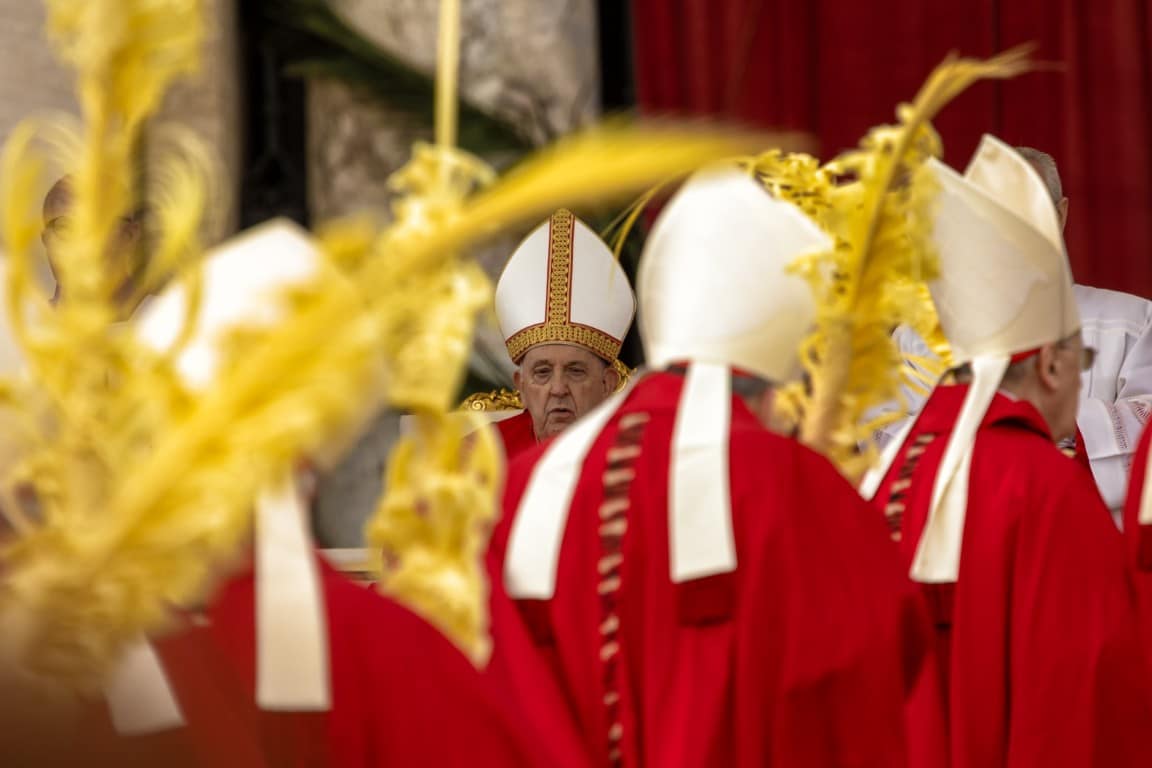
In the heart of medieval Italy, the city of Viterbo witnessed one of the most extraordinary events in the Catholic Church. Between 1268 and 1271, cardinals gathered to choose the successor to Pope Clement IV, but political divisions turned the election into a historic stalemate. For nearly three years, the process dragged on, marked by external pressures and drastic measures from local citizens. In contrast, centuries later, a conclave in 1503 resolved in just hours, electing Giuliano della Rovere as Pope Julius II.
The history of conclaves reveals striking extremes. While the Viterbo conclave tested an entire city’s patience, the election of Julius II showed how consensus and urgency can expedite crucial decisions. These moments shaped not only the choice of pontiffs but also the rules governing the process to this day.
- 1268-1271 conclave: Lasted 34 months, the longest ever, due to rivalries between French and Italian cardinals.
- 1503 conclave: Concluded in under 10 hours, the shortest, with Julius II’s near-unanimous election.
- Historical impact: The Viterbo conclave led to the creation of the Ubi periculum bull, formalizing cardinal isolation.
Origins of the longest conclave
Following the death of Clement IV on November 29, 1268, 20 cardinals convened in Viterbo’s Papal Palace, about 110 kilometers from Rome. Their goal was to elect a new pontiff, but tensions between Italian factions tied to the Guelphs and French factions aligned with King Charles of Anjou created a deadlock. Both sides repeatedly vetoed candidates, making the required two-thirds majority unattainable. Without a pope, the Church faced a leadership vacuum during a period of political instability in Europe.
The election dragged on for months, with daily votes eventually reduced to weekly ones. The patience of Viterbo’s residents wore thin. Frustrated by the delay and the cost of supporting the cardinals, locals took extreme measures. They first locked the palace doors. Then, they limited food to bread and water. Finally, they removed part of the roof, exposing the cardinals to Italy’s cold and rainy winter. These drastic actions reflected a community’s exasperation with a city held hostage by an endless process.
After 1,006 days, on September 1, 1271, the cardinals reached an agreement. A six-member committee selected Tebaldo Visconti, an archdeacon who was neither a cardinal nor in Viterbo, as he was in Acre, Palestine, on the Ninth Crusade. Visconti, crowned Gregory X, brought stability to the Church and left a lasting legacy. Inspired by the chaos of Viterbo, he issued the Ubi periculum bull in 1274, establishing the isolation of cardinals during conclaves, a practice still in place today.
- Exact duration: 34 months, or 1,006 days, from 1268 to 1271.
- Initial cardinals: 20, with three deaths during the process.
- External pressure: Viterbo residents locked doors and removed the roof.
- Outcome: Election of Gregory X, a non-cardinal.
A contrast in 1503
Nearly two and a half centuries later, the Catholic Church experienced the opposite in speed. On October 31, 1503, after the death of Pope Pius III, who reigned for just 26 days, cardinals gathered again. This time, there were no deep divisions. Giuliano della Rovere, an influential cardinal with strong political and military support, emerged as the favorite. The election, held amid conflicts in the Italian Peninsula, demanded immediate stability.
The vote was nearly unanimous in the first round. In under 10 hours, Rovere was elected and took the name Julius II. Known as the “Warrior Pope,” he consolidated the power of the Papal States and sponsored Renaissance works, such as the construction of St. Peter’s Basilica. The conclave’s speed reflected both consensus and the need for a strong leader in a time of crisis.
Rules that changed history
The contrast between the 1268-1271 and 1503 conclaves highlights the evolution of the papal election process. The Viterbo episode was so significant that it forced the Church to rethink its practices. The Ubi periculum bull, issued by Gregory X, introduced the concept of “conclave” – from the Latin cum clave, meaning “with key” – ensuring cardinals remained isolated until a pope was chosen. This rule aimed to prevent external interference and speed up decisions.
Before 1274, papal elections were vulnerable to pressures from monarchs and nobles. During the Viterbo conclave, for instance, Charles of Anjou tried to sway French cardinals to favor his interests. The Ubi periculum curbed such influences, mandating no contact with the outside world. It also stipulated that food would be reduced after days without a decision, a measure inspired by Viterbo’s residents.
- Total isolation: Cardinals have no access to news, internet, or external communication.
- Smoke signals: Since the 19th century, black smoke indicates no result; white smoke announces a new pope.
- Secret voting: Each cardinal places their vote in an urn, ensuring anonymity.
- Qualified majority: Two-thirds of votes are required to elect a pontiff.
Other prolonged conclaves
While the 1268-1271 conclave holds the record, other elections also stood out for their length. Between 1314 and 1316, the election of Pope John XXII took 27 months. The era’s tensions, marked by the start of the Avignon Papacy, hindered consensus. French and Italian cardinals, once again, clashed, and mercenaries even disrupted voting, scattering the electoral college.
Another notable conclave occurred between 1415 and 1417, culminating in the election of Martin V. Lasting about two years, this process was shaped by the Western Schism, when the Catholic Church split among up to three simultaneous popes. Martin V’s election ended this crisis, restoring Church unity. These episodes underscore how political and religious divisions often prolonged papal choices.
Swift conclaves in the modern era
In contemporary times, conclaves have become significantly shorter. The election of Pius XII in 1939 is considered the shortest in recent history, lasting just two days. Held on the eve of World War II, the vote was swift due to consensus around Cardinal Eugenio Pacelli, a clear favorite. After three rounds, Pacelli was elected, taking the name Pius XII.
More recently, the conclaves of 2005 and 2013 were also quick. In 2005, Joseph Ratzinger became Pope Benedict XVI in two days, after four votes. In 2013, Jorge Bergoglio was elected Pope Francis in five votes over two days. The efficiency of these processes reflects prior preparation by cardinals, who arrive at the Vatican with aligned preferences, as well as stricter rules established over centuries.
- Pius XII (1939): Elected in two days, with three votes.
- Benedict XVI (2005): Chosen in two days, after four votes.
- Francis (2013): Elected in two days, with five votes.
- Speed factors: Prior consensus and modern isolation rules.
The mechanics of the conclave
The conclave’s operation is a meticulous ritual, largely unchanged since the 13th century. After a pope’s death or resignation, the Apostolic See enters a vacancy period, known as sede vacante. During this time, the Cardinal Camerlengo manages the Church temporarily, organizing the conclave, which must begin 15 to 20 days after the vacancy starts.
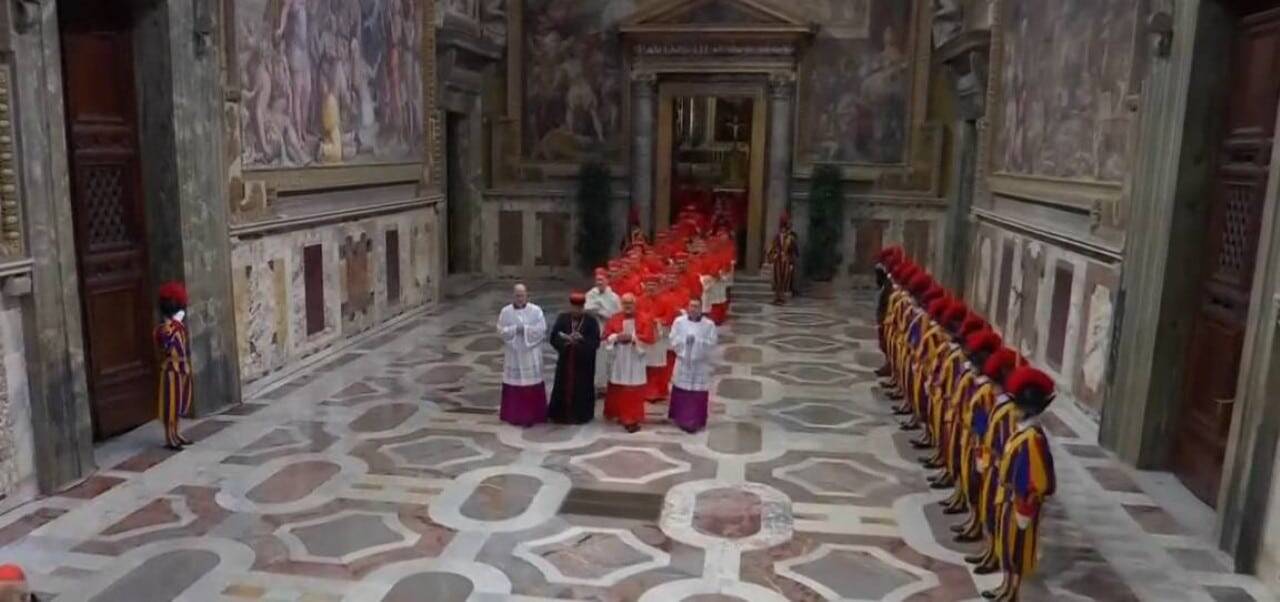
Cardinal electors, under 80 years old, gather in the Sistine Chapel, where voting occurs under Michelangelo’s frescoes. Each vote is secret, with cardinals placing ballots in an urn. If no candidate achieves a two-thirds majority, black smoke rises from the chimney, signaling the process continues. When a pope is chosen, white smoke announces the Habemus Papam, followed by the new pope’s introduction.
The role of the Sistine Chapel
Since the 15th century, the Sistine Chapel has been the exclusive venue for conclaves. Its frescoes, including The Creation of Adam and The Last Judgment, create a solemn atmosphere for voting. The location’s choice reflects the intent to isolate cardinals in a sacred space, free from external distractions. The chimney, installed on the roof, has become a global symbol, with millions watching for smoke to learn the outcome.
The Sistine Chapel also reinforces the tradition of secrecy. Before the conclave begins, cardinals swear an oath of silence, vowing not to disclose details of the process. Staff assisting in the conclave, such as secretaries and security, also pledge secrecy, under penalty of excommunication. This practice ensures decisions are made without external influence.
Historical curiosities
Conclaves have amassed peculiar stories over the centuries. During the 1268-1271 conclave, two cardinals died, and a third withdrew due to health issues. In 1503, the speed of Julius II’s election was so remarkable that some records suggest it was nearly by acclamation. These extreme events shaped perceptions of the conclave as a process that can be both tense and surprisingly efficient.
- Viterbo deaths: Three cardinals did not survive the 1268-1271 conclave.
- Jus exclusivae: Until 1903, Catholic monarchs could veto candidates, as seen with Mariano Rampolla.
- Modern smoke: The black-and-white smoke tradition solidified in 1878.
- Cardinal electors: Today, the limit is 120 voters, all under 80.
The influence of political contexts
Conclaves have always been shaped by political and social contexts. In the 13th century, the Viterbo conclave reflected rivalries between Guelphs and Ghibellines, as well as the ambitions of monarchs like Charles of Anjou. In 1503, Julius II’s election occurred amid conflicts in Italy, with powers like France and Spain vying for influence. Even in modern conclaves, such as 1939, the looming Second World War hastened Pius XII’s choice.
These contexts show how the Church, though spiritual, operates in a world of earthly interests. The Ubi periculum and subsequent reforms sought to shield the conclave from external pressures, but internal dynamics, like alliances among cardinals, continue to play a crucial role.
The legacy of Gregory X
The election of Gregory X not only ended the longest conclave but also transformed the papal election process. The Ubi periculum bull was a milestone, establishing norms that balance secrecy, isolation, and efficiency. Gregory X, who was neither a cardinal nor a priest at the time of his election, showed that Church leadership could come from unexpected figures, a precedent rarely repeated.
Gregory X’s rules were tested and refined over centuries. In 1996, John Paul II issued the Universi Dominici Gregis constitution, governing modern conclaves. In 2013, Benedict XVI introduced minor changes, such as allowing votes for two candidates after 34 inconclusive ballots. These adjustments reflect the ongoing quest for a process that is both sacred and practical.
Julius II’s election and the Renaissance
The swift 1503 conclave marked the start of a transformative pontificate. Julius II, known for his energy and ambition, led the Church during the Renaissance’s peak. He commissioned Michelangelo to paint the Sistine Chapel and began rebuilding St. Peter’s Basilica, projects that defined the Church’s aesthetics and power. His election, though brief, had lasting consequences.
The consensus around Julius II contrasted with prior conclaves’ divisions. His reputation as a charismatic leader and political strategist ensured a near-unanimous vote. This episode shows how the College of Cardinals’ internal dynamics can accelerate decisions in times of crisis.
Conclaves and modernity
Today, conclaves are global events, followed by millions. The white smoke, the Habemus Papam announcement, and the new pope’s presentation in St. Peter’s Square are universal symbols. Despite modernity, the process retains its medieval essence, with cardinals isolated in the Sistine Chapel, voting in secret under Michelangelo’s gaze.
The speed of modern conclaves reflects both refined rules and the Church’s globalization. Cardinals from every continent participate, bringing diverse perspectives. In 2013, the election of Francis, the first Latin American pope, highlighted Catholicism’s universality. The next conclave, begun on May 7, 2025, after Francis’s death, gathers 135 cardinal electors, a record number.
- Current cardinals: 135 electors, representing all continents.
- Diversity: For the first time, African and Asian cardinals have significant weight.
- Technology banned: Cell phones and internet are prohibited during the conclave.
- Global announcement: The Habemus Papam is broadcast live worldwide.
The tension between tradition and urgency
The 1268-1271 and 1503 conclaves illustrate the tension between tradition and the need for swift decisions. While the first exposed the limits of a process without clear rules, the second showed how consensus can overcome obstacles. Both shaped the Church’s history, defining how popes are chosen in times of crisis or transition.
The Viterbo conclave, lasting nearly three years, was a turning point. The locals’ extreme actions forced the Church to create a more structured system. Julius II’s election, conversely, demonstrated that unity among cardinals can lead to near-instant decisions, even in turbulent times.