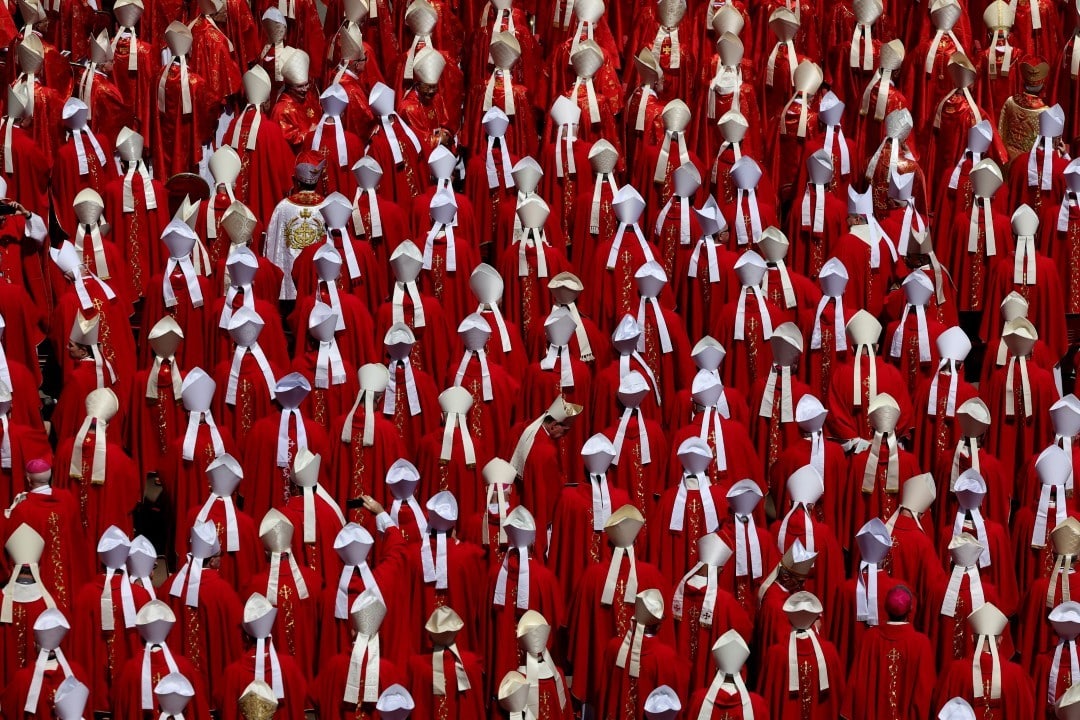
In the heart of the Vatican, the Sistine Chapel is ready to host 133 cardinal electors who will begin, on May 7, the conclave to choose the 267th pope of the Catholic Church. The election, marked by the burning of ballots producing black or white smoke, takes place in complete secrecy, with the cardinals isolated from the outside world. This centuries-old process, governed by strict traditions and rules, starts after the death of Pope Francis on April 21, drawing the attention of 1.4 billion Catholics. The first smoke, indicating the initial voting result, is expected around 2 p.m. Brasília time on Wednesday.
Choosing the new pontiff requires a two-thirds majority, meaning 89 votes from the cardinal electors, all under 80 years old. In recent conclaves, the decision was reached in a few days, but the process can extend if no consensus emerges.
- Location: Sistine Chapel, Apostolic Palace, Vatican.
- Participants: 133 cardinal electors from 71 countries.
- Voting: One round on the first day, up to four on subsequent days.
- Signal: Black smoke for no decision; white smoke for election.
The conclave reflects not only the spirituality of the Church but also its complex global dynamics, with cardinals representing diverse theological and cultural views.
Intense preparations in the Vatican
Installing the chimney on the Sistine Chapel was one of the final steps before the conclave. On Friday, May 2, Vatican firefighters positioned the pipe that will emit the smoke, a symbol followed by faithful and journalists worldwide. The chapel, adorned with Michelangelo’s frescoes, was equipped with wooden tables, chairs, and a false floor to house security devices, such as signal jammers. These measures ensure the cardinals remain incommunicado, preserving the process’s confidentiality.
The Pauline Chapel, where cardinals gather before entering the Sistine, was prepared for the opening prayer, including the hymn “Veni Creator Spiritus.” The Santa Marta House, the cardinals’ residence during the conclave, was also cleared to accommodate the electors. Each room is assigned by lot, ensuring equality among participants.
- Chimney: Installed on the Sistine roof to emit smoke.
- Security: Sweeps for listening devices and signal jammers.
- Accommodations: Santa Marta House, with 105 suites and 26 rooms.
- Opening liturgy: Pro Eligendo Pontifice Mass at 10 a.m. on May 7.
These preparations underscore the conclave’s solemnity, an event blending spirituality, tradition, and rigorous logistics.
Strict rules of the voting process
The pope’s election follows the apostolic constitution Universi Dominici Gregis, issued by John Paul II in 1996 and amended by Benedict XVI in 2007 and 2013. On the first day, cardinals hold a single vote in the afternoon, after the “extra omnes” proclamation, ordering non-electors to leave the Sistine. On subsequent days, up to four votes occur daily: two in the morning and two in the afternoon. Each cardinal writes their candidate’s name on a card with the phrase “Eligo in Summum Pontificem” (I elect as Supreme Pontiff), disguising their handwriting for anonymity.
Votes are placed in an urn on a ceremonial plate and counted by three randomly chosen scrutineers. After each round, ballots are burned in a stove inside the chapel. If no winner emerges, chemicals like potassium perchlorate and sulfur produce black smoke. When the pope is elected, potassium chlorate and chloroform resin create white smoke, accompanied by the ringing of St. Peter’s Basilica bells since 2005.
The process requires the winning candidate to accept the election, answering: “Acceptasne electionem de te canonice factam in Summum Pontificem?” (Do you accept your canonical election as Supreme Pontiff?). They also choose their papal name, a moment recorded by the Master of Liturgical Celebrations, acting as notary.
Role of cardinal electors
Of the Church’s 252 cardinals, only 133 are electors, as voting is restricted to those under 80 at the pope’s death. These cardinals, from 71 countries, reflect the global diversity of Catholicism, with 41% from Europe, 17% from Latin America, 16% from Asia, and 13% from Africa. About 80% were appointed by Francis, giving the conclave a strong influence from his pastoral and inclusive vision.
Cardinal Pietro Parolin, former Vatican Secretary of State, will preside over the conclave, as the dean, Cardinal Giovanni Battista Re, 91, is ineligible to vote. Parolin, 70, is a leading “papabile,” alongside others like Filipino Luis Antonio Tagle and Hungarian Péter Erdő. The choice reflects not only spiritual matters but also debates on the Church’s direction, such as minority inclusion and addressing crises like clerical abuse.
- Eligibility: Cardinals under 80, totaling 133.
- Diversity: 71 countries, with strong European and Latin American presence.
- Leadership: Cardinal Pietro Parolin presides over the conclave.
- Influence: 108 electors appointed by Francis.
- Oath: Secrecy vow, under penalty of excommunication.
Traditions and symbolism of the smoke
The smoke from the Sistine Chapel’s chimney is the main sign of the conclave’s progress to the outside world. Since the 19th century, burning ballots has communicated results, but only in the 20th century were chemicals introduced to avoid confusion between black and white smoke. Before that, wet or dry straw was used, often producing unclear colors.
Today, black smoke indicates no two-thirds majority was reached, while white smoke, or “fumata bianca,” announces the pope’s election. Since the 2005 conclave, St. Peter’s Basilica bells ring with the white smoke to confirm the choice, avoiding misunderstandings. The crowd in St. Peter’s Square, often thousands of faithful and tourists, awaits this moment with anticipation.
The smoke’s symbolism goes beyond practical communication. It represents the transition from the uncertainty of an undecided conclave to the hope of a new Church leader. Burning the ballots also reinforces secrecy, destroying any physical record of the vote.
General congregations before the conclave
Before the conclave began, cardinals held 12 general congregations from April 22 to May 6 to discuss the Church’s challenges and election logistics. These meetings, held in the Vatican, included both the 133 electors and cardinals over 80, who do not vote but contribute insights. Topics like the clerical abuse crisis, evangelization, Vatican finances, and interfaith relations dominated discussions.
During the final congregation on May 6, Francis’s fisherman’s ring and lead seal were destroyed, officially marking the end of his pontificate. The conclave’s start date, May 7, was confirmed in the fifth congregation, respecting the 15- to 20-day window after the pope’s death.
- Topics discussed: Clerical abuse, evangelization, finances, interfaith relations.
- Participants: 252 cardinals, including 119 non-electors.
- Decisions: Conclave date and destruction of the fisherman’s ring.
- Duration: 12 meetings over two weeks.
These congregations are crucial for aligning cardinals and allowing them to better know potential candidates, especially those from distant regions.
Expectation of a brief conclave
The average duration of the last 10 conclaves was 3.2 days, with the elections of Benedict XVI (2005) and Francis (2013) resolved in just two days. Cardinals like Gregorio Rosa Chávez from El Salvador predict a quick process, lasting no more than three days, to project Church unity. A prolonged conclave could suggest internal divisions, which cardinals aim to avoid.
Historically, the longest recorded conclave, from 1268 to 1271, lasted nearly three years, leading to Gregory X’s election. This episode inspired the “conclave” practice (from Latin “cum clave,” with key), where cardinals were literally locked in until deciding. Today, though conditions are more comfortable, pressure for a swift decision remains.
If no pope is chosen after three days, the conclave pauses for 24 hours for prayers and reflection. After seven unsuccessful rounds, cardinals may vote between the two top candidates, but this is rare in recent history.
Papabili and diversity in the cardinal college
Among the 133 electors, some names stand out as potential popes, or “papabili.” Pietro Parolin, a 70-year-old Italian, is seen as a natural successor to Francis due to his diplomatic experience and moderation. Luis Antonio Tagle, Filipino, represents a progressive, charismatic vision, while Péter Erdő, Hungarian, is tied to conservative stances. Other names, like Guinea’s Robert Sarah and Italy’s Matteo Zuppi, also appear in speculation.
The cardinal college’s diversity is notable. With 108 electors appointed by Francis, the group reflects his emphasis on peripheries, with strong representation from countries like the Philippines, Sweden, and Guinea. This makes the 2025 conclave the most diverse in history, with 48% of electors from the Global South.
- Pietro Parolin: Italian, moderate, former Secretary of State.
- Luis Antonio Tagle: Filipino, progressive, charismatic.
- Péter Erdő: Hungarian, conservative, traditionalist.
- Robert Sarah: Guinean, traditionalist, liturgy-focused.
- Matteo Zuppi: Italian, aligned with Francis’s pastoral vision.
Absolute secrecy during the process
The conclave is one of the world’s most secretive events. Cardinals swear absolute secrecy, under penalty of excommunication, and the Sistine Chapel is swept for listening devices. Phones, newspapers, and any external communication are banned. Only three cardinals — the Major Penitentiary, Rome’s Vicar, and the Vatican’s Vicar-General — can communicate externally in extreme cases, with prior approval.
Besides electors, a small group of aides, like doctors, cooks, and the Master of Liturgical Celebrations, participates in the conclave, also under secrecy oaths. The Swiss Guard patrols the Sistine’s exterior, ensuring total isolation. This rigor protects the election from external influences, like political or media pressures.
Final moments of the election
When a candidate reaches the required 89 votes, the senior cardinal asks if they accept the election and what papal name they choose. The new pope is taken to the Room of Tears, a small chamber beside the Sistine, where they don the papal vestments prepared by tailor Raniero Mancinelli, who served John Paul II, Benedict XVI, and Francis. Three sizes of white cassocks are kept ready to fit the new pontiff.
After dressing, the pope returns to the Sistine, where cardinals pledge obedience. The final ballots are burned, producing white smoke. The senior cardinal deacon appears on St. Peter’s Basilica’s balcony and announces: “Annuntio vobis gaudium magnum; Habemus Papam” (I announce to you a great joy: We have a pope). The new pope then offers his first blessing, known as “Urbi et Orbi.”
- Room of Tears: Where the pope dons papal vestments.
- Announcement: Made from St. Peter’s Basilica balcony.
- Vestments: White cassocks in three sizes, prepared by Mancinelli.
- Blessing: First “Urbi et Orbi” by the new pontiff.