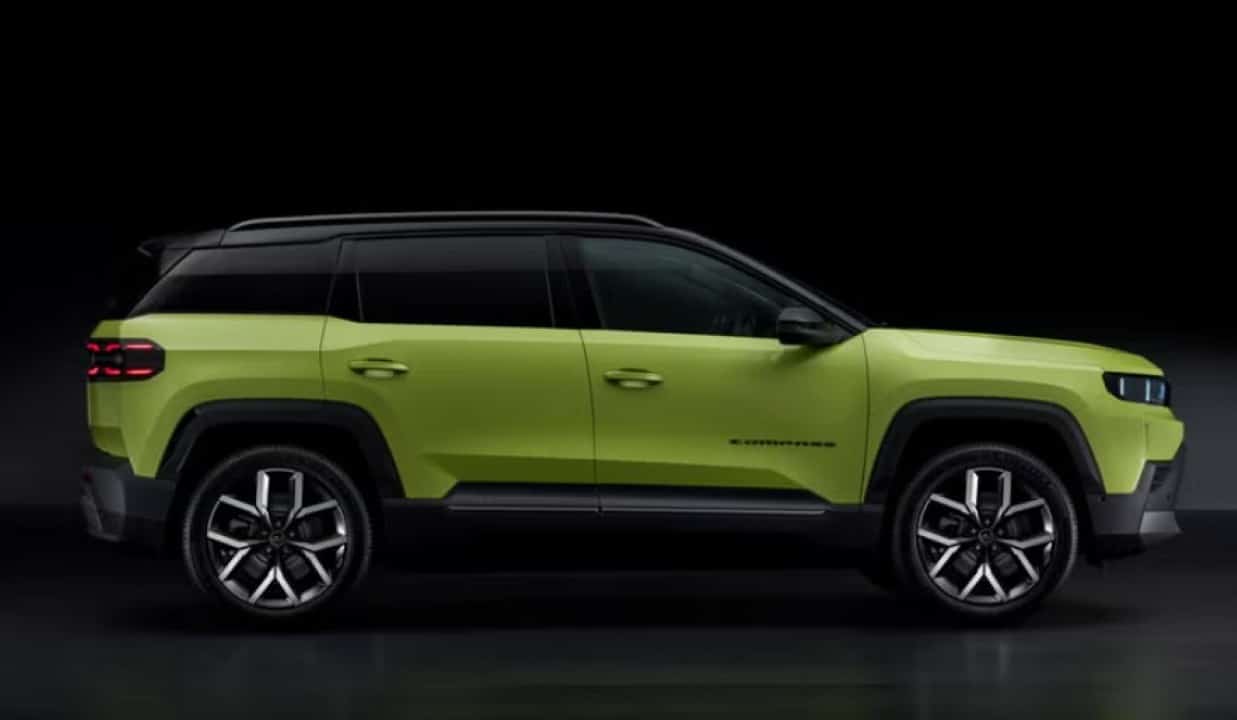
The automotive industry is navigating a pivotal moment. Stellantis, the conglomerate behind Jeep, Chrysler, and Dodge, has announced a temporary suspension of production plans for the next-generation Jeep Compass in North America, originally slated for 2026. The decision, confirmed by a company spokesperson, stems from challenges posed by the Trump administration’s 25% tariffs on vehicles imported from Canada and Mexico. While Europe prepares to welcome the new Compass, equipped with hybrid and electric powertrains, North American consumers face uncertainty about the model’s future.
The production pause affects the Brampton, Ontario, plant, which was being retooled to manufacture the 2027 Compass. Stellantis had invested 3.6 billion Canadian dollars to modernize its Brampton and Windsor facilities, focusing on electrification. However, the suspension does not impact European plans, where production is set to begin in 2025 at the Melfi, Italy, factory. The new Compass, built on the STLA Medium platform, promises innovations like extended electric range and a redesigned look, but its U.S. arrival remains uncertain.
The Stellantis decision raises questions about the broader impact of tariffs on the automotive sector. The 25% tariffs, implemented in 2025, directly affect North America’s integrated supply chain, with 45% of Stellantis’ U.S. sales relying on imports. The company is now reassessing its strategy to offer powertrain options that align with North American consumer preferences, which increasingly favor hybrids over fully electric vehicles.
- Compass changes: New design, 6.1 inches longer, with hybrid, plug-in hybrid, and electric options.
- Tariff impact: 25% duties on Canadian and Mexican imports raise production costs.
- European production: Melfi, Italy, factory to start production in 2025.
Tariffs reshape Stellantis strategy
The Trump administration’s tariffs, enacted in April 2025, have prompted Stellantis to rethink its North American operations. The 25% duties on vehicles from Canada and Mexico have forced automakers to reconsider production plans. Stellantis, heavily reliant on its non-U.S. factories, faces pressure to relocate manufacturing or absorb additional costs. The pause at the Brampton plant reflects this reality, as the company seeks to minimize financial strain while navigating the evolving political landscape.
The Brampton facility, which previously produced models like the Dodge Charger and Chrysler 300 until 2023, was undergoing a $2.8 billion retooling to produce the 2027 Compass. The suspension has raised concerns for workers, with the Unifor union warning of immediate job impacts from the tariffs. Stellantis, now led by interim chairman John Elkann following the departure of CEO Carlos Tavares, is working to realign its priorities in response to these challenges.
- Investment halted: $3.6 billion CAD for Brampton and Windsor plants on hold.
- Union response: Unifor criticizes tariffs, demands job protections.
- Leadership shift: Tavares’ exit prompts strategic reevaluation.
Next-gen Compass pushes electrification
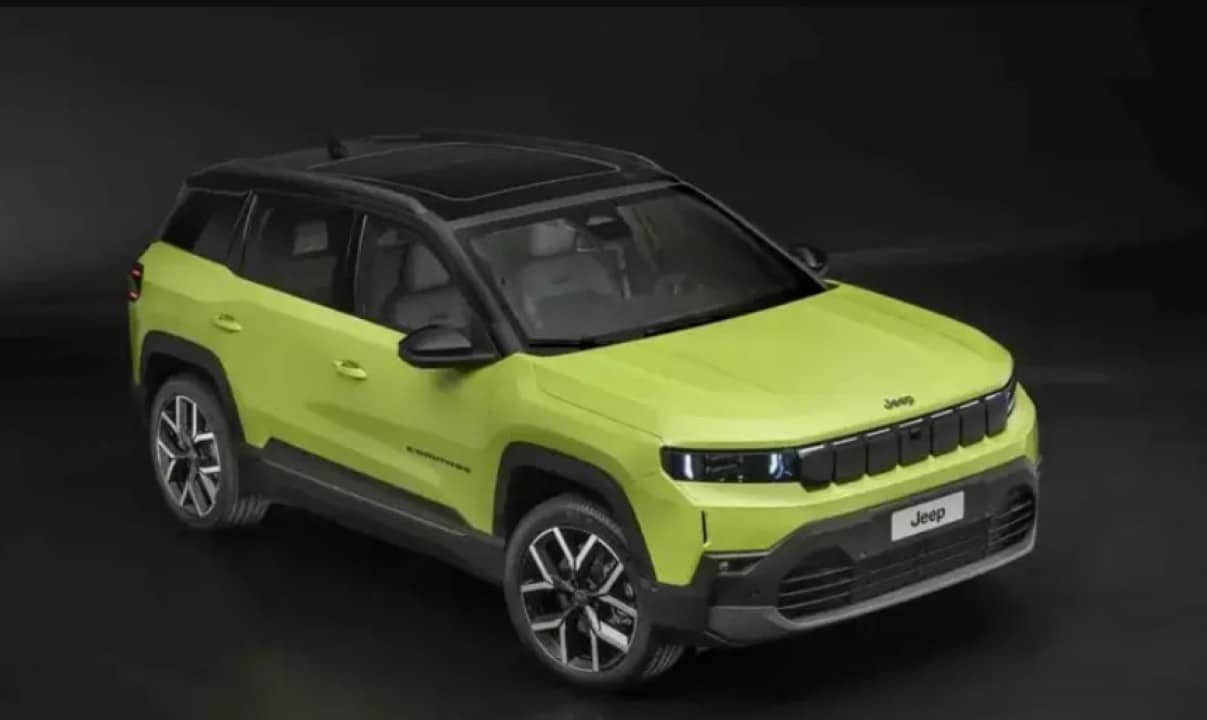
The 2027 Jeep Compass marks a significant step in Stellantis’ electrification strategy. Built on the STLA Medium platform, the model departs from the outdated Fiat-Chrysler architecture, adopting a bolder design with 6.1 inches of added length. The platform, shared with vehicles like the Peugeot 3008 and Opel Grandland, supports a range of powertrains, including combustion, hybrid, plug-in hybrid, and electric, catering to diverse global markets. In Europe, the Compass is already generating buzz with its innovative powertrain lineup.
The Compass powertrain options range from a 145-horsepower hybrid to a 375-horsepower all-wheel-drive electric model. Stellantis highlights the electric version’s 404-mile range (WLTP cycle) and 160 kW fast-charging capability, achieving an 80% charge in 30 minutes. These specifications position the Compass as a strong contender in the compact SUV segment, particularly in markets like Europe, where electrification is gaining momentum.
European production moves forward
While North America faces delays, the Jeep Compass production in Europe is on track. The Melfi, Italy, plant will begin manufacturing the model in 2025, with deliveries expected by year-end. Stellantis plans to triple Melfi’s output, adding hybrid versions of other models like the Lancia Gamma and DS7. This strategy underscores the company’s commitment to the European market, where strict environmental regulations drive demand for electrified vehicles.
The Melfi plant, employing around 7,000 workers, is receiving a €2 billion investment in 2025. These funds, independent of public financing, align with Stellantis’ goal to maintain its Italian operations through 2032. The Italian government has pledged €1.6 billion to support the automotive supply chain, further bolstering Melfi’s role as a hub for electrified vehicle production.
- Expanded capacity: Melfi to triple production with new hybrid models.
- Major investment: €2 billion to modernize the plant in 2025.
- Italian commitment: Stellantis ensures factory operations until 2032.
Industry reacts to tariff pressures
The Trump tariffs impact more than just Stellantis. Automakers like Ford and General Motors are also adapting to the new trade environment. Ford has introduced consumer discounts, while GM has ramped up pickup truck production in Indiana. Stellantis, however, has taken more drastic steps, including suspending operations at plants in Canada and Mexico and laying off 900 workers across five U.S. facilities. These moves highlight the company’s vulnerability, with 45% of its U.S. vehicle sales sourced from imports.
The United Auto Workers (UAW) has criticized the layoffs, arguing that Stellantis has the resources to expand domestic production. Tensions with the UAW, strained during Carlos Tavares’ tenure, add pressure on the new leadership. The White House defends the tariffs, claiming they will protect American jobs in the long term, though it acknowledges short-term disruptions for workers and businesses.
Shifting North American consumer trends
The Compass pause also reflects evolving consumer preferences in North America. Unlike Europe, where electric vehicles are gaining traction, U.S. buyers show a stronger preference for hybrids and combustion engines. Stellantis, which planned to emphasize electric options for the Compass, is now reevaluating its approach to include more hybrid models. This shift aligns with decisions by brands like Ram, which delayed its 1500 REV electric pickup to prioritize a plug-in hybrid version.
Stellantis faces the challenge of balancing innovation with affordability. The current Compass, launched in 2016, is Jeep’s most affordable model in the U.S., starting at $25,900. The 2027 model, with advanced technology, could raise prices, especially with tariffs. The company is exploring options like relocating production to the U.S. or adjusting pricing to remain competitive.
- Hybrid demand: U.S. consumers favor hybrids over fully electric vehicles.
- Affordable pricing: Current Compass starts at $25,900, Jeep’s cheapest model.
- Strategic pivot: Stellantis considers domestic production to bypass tariffs.
Investments persist despite delays
Despite the Brampton pause, Stellantis remains committed to North American investments. The modernization of Brampton and Windsor, announced in 2022, continues to be a priority, albeit with adjusted timelines. The company also plans to produce a new Dodge Durango in Detroit and invest in facilities in Toledo, Ohio, and Kokomo, Indiana. These efforts aim to bolster domestic production and reduce reliance on imports.
Stellantis has committed to building a new midsize pickup in Belvidere, Illinois, starting in 2027, creating 1,500 jobs. The move responds to pressure from the UAW and the U.S. government for more local manufacturing. The company has also offered financial support to suppliers to offset tariff costs, signaling efforts to mitigate the policy’s impact.
Technology and performance focus
The 2027 Jeep Compass stands out for its technological advancements. Beyond the STLA Medium platform, the model features a 10-inch digital dashboard and a 16-inch multimedia system, offering advanced connectivity. The 375-horsepower electric version, with all-wheel drive, delivers robust off-road performance, upholding Jeep’s rugged heritage. Adjustable suspension and 7.9 inches of ground clearance enhance its capability on rough terrain.
Stellantis emphasizes energy efficiency. The electric Compass, with a 404-mile range, uses batteries up to 98 kWh, similar to the Opel Grandland. Fast-charging technology, enabling 20% to 80% charge in 30 minutes, caters to consumers seeking convenience. These features make the Compass a versatile option for global markets.
- Advanced tech: 10-inch dashboard and 16-inch multimedia system.
- Off-road prowess: 7.9 inches of ground clearance and all-wheel drive.
- Electric efficiency: 404-mile range with fast charging.
Political pressures shape decisions
The Trump tariffs, combined with regulatory uncertainty, create a challenging environment for Stellantis. The U.S. government is pushing automakers to relocate production domestically, offering incentives for local manufacturing. Stellantis, criticized for moving jobs to lower-cost countries under Tavares, is now aligning with government and union expectations. The Compass pause reflects this adaptation.
The White House argues that tariffs will strengthen U.S. industry, boosting wages and repatriating jobs. However, analysts warn that higher costs could raise vehicle prices, impacting consumers. Stellantis, with its heavy reliance on imports, faces greater risks than competitors like GM and Ford, which have more domestic production.
Supply chain under strain
The Trump tariffs also disrupt the automotive supply chain. Stellantis, which sources components from Canada and Mexico, faces higher costs for materials like steel and aluminum, subject to additional 25% duties. The company has proposed a program to help suppliers cover these costs, but the solution is temporary. The integrated North American supply chain, strengthened by the U.S.-Canada-Mexico trade agreement, complicates rapid production relocation.
Commerzbank analysts note that building new factories or reconfiguring supply chains is a long-term process. Stellantis, grappling with a 70% profit drop in 2024, must balance electrification investments with tariff-related costs. The suspension of production in Brampton and Mexican plants like Toluca underscores this pressure.
- Rising costs: 25% tariffs on steel and aluminum inflate component prices.
- Supplier support: Stellantis offers financial aid for tariff expenses.
- Complex integration: North American supply chain resists quick changes.
Global demand for compact SUVs
The 2027 Jeep Compass enters a thriving compact SUV market. In Europe, the segment is growing as consumers seek versatile, efficient vehicles. The Compass, with its hybrid and electric options, meets this demand, competing with models like the Toyota Corolla Cross and Volkswagen Tiguan. Stellantis leverages the STLA Medium platform’s flexibility to target diverse markets, offering combustion to electric powertrains.
In the U;box-shadow: none !important;”>.S., the Compass is Jeep’s third-best-selling model, with 111,697 units sold in 2024, trailing the Wrangler and Grand Cherokee. Delaying the new model could weaken Jeep’s position in the segment, especially if competitors launch new offerings. Stellantis is closely monitoring market trends to determine when and how to resume Compass production in North America.
Stellantis’ long-term vision
Stellantis maintains a long-term focus on electrification and sustainability. The company plans to launch eight new models on the STLA Large platform between 2024 and 2026, starting with Dodge and Jeep. The STLA Medium platform, used in the Compass, supports up to 2 million units annually, underscoring its strategic importance. Stellantis is also investing in hydrogen technology for commercial vehicles, reinforcing its goal of carbon neutrality by 2038.
In North America, Stellantis faces the challenge of aligning its strategy with government incentives and consumer preferences. The production of new models, such as the Belvidere pickup, and expansion of U.S. factories signal efforts to strengthen domestic presence. The Compass pause, while significant, is viewed as a temporary measure to adapt to a rapidly changing environment.
- New launches: Eight STLA Large models planned by 2026.
- Sustainability goal: Carbon neutrality targeted for 2038.
- Domestic growth: Belvidere pickup to create 1,500 jobs.