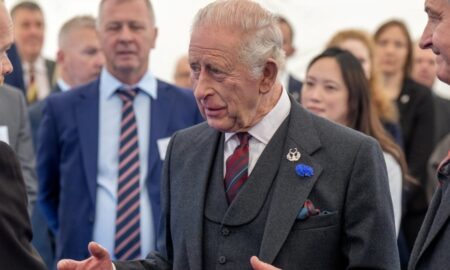
King Charles III battles worsening cancer as William and Kate escalate preparations for royal succession


The British monarchy stands at a pivotal juncture. King Charles III, aged 76, confronts a worsening cancer diagnosis that has heightened concerns about the Crown’s continuity. Revealed in February 2024, the monarch’s condition has led to a significant reduction in his public duties, with responsibilities increasingly delegated to Prince William, 42, and Kate Middleton, also 42. The couple, already central to royal operations, is intensifying preparations to assume the throne sooner than anticipated, as the king’s health remains under close scrutiny.
This moment underscores the urgency of ensuring stability for the United Kingdom and the Commonwealth nations. William has taken on high-profile engagements, from diplomatic events to administrative tasks, while Kate, navigating her own health challenges following a cancer diagnosis in 2024, gradually resumes her roles. Their training spans royal protocols, foreign policy, and the monarchy’s modernization, positioning them to lead in a rapidly changing world.
The transition raises broader questions about the monarchy’s future. Key aspects of the current situation include:
- King’s health: Charles III’s cancer limits his public engagements, necessitating William’s stepped-up role.
- William and Kate’s preparation: The couple deepens their involvement in governance and diplomacy.
- Commonwealth challenges: Some nations question their ties to the British monarchy.
- Modernization efforts: The monarchy seeks to align with contemporary expectations.
This period marks a delicate balance between tradition and transformation for the royal institution.
Severity of Charles III’s condition
King Charles III’s cancer diagnosis, announced in February 2024, followed a hospitalization for benign prostate enlargement. While Buckingham Palace has not disclosed the cancer’s specifics, the monarch’s condition has worsened throughout 2024 and into 2025. Reports suggest that ongoing treatment has failed to halt the disease’s progression, prompting a sharp reduction in the king’s public appearances.
Since ascending the throne in September 2022 after Queen Elizabeth II’s death, Charles III has limited his schedule to select events. In 2024, he attended ceremonies like the D-Day commemorations in France, but his presence was minimal. By 2025, his absence from traditional events, such as the State Opening of Parliament, fueled speculation about his deteriorating health.
The monarch’s reduced capacity directly affects the Crown’s operations. Charles III has delegated significant duties to William, who has represented him at major events, including the reopening of Notre-Dame Cathedral in Paris in December 2024. This gradual transfer of responsibilities highlights the need to prepare for a potential leadership change in the near term.
William’s expanding role in the monarchy
Prince William, first in line to the throne, has significantly expanded his responsibilities in 2024 and 2025. He has taken on the king’s duties at national and international events, while also overseeing the management of royal estates and charitable organizations. His work includes high-profile initiatives like the Earthshot Prize, which supports environmental innovation.
William’s preparation extends to foreign policy. He has engaged in meetings with global leaders and diplomats, solidifying his role as a future head of state for the UK and the Commonwealth. His background as a rescue pilot and advocate for mental health has bolstered his public image as a relatable and forward-thinking royal.
Key challenges for William include:
- Commonwealth management: Maintaining the monarchy’s relevance in nations debating independence.
- Family balance: Supporting Kate during her recovery while raising their three children.
- Institutional modernization: Adapting the monarchy to a diverse, modern society.
- Public pressure: Securing widespread support amid scrutiny of the royal family.
William’s growing prominence reflects his commitment to stabilizing the monarchy during this transitional phase.
Kate Middleton’s health and its implications
Kate Middleton, Princess of Wales, was diagnosed with cancer in January 2024 following abdominal surgery. The diagnosis required intensive treatment, leading her to temporarily step back from royal duties throughout 2024. In 2025, Kate has gradually resumed engagements, focusing on causes like cancer awareness and early childhood development.
Kate’s health adds complexity to the royal transition. As the future queen consort, her role is pivotal, but her recovery limits her current capacity. William has adjusted his schedule to support his wife, balancing royal obligations with family responsibilities. The couple, parents to George, Charlotte, and Louis, prioritizes shielding their children from public scrutiny during this period.
Kate’s resilience has earned significant public support. Her return to events, such as Wimbledon in 2024, reinforced her popularity. She continues to champion initiatives like the Centre for Early Childhood, which advocates for policies supporting young children.
Line of succession and future scenarios
The British line of succession is well-defined. Should Charles III abdicate or pass away, William will ascend as king, with Kate becoming queen consort. Queen Camilla will take the title of queen dowager. Prince George, aged 11, will be next in line, followed by Charlotte and Louis. Prince Harry, estranged from royal duties, remains fifth, followed by his children, Archie and Lilibet.
William and Kate’s preparation involves rigorous training in governance. They meet with experts in international relations, royal estate management, and diplomatic protocol. The couple also engages in social causes, such as sustainability and mental health, to enhance the monarchy’s relevance.
Possible succession scenarios include:
- Charles III’s abdication: If his health deteriorates further, the king may choose to step down, as Edward VIII did in 1936.
- Immediate transition: Charles III’s death would place William on the throne without a regency period.
- Kate’s strengthened role: Her recovery will enable a more active role as queen consort.
- Commonwealth stability: William’s leadership will face tests from nations questioning the monarchy.
The clear succession line ensures an orderly transition, though strategic planning remains critical.
Commonwealth challenges on the horizon
The Commonwealth, comprising 56 nations, is undergoing significant shifts. Countries like Australia, Jamaica, and Barbados have debated transitioning to republics, severing formal ties with the British monarchy. Barbados became a republic in 2021, and other Caribbean nations have signaled similar intentions.
William and Kate have traveled to Commonwealth countries to reinforce cultural and diplomatic ties. Their 2022 Caribbean tour faced criticism for perceived disconnects, prompting the couple to adopt a more inclusive approach, focusing on education, environmental issues, and equality.
The monarchy faces pressures to:
- Adapt culturally: Address demands for historical reparations in former colonies.
- Remain relevant: Engage younger generations across Commonwealth nations.
- Strengthen economic ties: Foster trade partnerships in a post-Brexit landscape.
- Navigate political crises: Manage republican movements in member states.
The Commonwealth’s future hinges on William and Kate’s ability to address these complex dynamics.
Historical transitions in the British monarchy
The British monarchy has navigated numerous transitions, often under challenging circumstances. In 1936, Edward VIII abdicated to marry Wallis Simpson, passing the throne to George VI. In 1952, George VI’s sudden death elevated Elizabeth II to the throne at age 25, beginning a 70-year reign. The transition from Elizabeth II to Charles III in 2022 was planned, but the king’s declining health has accelerated preparations for the next generation.
These historical moments underscore the importance of structured successions. William and Kate’s training draws on past lessons, emphasizing stability and public engagement. The monarchy has also adapted to modern media, using it to shape its image during transitions.
Modernization under William and Kate
William and Kate are viewed as modernizing forces within the monarchy. They champion causes like environmental sustainability, mental health, and education, resonating with younger audiences. Their use of social media to share initiatives contrasts with Elizabeth II’s more reserved approach.
Modernization efforts include:
- Promoting diversity: Incorporating greater inclusion in royal events.
- Engaging youth: Supporting technology and innovation-focused projects.
- Expanding philanthropy: Amplifying the impact of royal charities.
- Addressing criticism: Responding to concerns about the monarchy’s costs.
Their approach seeks to balance tradition with the demands of a changing society.
Public reactions to the transition
The health of Charles III and the rise of William and Kate generate widespread public interest. Recent polls show the couple enjoys strong approval, with over 60% of Britons supporting William as the next king. Kate’s battle with cancer has further endeared her to the public.
Royal events, such as Trooping the Colour and Remembrance Sunday, continue to draw crowds, though Charles III’s absence has spotlighted William and Kate. British media closely tracks the couple’s activities, praising their dedication while calling for greater transparency about the king’s health.
William’s international engagements
William has taken on a prominent diplomatic role. In 2024, he represented the UK at events like the World Economic Forum and the G7 summit, addressing issues such as climate change and global cooperation. His efforts reflect the need to maintain Britain’s global influence.
William’s engagements include:
- Official visits: Tours to Commonwealth nations and strategic allies.
- Global partnerships: Promotion of environmental and educational initiatives.
- Cultural diplomacy: Leveraging royal events to strengthen international ties.
His experience prepares him to lead the UK in a dynamic geopolitical landscape.
Family support for the transition
The royal family has rallied to support the transition. Queen Camilla maintains an active schedule, representing the king at cultural and charitable events. Other royals, such as Princess Anne and the Duke of Edinburgh, take on complementary roles to ease the burden on William and Kate.
Family unity is critical for maintaining the monarchy’s stability. Despite past tensions with Prince Harry, the royals project cohesion, particularly during public appearances.
Preparing William and Kate’s children
The couple’s children, George, Charlotte, and Louis, are being groomed for their future roles. George, as a future king, attends select events to familiarize himself with royal protocol. The couple shields their children from excessive media exposure, prioritizing their privacy.
The children’s education includes:
- Cultural training: Lessons on the monarchy’s history and the Commonwealth.
- Social responsibility: Early involvement in charitable causes.
- Media preparation: Guidance on handling public attention.
This focus ensures the next generation is ready for their responsibilities.