
Zverev faces Stubbs’ Harsh critique after losses in 2025 Season

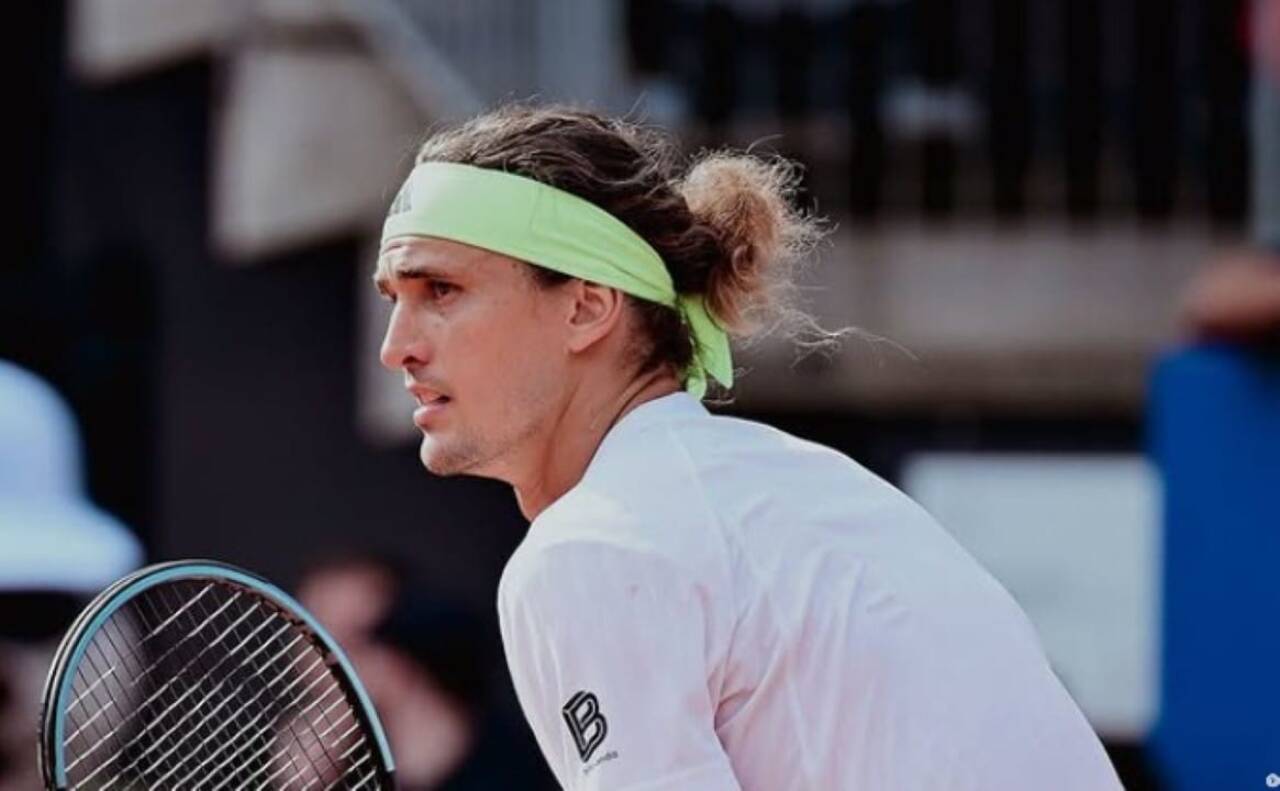
Alexander Zverev, currently ranked third in the ATP, has hit a rough patch in the 2025 tennis season. After a strong start with a title at the Munich ATP, the German star suffered back-to-back defeats at the Mutua Madrid Open and Rome Masters 1000. These setbacks have sparked intense discussions among fans and analysts, particularly after Rennae Stubbs, former coach of Serena Williams, delivered a scathing critique of Zverev’s performance and mentality. The former doubles world number one didn’t hold back, targeting his forehand and emotional resilience as major weaknesses that could jeopardize his chances at Roland Garros.
Zverev, once the world number two, slipped behind Carlos Alcaraz in the rankings following his losses in Madrid and Rome. His defeat to Lorenzo Musetti in the Rome Masters 1000 quarterfinals drew attention not only for the scoreline but also for his on-court behavior. Visibly frustrated, Zverev lashed out at the balls and criticized Musetti’s playing style, prompting questions about his ability to handle high-pressure situations.
- Stubbs criticized Zverev’s lack of mental toughness in critical moments.
- His forehand struggled against Musetti’s tactical slices.
- Complaints about the balls in Rome irked the former coach.
With the French Open looming, the 28-year-old faces the challenge of proving he can rebound and silence his detractors.
Forehand Under Fire
Rennae Stubbs zeroed in on Zverev’s forehand as a glaring flaw in his game. During his match against Musetti in Rome, the Italian exploited Zverev’s difficulty in handling low slices aimed at his forehand, forcing a string of unforced errors. On her podcast, Stubbs dissected Zverev’s technique, describing his grip as suboptimal and his movement as restricted due to his 6’6” frame. She argued that his inability to adapt his forehand in defensive situations is a significant barrier to success in top-tier tournaments.
Stubbs drew comparisons to tennis legends like Rafael Nadal, Roger Federer, and Novak Djokovic, who rarely blame external factors for their losses. She pointed out that Zverev’s tendency to complain, such as his remarks about the “soft” balls in Rome, reflects a mindset that could prevent him from securing a Grand Slam title. Her comments resonated across social media, with fans debating whether Zverev needs technical tweaks or a stronger mental approach.
- Musetti’s slices disrupted Zverev’s forehand rhythm.
- Stubbs criticized Zverev’s grip as a technical limitation.
- Comparisons to Nadal and Djokovic highlighted mental gaps.
Losses in Madrid and Rome
Zverev’s defeats in Madrid and Rome marked a turning point in his season. At the Mutua Madrid Open, he fell in the fourth round to Francisco Cerundolo, a player who has troubled him in past encounters. Despite the fast courts and high altitude favoring his powerful serve, Zverev struggled to find consistency in long rallies. The match ended in straight sets, with Cerundolo capitalizing on the German’s erratic play.
In Rome, Zverev entered as the defending champion but was outplayed by Musetti in the quarterfinals. The Italian, known for his crafty clay-court game, used slices and tempo changes to unsettle Zverev. During the match, Zverev voiced frustration about the balls, claiming they were too soft to hit winners. Stubbs dismissed these complaints, arguing that top players adapt to conditions rather than use them as excuses.
On-Court Behavior Sparks Debate
Zverev’s conduct during his loss to Musetti fueled further scrutiny. In the second set, he openly complained to the umpire about the balls, stating they made it “impossible to hit winners.” His frustration boiled over into aggressive gestures, including slamming balls in anger. This contrasted sharply with Musetti’s composed demeanor, as the Italian stayed focused and clinched the victory. Stubbs labeled Zverev’s outburst as a sign of emotional immaturity, unfit for a player of his caliber.
On platforms like X, fans and pundits were divided. Some sympathized with Zverev, suggesting the pressure of defending his Rome title contributed to his reaction. Others sided with Stubbs, arguing that Zverev must develop better emotional control to compete with the sport’s elite.
- Zverev’s complaints about the balls came in the second set.
- He displayed frustration through aggressive gestures.
- X users debated the role of pressure in his behavior.
Grand Slam Track Record
Zverev has reached three Grand Slam finals but remains without a title. His most recent loss came in the 2025 Australian Open final against Jannik Sinner, where he fell in straight sets. The match exposed his struggles to maintain consistency in high-stakes moments. Stubbs noted that while Zverev excels in smaller tournaments, he often “goes missing” in Major finals, lacking the clutch performance of his peers.
Roland Garros has been a mixed bag for Zverev. He reached the semifinals in 2021, 2022, and 2023 but has yet to advance further. With clay demanding patience and endurance, Stubbs’ concerns about his mentality carry weight, especially against formidable opponents like Alcaraz and Sinner, both past champions in Paris.
Roland Garros Preparation
As Roland Garros approaches, Zverev is fine-tuning his game on clay. The tournament, set to begin in late May, offers a chance to address his critics. Following his Madrid and Rome exits, Zverev plans to compete in smaller events, such as the ATP 250 in Geneva, to build momentum. His team is analyzing recent matches, focusing on improving his forehand and defensive transitions.
The pressure is mounting for Zverev. With seven Masters 1000 titles and a former world number two ranking, he’s expected to lead the next generation of tennis stars. Yet, Stubbs’ critique suggests he needs significant adjustments to challenge Alcaraz, Sinner, and other rising talents on the Parisian clay.
- Zverev will play in Geneva to gain match practice.
- His team targets improvements in forehand and defense.
- Alcaraz and Sinner pose major threats in Paris.
Social Media Buzz
Stubbs’ remarks ignited a firestorm on X, where fans and analysts shared their takes. Some praised her candor, agreeing that Zverev’s mindset needs work. Others defended him, citing his achievements, including two Rome titles (2017, 2024) and an Olympic gold medal in Tokyo. The hashtag #Zverev trended, with users debating his Grand Slam potential.
Posts on X also referenced Zverev’s history of handling criticism. In Rome, he addressed questions about his ranking, stating, “The points system doesn’t lie.” Some saw this as confidence, while others viewed it as deflecting accountability. The online chatter underscores Zverev’s polarizing presence in the tennis world.
Comparisons to Tennis Giants
Stubbs invoked Nadal, Federer, and Djokovic as benchmarks for handling adversity. These icons rarely attributed losses to external factors, a stark contrast to Zverev’s complaints. Nadal’s grit on clay, Federer’s poise under pressure, and Djokovic’s ability to turn matches around set a high standard that Zverev has yet to meet.
Alcaraz, who overtook Zverev in the rankings, also draws comparisons. The Spaniard, with Grand Slam titles at Roland Garros (2024) and Wimbledon (2024), exudes an aggressive mindset that Zverev lacks in crunch moments. Sinner, the current world number one, further challenges Zverev, especially after their Australian Open clash.
- Nadal, Federer, and Djokovic set the bar for mental strength.
- Alcaraz’s aggressive style contrasts with Zverev’s hesitations.
- Sinner’s consistency outshines Zverev in big matches.
Technical Challenges
Beyond his forehand, Zverev’s game faces other critiques. His movement, hampered by his height, struggles on slower surfaces like clay. Musetti capitalized on this with short balls and slices, forcing Zverev to bend low and lose balance. Stubbs emphasized that these mobility issues hinder his defensive game.
Zverev’s serve, while a weapon, also showed cracks. Against Musetti, he landed only 60% of first serves, allowing the Italian to attack his second serve. His team is working on adding variety to his serving and improving his court positioning to address these weaknesses before Roland Garros.
History of Criticism
Stubbs has previously called out Zverev. In early 2025, she questioned his number two ranking, arguing his results in big tournaments didn’t justify it. After his Madrid loss, she weighed in on the electronic line-calling controversy, acknowledging potential errors but urging Zverev to focus on his play. These recurring critiques highlight a pattern of concern about his approach.
Other figures have also weighed in. Paolo Bertolucci, former Italian Davis Cup captain, dismissed Zverev’s complaints about Rome’s balls as “baseless.” Such criticisms suggest Zverev must address both his on-court performance and off-court narrative to rebuild his reputation.
- Stubbs previously challenged Zverev’s ranking status.
- Bertolucci called his ball complaints unfounded.
- Ongoing critiques impact Zverev’s public image.
Looking Ahead to Paris
Roland Garros looms as a pivotal moment for Zverev. A strong showing could quiet critics and boost his confidence. His semifinal runs in Paris give him experience, but facing Alcaraz, Sinner, or even a resurgent Djokovic will test his progress. Adjustments to his forehand and mental approach are critical.
Zverev’s team is prioritizing tactical refinements, including sharper rally aggression and better defensive positioning. Competing in smaller tournaments beforehand will help him test these changes. The tennis world watches closely to see if he can rise to the occasion.
Stakes for Zverev’s Career
The criticism from Stubbs and recent losses raise questions about Zverev’s trajectory. At 28, he has time to win a Grand Slam, but the rise of Alcaraz and Sinner narrows his window to dominate. A deep run in Roland Garros, even without a title, could shift the narrative and reaffirm his place among the elite.
Conversely, an early exit could amplify doubts and increase scrutiny ahead of the hard-court season, including the US Open. Zverev’s ability to translate his talent into consistent Major performances remains the defining challenge of his career.
- A strong Roland Garros could reshape Zverev’s narrative.
- Alcaraz and Sinner threaten his standing.
- The US Open looms as the next big test.
Zverev’s Response
Zverev has shown he’s aware of the criticism. In Rome, he defended his ranking, noting, “Points are earned through wins.” He expressed confidence in finding his best form for Majors, citing his Australian Open final as evidence of his potential. However, he avoided directly addressing Stubbs’ comments, focusing instead on his preparation.
His decision to play smaller events before Paris signals a commitment to improvement. How he handles pressure in these matches will be telling, especially after his visible frustration in Rome. A more composed approach could help reshape perceptions of his mentality.





