
Northern Lights to dazzle 13 US states today: How to catch the show

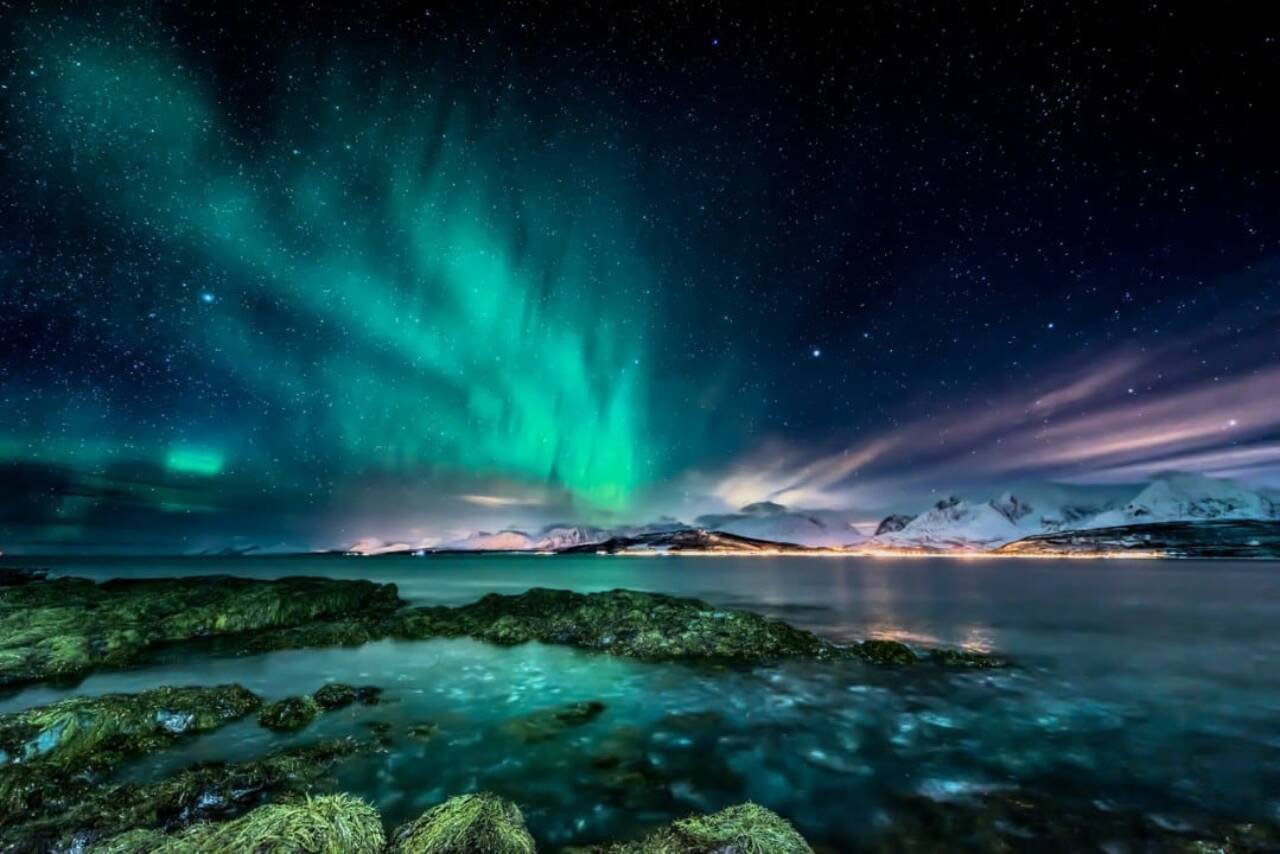
On June 2, 2025, the aurora borealis, a stunning celestial display, is expected to illuminate the skies across 13 US states, as forecasted by the National Oceanic and Atmospheric Administration (NOAA). The phenomenon, anticipated from Monday night into Tuesday morning, is driven by a G1-class geomagnetic storm triggered by high-speed solar winds and a coronal mass ejection directed at Earth. States like Michigan, Washington, and even Alabama may witness the aurora, with the best chances near the US-Canada border. The aurora, caused by solar particles colliding with Earth’s magnetosphere, promises a vibrant display of colorful lights, particularly in areas with clear skies. Observers are advised to seek dark, elevated locations to enhance their viewing experience, while NOAA monitors activity in real time.
The geomagnetic storm, which intensified early Sunday, reached severe levels, allowing the aurora to extend to lower latitudes than usual. Unlike the G5 storm in May 2024, which brought auroras to Florida, this event is less intense but still offers a rare opportunity for northern state residents.
NOAA noted that the Kp index, a measure of geomagnetic activity, may reach level 5, indicating brighter and more dynamic lights.
- States with visibility: Alaska, Montana, Michigan, and others.
- Ideal conditions: Clear skies, areas free of urban lights.
- Recommended time: Between 10 p.m. and 2 a.m. local time.
Nature of the phenomenon
The aurora borealis occurs when charged solar particles, released in coronal mass ejections, interact with Earth’s magnetic field. These particles collide with atmospheric gases, producing lights in shades of green, purple, and red. The June 2 event stems from fast solar winds compressing Earth’s magnetosphere, creating conditions for a geomagnetic storm.
NOAA classifies geomagnetic storms on a G1 to G5 scale, with G1 being the weakest. Despite its moderate rating, the current storm may expand the aurora’s visibility, reaching states like Iowa and Nebraska, which rarely see the phenomenon.
States in the visibility zone
The 13 states with a chance to observe the aurora include Alaska, Montana, North Dakota, Minnesota, Wisconsin, Michigan, South Dakota, Vermont, New Hampshire, Maine, Idaho, Washington, and Oregon. Areas near the US-Canada border, such as Duluth, Minnesota, and Burlington, Vermont, have the highest likelihood of sightings.
Other states, including New York, Massachusetts, Nebraska, Iowa, Wyoming, Illinois, and Connecticut, may also see the aurora, particularly in elevated, low-light areas. NOAA’s aurora visibility maps suggest the lights may appear along the northern horizon.
- Prime regions: US-Canada border and northern states.
- Unusual locations: Alabama and northern California may have limited visibility.
- Key factor: Clear skies and minimal artificial light.
Observation conditions
Aurora visibility hinges on factors like clear skies and geographic location. NOAA recommends heading to rural areas, away from city lights, such as national parks or remote trails. Elevated spots, like hills or mountains, provide better views by reducing horizon obstructions.
The optimal viewing window is between 10 p.m. and 2 a.m., when geomagnetic activity typically peaks. Tools like weather apps and light pollution maps can aid in planning the experience.
Recent aurora history
The US has seen notable aurora events in 2025, driven by an active solar cycle. On May 28, an unexpected G3 storm brought auroras to 17 states, with sightings as far south as Italy in a rare transcontinental event. On May 10, 2024, a G5 storm, the strongest since 2003, produced auroras as far south as Florida and northern Mexico.
These events reflect heightened solar activity as the Sun nears the peak of its 11-year cycle, expected in mid-2025. The proximity to the June 21 solstice also enhances visibility in the US, as shorter nights concentrate auroral activity in accessible hours.
Monitoring technology
NOAA relies on satellites like DSCOVR and ACE, positioned about 1 million miles from Earth, to track solar wind and predict geomagnetic storms. These satellites provide up to 30 minutes of warning before auroras appear, helping observers prepare.
The Kp index, ranging from 0 to 9, gauges auroral intensity. A Kp of 5, as forecasted for June 2, signals bright, dynamic auroras visible at lower latitudes than usual.
- Forecasting tools: DSCOVR and ACE satellites, NOAA aurora maps.
- Key metric: Kp index, level 5 for the current event.
- Real-time data: Updates from the Space Weather Prediction Center.
- Significance: Alerts aid observation planning and infrastructure protection.
Viewing tips
To optimize the experience, observers should plan ahead. National parks like Glacier in Montana or Acadia in Maine are popular due to low light pollution. Checking weather forecasts is critical, as clouds can obscure the view.
Bringing warm clothing, blankets, and hot drinks ensures comfort during the wait, as auroras can be unpredictable. Patience is key, as the lights may appear suddenly or take time to emerge.
Photographing the aurora
Modern smartphones with night mode can capture striking aurora images. NOAA and experts suggest using the main camera lens for better quality, avoiding the ultra-wide lens. Stabilizing the phone on a tripod or solid surface prevents blur during long exposures, typically 5 to 10 seconds.
Shooting in RAW format, if available, allows greater flexibility in post-editing. Image editing apps can enhance the aurora’s vibrant colors, particularly greens and purples.
- Recommended gear: Tripod, smartphone with night mode.
- Ideal settings: 5-10 second exposure, RAW format.
- Practical tip: Avoid movement during capture for sharp images.

Solar activity in 2025
The year 2025 has been marked by intense solar activity, with multiple coronal mass ejections recorded. These ejections, releasing billions of tons of solar plasma, trigger geomagnetic storms that produce auroras. The current 25th solar cycle is nearing its peak, explaining the surge in auroral events.
The June 2 storm, while moderate compared to earlier events, follows a G3 storm in May, highlighting the frequency of solar phenomena this year. Urban areas like Seattle and Minneapolis may see auroras if observers move to darker locations.
Popular viewing spots
Certain locations stand out as prime aurora-viewing sites in the listed states. In Alaska, Fairbanks is a renowned destination with vast low-light areas. Montana’s Glacier National Park offers unobstructed northern horizon views. In Maine, Acadia National Park draws observers for its coastal setting and clear skies.
In states less accustomed to auroras, like Iowa and Nebraska, rural areas with open fields or hills are ideal. NOAA advises using light pollution maps to pinpoint optimal spots.
- Top destinations: Fairbanks (Alaska), Glacier (Montana), Acadia (Maine).
- Alternative spots: Rural areas in Iowa, Nebraska, and Wyoming.
- Helpful resource: Online light pollution maps.
Event preparation
Observers should prepare for variable weather, especially in states like Minnesota and Wisconsin, where early June nights can be chilly. Carrying extra batteries for cameras and phones is wise, as long exposures drain power quickly.
Astronomy clubs in states like Michigan and Washington are hosting viewing events, providing telescopes and guides for beginners. Social media platforms also share real-time tips from fellow observers.





