

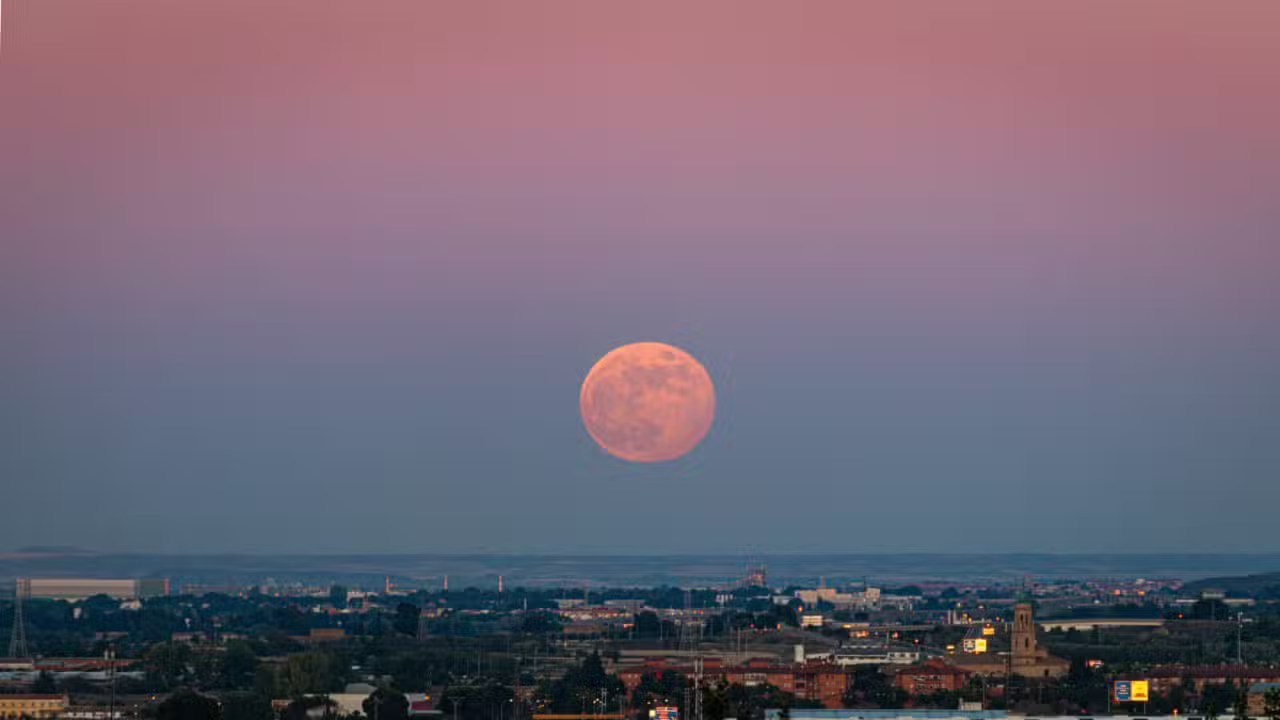
On June 10 and 11, 2025, the Strawberry Moon, a full moon named by Native American tribes for the strawberry harvest season, will reach its lowest position in the Northern Hemisphere’s sky in nearly two decades. Visible globally, the phenomenon will be most striking in the Northern Hemisphere, where the moon will hug the horizon, displaying golden or reddish hues. In Brazil, the moon will appear higher, peaking at 4:45 AM on June 11, Brasília time. This extreme position results from an 18.6-year lunar cycle known as the major lunar standstill, making the 2025 Strawberry Moon a rare astronomical event. For optimal viewing, choose locations with a clear horizon and minimal light pollution.
The Strawberry Moon won’t appear pink but will seem larger in the Northern Hemisphere due to its low position, enhancing an optical illusion. In the Southern Hemisphere, including Brazil, the moon will be high, offering a bright, clear view. Astronomers recommend the evening of June 10 for the best observations, as the moon rises in the eastern horizon.
This event aligns closely with the winter solstice in the Southern Hemisphere on June 20, adding astronomical significance. Known as the Mead Moon or Rose Moon in European traditions, the June full moon reflects its ties to natural cycles.
- Best time in Brazil: 4:45 AM on June 11, with prime viewing at dusk on June 10.
- Ideal locations: Rural areas or spots with an unobstructed eastern horizon.
- Equipment: Binoculars or telescopes to see lunar surface details.
Why the 2025 Strawberry Moon stands out
The 2025 Strawberry Moon’s uniqueness stems from the major lunar standstill, a cycle where the moon’s orbit hits its most extreme points in the sky every 18.6 years. In the Northern Hemisphere, the moon will reach a declination of -28°24.1′, its lowest since 2006, staying close to the horizon. This position causes moonlight to pass through a thicker atmospheric layer, creating golden, orange, or reddish tones.
In the Southern Hemisphere, the moon will appear at its highest, offering a contrasting spectacle. The last time the June full moon was this low in the Northern Hemisphere was in 2006, with the next similar event not until 2043. The lunar illusion, making the moon appear larger near the horizon, will be particularly vivid in the Northern Hemisphere.
The major lunar standstill results from nodal precession, a gradual shift in the lunar orbit’s intersection with the ecliptic. This cycle peaks in 2025, amplifying the moon’s extreme positions.
- Lunar declination: -28°24.1′ in the Northern Hemisphere, lowest in 18.6 years.
- Lunar illusion: Optical effect enlarging the moon’s appearance near the horizon.
- Colors: Golden or reddish hues due to atmospheric scattering.
- Cycle: Next similar event in June 2043.
Origins of the Strawberry Moon name
The term “Strawberry Moon” originates from Native American tribes, particularly those in the northeastern United States, who linked the June full moon to the wild strawberry harvest. Recorded in sources like the Old Farmer’s Almanac, the name underscores the connection between lunar cycles and agricultural rhythms.
Beyond “Strawberry Moon,” the event has other names across cultures. In Europe, it’s called the Mead Moon, tied to honey fermentation, or the Rose Moon, marking the blooming of roses. Other names include the Green Corn Moon and Hot Moon, reflecting seasonal traits.
These names, adopted by European settlers, remain in use, preserving the tradition of tracking time through celestial events. In Brazil, “Strawberry Moon” has gained traction for its poetic appeal, despite no direct link to local strawberry harvests.
How to observe the Strawberry Moon in Brazil
In Brazil, the Strawberry Moon will be visible on the night of June 10 and early morning of June 11, peaking at 4:45 AM Brasília time. Unlike the Northern Hemisphere, where the moon will be low, it will appear high in the Southern Hemisphere, aiding observation. The evening of June 10, around 6 PM, is ideal, as the moon rises in the east with a yellowish glow.
Choose locations far from urban centers to minimize light pollution. Rural areas, beaches, or fields with a clear eastern horizon are best. Binoculars or telescopes can reveal lunar craters and impact marks.
- Prime time: Dusk on June 10, around 6 PM.
- Recommended spots: Areas with low artificial light and clear eastern views.
- Tip: Watch the moonrise for striking yellowish or orange hues.

The science behind the moon’s position
The 2025 Strawberry Moon’s extreme position is due to the moon’s orbital inclination of 5.15° relative to Earth’s orbit around the Sun. Combined with Earth’s 23.5° axial tilt, the moon can vary up to 28.65° north or south in the sky. During the major lunar standstill, this variation is maximized.
Nodal precession, a slow rotation of the lunar orbit, causes the moon’s ecliptic intersections to shift, reaching extreme points in 2025. In the Northern Hemisphere, the moon will be at its lowest; in the Southern Hemisphere, its highest. This creates a dramatic contrast between hemispheres.
The June full moon occurs just before the Southern Hemisphere’s winter solstice on June 20 at 11:42 PM Brasília time, heightening its astronomical significance.
Other astronomical events in June
June 2025 offers a rich array of celestial events. On June 17, Mars will appear close to the star Regulus in the Leo constellation, creating a striking contrast between the planet’s reddish glow and the star’s bluish light.
The winter solstice in the Southern Hemisphere, on June 20, marks the shortest day of the year, with fewer daylight hours. In the Northern Hemisphere, it’s the summer solstice, the longest day. These events complement the Strawberry Moon, enriching June’s astronomical calendar.
- Mars and Regulus: Visible to the naked eye on June 17.
- Winter solstice: June 20, 11:42 PM Brasília time.
- Other moon names: Mead Moon, Rose Moon, Hot Moon.
Cultural significance of the event
The Strawberry Moon holds deep cultural meaning, especially for Native American communities. The name reflects the full moon’s role as a timekeeper for farming and survival. In other cultures, the June moon is tied to fertility rituals, weddings, and seasonal celebrations.
In Europe, the Mead Moon name connects to honey-based drinks produced in June, while the Rose Moon celebrates blooming flowers, symbolizing renewal. These meanings highlight the link between lunar cycles and human life.
In Brazil, the event’s timing near Valentine’s Day on June 12 adds a romantic flair, with couples enjoying the moonlit sky for celebrations.
Tips for photographers and amateur astronomers
The 2025 Strawberry Moon is a prime opportunity for photographers and amateur astronomers. In the Northern Hemisphere, the low moon creates dramatic scenes with terrestrial landmarks like trees or buildings. In Brazil, the high moon allows clear shots of its surface.
Use tripods and cameras with strong zoom capabilities. Adjust exposure to avoid overbright images. Apps like Sky Tonight can help track the moon’s precise position.
The moon’s historical influence
The June full moon has inspired myths, legends, and scientific inquiry throughout history. Structures like Stonehenge may align with the moon’s extreme orbital points, suggesting ancient knowledge of the major lunar standstill.
In modern astronomy, the 2025 Strawberry Moon offers a chance to study orbital dynamics and atmospheric effects on lunar appearance. Scientists also explore how lunar cycles affect tides and other terrestrial phenomena.
Preparing for the lunar spectacle
To fully enjoy the Strawberry Moon, plan ahead. Check weather forecasts for clear skies and select a viewing spot with good visibility. In Brazil, the moon’s high position will be striking, especially at moonrise with its yellowish tint.
Astronomers suggest arriving before sunset on June 10 to catch the moonrise. Bring binoculars, cameras, or simply observe with the naked eye for a memorable experience.