Elon Musk: First Tesla Model Y drives itself from factory to customer’s home


In a historic milestone for the automotive industry, Tesla achieved the first fully autonomous delivery of a Model Y SUV, which left the company’s factory near Austin, Texas, and arrived at a customer’s home without human intervention on June 28, 2025. The announcement was made by Elon Musk, Tesla’s CEO, in a post on the social media platform X, highlighting the vehicle’s ability to navigate the route, including highway sections, at a maximum speed of 116 km/h. The delivery, which involved no drivers or remote operators, underscores Tesla’s commitment to artificial intelligence and autonomous driving, solidifying its leadership in the electric vehicle sector. The achievement, completed a day earlier than Musk had predicted, comes amid challenges for the company, such as declining sales and criticism related to Musk’s involvement in American politics.
The autonomous delivery of the Model Y is a significant step in Musk’s vision to transform Tesla into a company centered on cutting-edge technologies like robotaxis and humanoid robots. The vehicle covered the route “across town,” as described by the CEO, marking an advancement over previous features, such as autonomous vehicle movement within factory premises. The initiative also aligns with Tesla’s recent launch of its robotaxi service, which began operating in Austin on June 22, offering rides to a select group of influencers and investors.
- Key highlights of the delivery:
- Vehicle: Tesla Model Y SUV.
- Route: From the Austin factory to the customer’s residence.
- Maximum speed: 116 km/h, including highway sections.
- No intervention: No drivers or remote operators involved.
Advancement in autonomous driving
The driverless Model Y delivery reflects years of Tesla’s investment in artificial intelligence and autopilot systems. Ashok Elluswamy, Tesla’s head of AI and autopilot, confirmed that the vehicle operated with complete autonomy, without any external assistance. The technology used in the delivery is an evolution of the Full Self-Driving (FSD) system, which enables Tesla vehicles to navigate complex environments, such as highways and urban areas, with minimal human intervention.
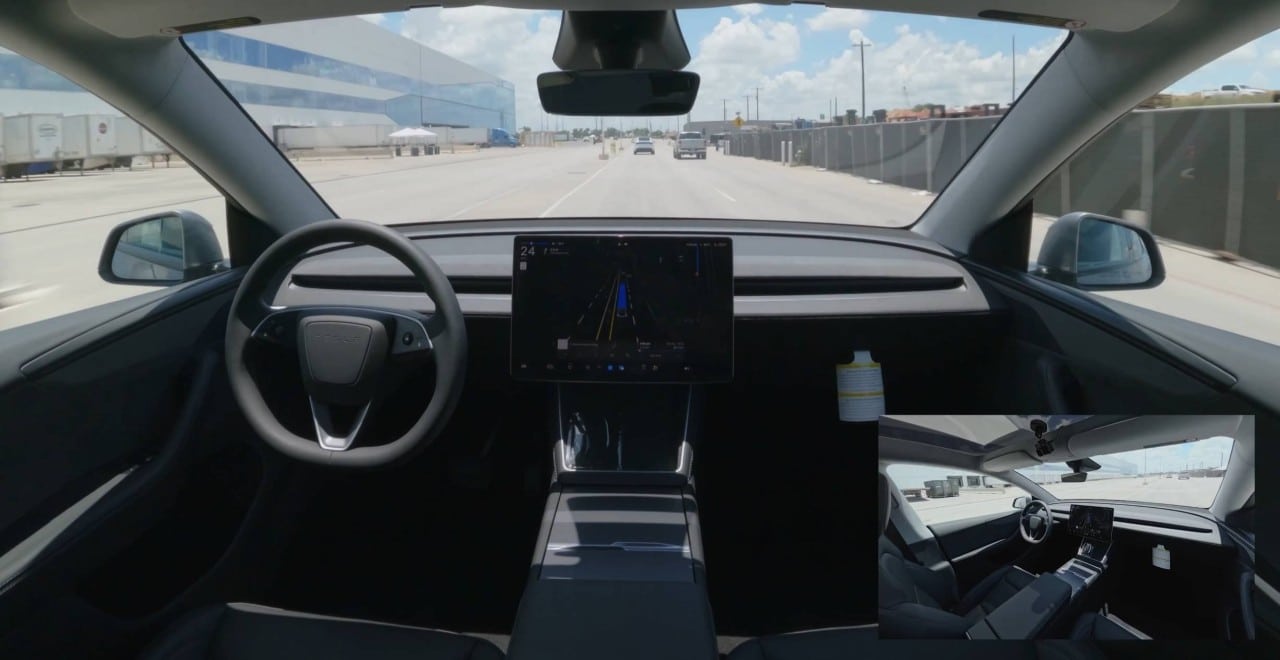
This milestone comes at a strategic moment for Tesla, which is seeking to reinvent itself amid market challenges. The company is facing declining electric vehicle sales in regions like North America and Europe, where competition with Chinese automakers, such as BYD, has intensified. Additionally, the departure of key executives in recent weeks has raised questions about the company’s internal stability. Despite these issues, Musk remains focused on disruptive innovations, such as mass production of robotaxis and the development of the Optimus humanoid robot, which he believes represent Tesla’s future.
Innovation context
The autonomous delivery is not an isolated achievement but part of Tesla’s broader strategy to lead the mobility revolution. In April 2025, the company had already demonstrated the ability of its vehicles to move autonomously from assembly lines to logistics yards in Texas, streamlining internal operations. The customer delivery, however, raises the bar, requiring the vehicle to navigate real-world traffic conditions, including intersections, traffic lights, and other obstacles.
Tesla also faces a challenging regulatory environment. In the United States, autonomous driving is under scrutiny from agencies like the National Highway Traffic Safety Administration (NHTSA), which is investigating incidents involving the FSD system. Despite this, the company continues to push forward, betting that its technology will overcome legal and technical barriers.
- Regulatory challenges faced by Tesla:
- NHTSA investigations into the safety of Full Self-Driving.
- Restrictions in some U.S. states for driverless vehicles.
- Need for approval for commercial robotaxi operations.
- Debates over liability in accidents involving autonomous vehicles.
Impact on the automotive market
The autonomous Model Y delivery could redefine consumer expectations for electric vehicles. While traditional automakers, such as Ford and General Motors, are also investing in autonomous technologies, Tesla stands out for its rapid implementation of innovations. The ability to deliver a car directly to a customer without human intervention could become a competitive advantage, especially in markets where convenience is highly valued.
However, Tesla must overcome significant hurdles to scale this technology. The infrastructure required for large-scale autonomous deliveries, such as remote monitoring systems and constant software updates, demands substantial investments. Additionally, consumer acceptance remains uncertain, particularly after reports of incidents involving autonomous vehicles from other companies, like Waymo.
Tesla’s future and robotaxis
The success of the autonomous delivery is closely tied to Musk’s ambition to transform Tesla into an autonomous mobility company. The launch of the robotaxi service in Austin, though limited to a restricted area, is an initial step in this direction. The initial fleet of autonomous Model Y vehicles, which transported influencers and investors, demonstrated the technology’s viability in urban settings.
Musk has announced plans to expand the service to other U.S. cities, aiming to deploy “millions of robotaxis” on the roads in the coming years. This vision, however, depends on technological advancements and regulatory changes that allow the commercial operation of driverless vehicles on a large scale.
- Recent Tesla timeline:
- April 2025: Vehicles move autonomously within Texas factory premises.
- June 22, 2025: Launch of the robotaxi service in Austin.
- June 28, 2025: First autonomous Model Y delivery.
Repercussion and next steps
The news of the autonomous delivery sparked significant buzz on social media and among automotive industry analysts. While some praise Tesla for its boldness, others question the feasibility of scaling this type of operation in the short term. The absence of videos or images of the delivery, promised by Musk, also fueled speculation, with some X platform users demanding greater transparency.
Tesla plans to release a video of the event soon, which could bolster the achievement’s credibility. In the meantime, the company continues to invest in its artificial intelligence infrastructure, aiming to make autonomous driving an accessible reality. The success of this endeavor will depend on Tesla’s ability to balance technological innovation with consumer and regulatory trust.
- Reactions to the autonomous delivery:
- Investor enthusiasm for the advancement of FSD technology.
- Analyst skepticism about the scalability of autonomous deliveries.
- Anticipation for the video promised by Musk to validate the achievement.